
Lieferung heute & morgen

Qualitätsgarantie

Willkommens-Angebote freischalten: KOSTENLOSE Lieferung | Bis zu 80 % RABATT | Kostenlose 30-Tage-JoyPlus-Testphase
App herunterladen
The right floor cleaner can make daily maintenance significantly easier. However, a floor-cleaning appliance, wet-dry vacuum, mopping robot and conventional hard-floor cleaner differ considerably in how they are used. Anyone who focuses solely on high suction power, numerous programmes or attention-grabbing marketing claims may end up buying a device that does not suit their flooring or cleaning routine.
Figures such as 4,000, 8,000 or 20,000 Pa describe the maximum suction power under specific conditions. On their own, they say little about how well a device performs along edges, on carpets or when handling liquids. Brush design, seals, filters and the actual operating mode also affect the result.
A wet-dry vacuum designed for spilled liquids is also built differently from a robot vacuum with mopping function, which is primarily intended to remove dust and light everyday dirt.
Laminate, parquet, vinyl, tiles and carpets require different care. On sensitive wood surfaces, excessive water can cause swelling or damage to joints. A laminate cleaner or parquet cleaner should therefore only be used in accordance with the manufacturer’s instructions.
With robot models, you should also check whether the mopping function pauses automatically on carpets or whether carpeted areas need to be manually designated as no-go zones.
Although a self-cleaning wet-dry vacuum rinses the brush roll, it does not always eliminate the need to empty the dirty-water tank, dry the filters or clean the sensors. If these steps are neglected, odours, residue and operating problems may develop.
Before buying, you should therefore check:
For dry dust, crumbs and pet hair, a robot vacuum or cordless floor cleaner is a suitable choice. A mopping robot adds wet cleaning to this functionality, but it is not designed to tackle every type of stubborn dirt.
An electric hard-floor cleaner, by contrast, is operated manually and, depending on the model, can pick up dry and wet dirt simultaneously. These appliances are especially practical for spilled drinks, kitchen stains or damp paw prints. For carpets and upholstery, a dedicated carpet cleaner with a suitable nozzle and filtration system is the more appropriate option.
Look for separate clean- and dirty-water channels. With a dual-tank system, the cleaning water is not dispensed from the same container in which the collected liquid ends up. This reduces the risk of redistributing dirty water across the floor.
For wood, laminate and cork, adjustable water output is important. The floor should only be cleaned with a mist of water or a light dampness. Standing water should be avoided. Cleaning products may only be used if they are approved for the specific appliance and flooring.
For a robot model, laser navigation, map management, no-go zones and app compatibility are useful criteria. A specification such as “up to 150 minutes” or “up to 300 m²” depends on the cleaning mode, room layout, floor type and battery condition.
For homes with children or pets, a stated noise level can help inform your choice. However, it should be understood as a manufacturer specification, as the actual volume varies depending on the operating mode and surface.
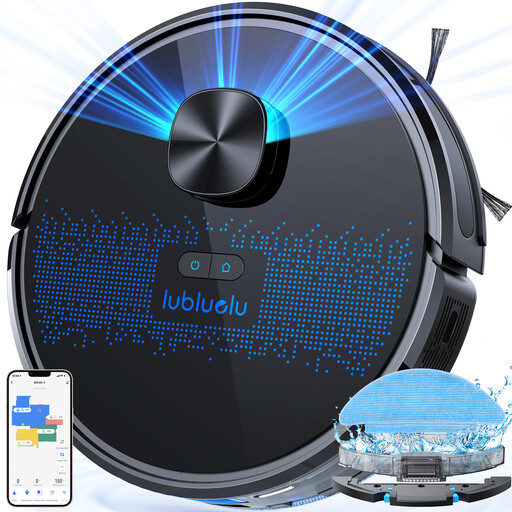
Why it is a good fit: This 2-in-1 model combines vacuuming and mopping, making it suitable for households seeking automated everyday cleaning of hard floors and carpets.
The product specifications mention laser navigation, five maps and app control. Before use, carpets and sensitive areas should be designated as no-go zones.
4,000 Pa according to the product description, a stated noise level of 55 dB and 2-in-1 cleaning.
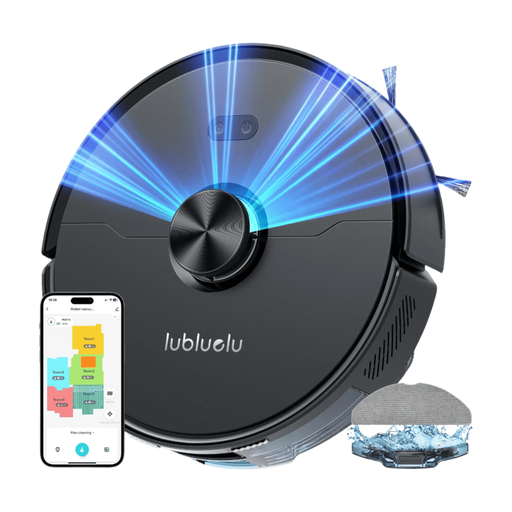
Why it is a good fit: The base station features larger water and dust containers, making it suitable for users who want to intervene manually less often.
The instructions still require regular care of the mop pads, tanks and base station. Convenience therefore does not mean complete freedom from maintenance.
Up to 180 minutes of runtime, maximum suction power of 4,000 Pa and stated coverage of up to 300 m².
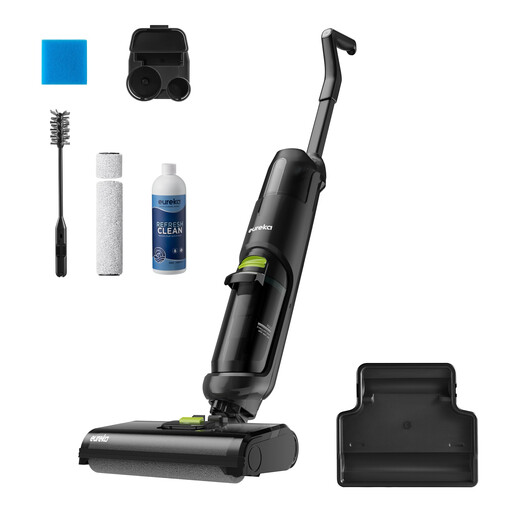
Why it is a good fit: A manual hard-floor cleaner for sealed floors when liquids, kitchen debris or damp pet hair need to be picked up immediately and regularly.
According to the supplier, the appliance is intended for sealed hard floors, not arbitrary surfaces. The dirty water and brush roll must be maintained after use.
Cordless operation, separate water channels and a self-cleaning function according to the product description.
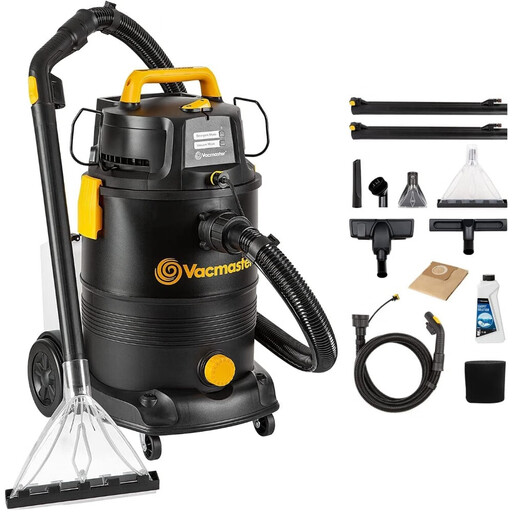
Why it is a good fit: For larger households, carpets, upholstery, car interiors and varied cleaning tasks, a corded multifunction appliance is a practical choice.
The 30-litre collection container and separate 6-litre cleaning-solution tank allow for longer cleaning sessions. However, at 10.8 kg, the appliance is considerably less mobile than a cordless model.
1,300 W rated power, wet, dry and carpet cleaning, plus a HEPA exhaust filter according to the supplier.
For laminate, cork and vinyl, a low-dosage cleaning solution with clear usage instructions is a sensible choice. According to the product description, emsal Floor Care Cork & Laminate is intended for cork and laminate floors, as well as vinyl, design flooring and linoleum, among others. However, the stated BIOPROTECT moisture-protection formula does not replace using water sparingly when mopping.
For sealed parquet, emsal Bioprotect Parquet Care is a suitable option. Always use a well-wrung mop on wood and cork floors. Products such as emsal Vollglanz Floor Cleaner are, according to the product information, not intended for laminate or unfinished wood floors. The specific product label is therefore more important than general terms such as “universal cleaner”.
Explore a current selection of appliances and care products for different floor types and cleaning tasks.
For laminate, you can choose a suitable laminate cleaner or an appliance with controlled, low water output. Only mop with a light mist of water and avoid standing water. A mopping robot should be configured so that the moisture level is appropriate for the flooring.
Depending on the model, cleaning mode and floor conditions, runtime per charge is often around 30 to 45 minutes. Overall service life depends on battery replacement, filter care, brush cleaning and the availability of spare parts.
In addition to electricity consumption, you should budget for cleaning products, filters, brush rolls, mop pads and, where applicable, replacement batteries. An appliance with a higher purchase price may prove more economical with regular use due to longer maintenance intervals; the decisive factors are the actual costs of spare parts and consumables.