
Lieferung heute & morgen

Qualitätsgarantie

Willkommens-Angebote freischalten: KOSTENLOSE Lieferung | Bis zu 80 % RABATT | Kostenlose 30-Tage-JoyPlus-Testphase
App herunterladen
A good folding camping table is more than just a surface—it's the central gathering point on your campsite, the heart of your picnic, and a practical workspace for anglers or festival-goers. But the search for the right model can quickly become overwhelming. Many products promise stability and a compact design, only to prove useless in practice. As your Joybuy Product Recommendation Officer, I'll help you recognise the common pitfalls and make an informed decision.
Before we dive into the key features, let's highlight the problems that often only surface after the purchase. If you know what to look for, you can specifically seek out solutions.
To avoid the problems mentioned above, you should check three core aspects before buying. These are crucial in determining the longevity and functionality of your table.
The material is decisive for weight, stability, and weather resistance. An aluminium camping table (aluminium alloy) offers a good compromise here. It is significantly lighter than steel, does not rust, and is robust enough for outdoor use.
Pay special attention to the frame construction. An X-cross structure under the tabletop ensures even load distribution and prevents the table from sagging or twisting under pressure. Sturdy, locking joints are also a must for a secure stand.
There are two common systems that directly influence the pack size:
Small but important features separate good models from impractical ones. These include non-slip foot caps, which provide grip on smooth or damp surfaces and prevent the table from sinking into soft ground. An easy and intuitive setup and breakdown process is just as important. No one wants to struggle with complicated mechanisms in the dark or in the rain.
Based on the criteria above, we have identified several models that are particularly well-suited for different user profiles.
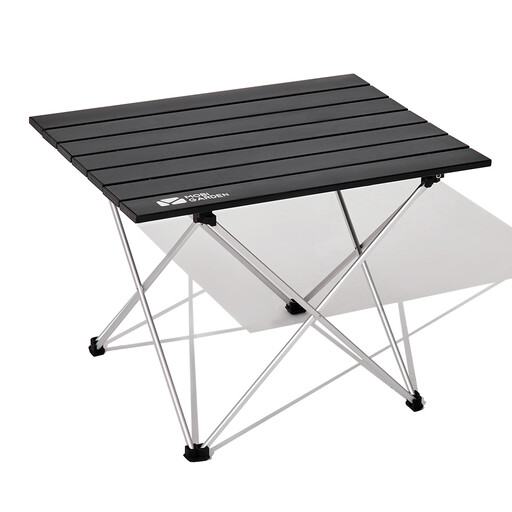
Why it's a fit: Perfect for hikers, anglers, or a solo tent camper. The extremely low weight and tiny pack size make it the perfect companion when every gram counts.
It effectively solves the problem of a deceptive pack size by allowing the tabletop and frame to be packed separately. The X-cross structure ensures good foundational stability despite its low weight.
Extremely light: Net weight of approx. 1.25 kg. Compact pack size: approx. 16 × 8 × 57 cm. Material: Corrosion-resistant aluminium alloy.
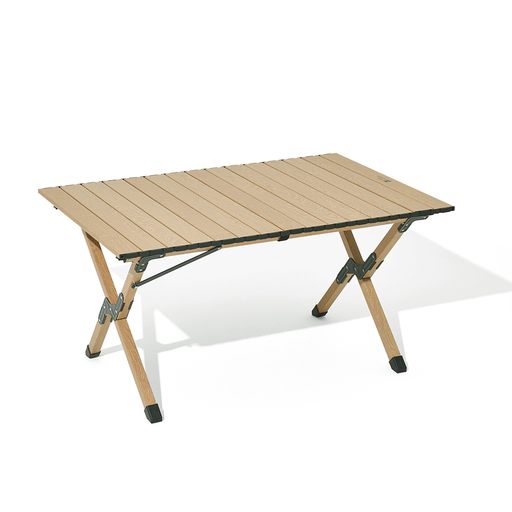
Why it's a fit: An all-rounder for weekend trips by car or camper van. It offers enough space for 2-3 people without being excessively heavy to transport.
The "wobble trap" is minimised by the X-cross frame construction, which forms a stable triangular support. The roll-top design ensures a manageable pack size despite the larger tabletop area.
Good balance: Usable surface of 87 × 60 cm with a weight of approx. 3.6 kg. Stable stand: Non-slip PVC foot caps.
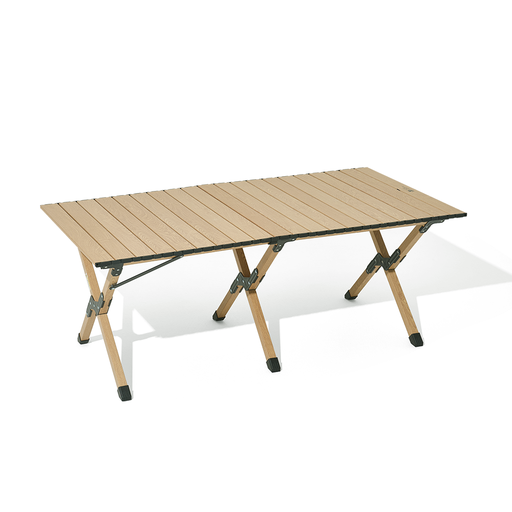
Why it's a fit: When you need space—for the whole family, as a buffet table at base camp, or as a spacious **folding picnic table**. It provides a large surface for shared meals.
Despite its size, the pack size remains manageable thanks to its collapsible design. The robust construction is designed to keep a larger surface stable and prevent it from sagging in the middle.
Generous tabletop: 116 × 60 cm offers space for several people. Portable: Can be disassembled for transport despite its size. Weight: approx. 4.9 kg.
We've compiled a complete, up-to-date list of products that meet these strict selection criteria.
Stability heavily depends on the construction. Models with an X-cross structure under the tabletop and locking legs are generally much more stable than simple folding frames. It is also important to always set up the table on the most level ground possible and ensure that all legs have firm contact with the ground.
Maintenance is straightforward. Clean the surfaces after use with a damp cloth and mild soapy solution to remove food residue or dirt. It is important to let the table dry completely before packing it away to avoid mildew in the carrying bag. Store it in a dry place when not in use.
A folding table typically has a solid, one-piece top under which the legs fold. The pack size is flat, but the footprint remains large. A roll-top table has a slatted tabletop that rolls up and a separate folding frame. This results in a very compact, elongated package that is often easier to store in tight spaces.