
Lieferung heute & morgen

Qualitätsgarantie

Willkommens-Angebote freischalten: KOSTENLOSE Lieferung | Bis zu 80 % RABATT | Kostenlose 30-Tage-JoyPlus-Testphase
App herunterladen
A folding step stool can quickly free up space around the home. It helps you reach high shelves, curtains, light fittings or cupboards without having to leave a bulky ladder standing permanently. However, folding step stools and step ladders vary considerably in terms of height, standing area, material and safety features.
Anyone who focuses only on a high load capacity or a low price often overlooks important details. Three typical purchasing pitfalls are particularly common:
For reaching kitchen wall cupboards or the top shelves of bookcases, a low folding step stool with one or two steps is sufficient in many homes. A two-step model is usually easier to carry and quicker to put away. For higher tasks, such as hanging curtains, a folding step ladder with four steps may be more suitable.
Important: The top step or platform must only be used as specified in the relevant instructions. A folding step stool is not automatically suitable for use as a leaning ladder or as a workstation where sideways pressure may be applied.
An aluminium folding step stool is generally lighter than a steel model. This makes it easier to move between the kitchen, cellar and bedroom. A steel folding step stool, on the other hand, may have a higher unladen weight and therefore be less comfortable to carry.
The specific dimensions are also important:
A space-saving plastic folding stool may be sufficient for low heights. For greater working heights, a suitable handhold and a stable construction are more important than particularly low weight.
The specification folding step stool up to 150 kg describes the maximum load stated by the supplier. This should not be exceeded. The total load must be taken into account, including, for example, body weight plus any items being carried. A high load capacity does not replace a level standing surface or a correctly engaged locking mechanism.
You should also look for:
The following models demonstrate different options for use in the home. The information is based on the respective product descriptions and technical specifications.
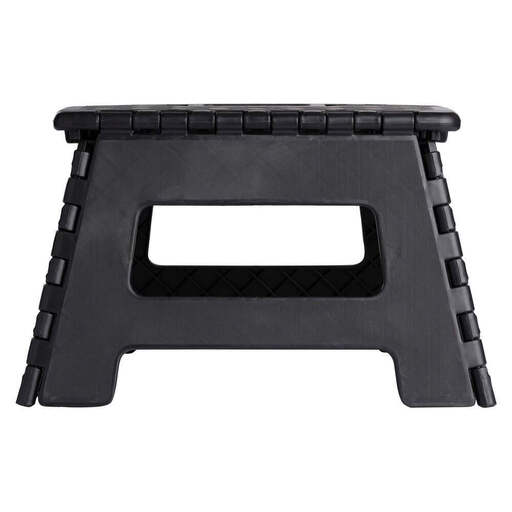
Why this product suits this profile: At 22 cm high and weighing 1.1 kg, this step stool is suitable for low-level everyday tasks and smaller homes.
The folded dimensions of 32 × 4.5 × 35 cm make storage easy to plan. The stated EN 14183 standard and textured tread provide useful points of reference.
Low unladen weight, integrated carrying handle, slim folded dimensions and a stated load capacity of 150 kg.
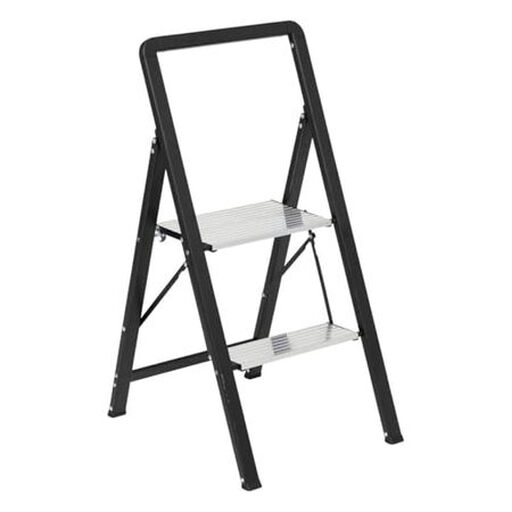
Why this product suits this profile: The aluminium frame combines a stated weight of 2.9 kg with a height of 83 cm and a handrail for tasks involving higher shelves.
The anti-slip steps and feet are explicitly specified. A safety mechanism for locking the frame is also mentioned.
Aluminium construction, stated maximum load of 150 kg, handrail and folding design requiring no assembly.
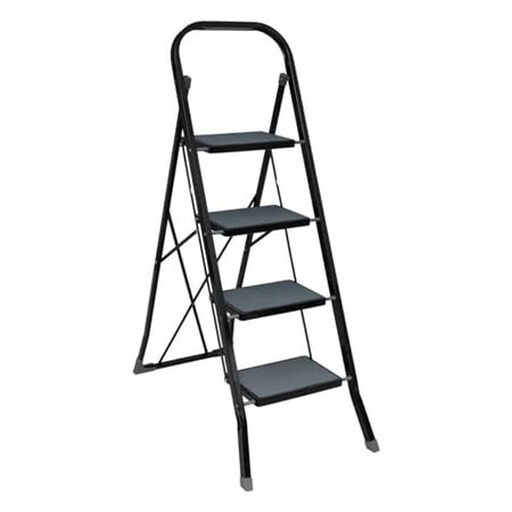
Why this product suits this profile: With four steps and a height of 124 cm, this steel model is designed for greater reach and recurring household tasks.
The product description lists a locking mechanism, anti-slip steps and feet, as well as a handrail. The stated TUV and EN14183 certification should be checked against the product documentation.
Four steps, steel construction, stated load capacity of 150 kg and folding storage.
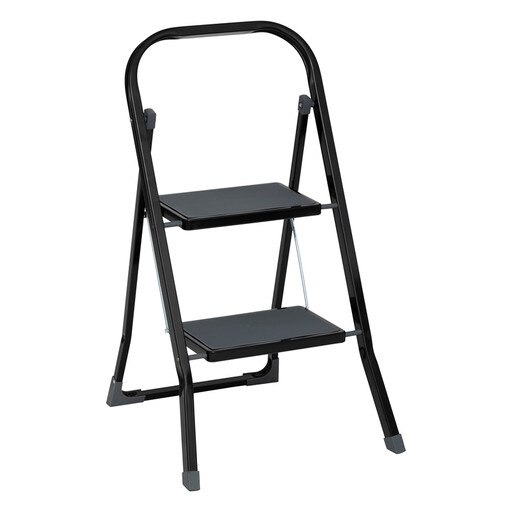
Why this product suits this profile: Two steps, safety rails at the steps and platform, plus stated EN14183 and TUV certification make this model appealing to users who prefer additional support when climbing.
The design specifies anti-slip coatings and a locking indicator. Before every use, check that the frame is fully opened.
Metal construction, two steps, safety rails, folding design and a stated maximum load of 150 kg.
We have put together a complete, regularly updated list of products that fully meet these strict selection criteria and the safety regulations applicable in the EU.
Before every use, the surface should be level, dry and free from obstacles. Carpet edges, liquids or uneven tiles can affect stability. When climbing up or down, face the folding step stool and maintain three points of contact wherever possible.
Also bear the following in mind:
For low-level tasks, a 2-step folding stool is often sufficient. If you regularly need to reach higher shelves, curtain poles or areas near the ceiling, a 4-step folding stool may be more suitable. The key factors are the actual working height, the available floor space and safe use in accordance with the instructions.
It is not possible to give a fixed service life in general terms. This depends on the load, storage conditions, frequency of use and care. Check the joints, locking mechanism, treads and feet before every use. If you notice cracks, looseness or material fatigue, the product should no longer be used.
A folding step stool does not require electricity and normally incurs no ongoing running costs. In most cases, care consists simply of wiping it with a damp cloth and carrying out regular visual checks. Moving parts should only be treated in accordance with the manufacturer’s instructions. Store the folded step stool somewhere dry and protected from continuous moisture.