
Lieferung heute & morgen

Qualitätsgarantie

Willkommens-Angebote freischalten: KOSTENLOSE Lieferung | Bis zu 80 % RABATT | Kostenlose 30-Tage-JoyPlus-Testphase
App herunterladen
A 150 kg folding step stool can be a reliable household aid for reaching high shelves, hanging curtains or changing light bulbs. In practice, though, the stated load capacity isn’t the only factor to consider. The construction, standing surface, locking mechanism and storage dimensions all need to suit the job.
Many models look similar at first glance. However, some important details may be presented only briefly, or can be difficult to assess without technical information. The criteria below will help you compare a folding step stool or folding step ladder objectively.
A load capacity of 150 kg refers to the maximum permitted load under the specified conditions. It doesn’t automatically mean that a model will stand securely on every surface or suit every posture. Always place the step stool on a flat, dry and stable surface. You must also stay within the load limit, taking into account the combined weight of the person using it, any tools and other items.
Non-slip treads and rubber feet can improve grip. However, the step stool is still unsuitable for use on wet, oily, uneven or slippery surfaces. Check that both the treads and feet have anti-slip features. A metal step stool with coated treads offers different properties from a basic plastic stool with a small standing surface.
A folding step stool is only practical if it’s easy to store and locks securely when unfolded. Without a clear locking mechanism, the frame may move unexpectedly under load. Before climbing up, check that the mechanism is fully engaged. When folding the stool away, keep your hands clear of the joints and hinges.
For a 150 kg folding step stool, the maximum load should be clearly stated in the technical specifications. Many models have steel frames designed to withstand high structural loads, while aluminium can help keep the overall weight down. However, the material alone doesn’t prove that a step stool is safe. The frame shape, joints, tread fixings and base width all matter too.
If you regularly move your step stool between the kitchen, utility room and bedroom, you might prefer an aluminium step stool weighing around 2.9 kg. For more stationary use, a heavier steel model with an additional handrail may be worth considering.
Wide treads with a profiled or coated surface make it easier to climb up and down securely. A step stool with a safety rail can provide an extra handhold when positioning yourself. However, it doesn’t replace the need for a stable stance or proper use.
Also check:
A 2-step folding ladder is usually suitable for reaching shelves and cupboards at standard room height. A 3-step folding ladder or 4-step folding ladder may offer greater reach, but needs more floor space and requires extra care when climbing up and down.
For smaller homes, a space-saving step stool with a compact folded size is a sensible choice. Dimensions such as 55 × 50 × 4,5 cm when folded show whether the model can be stored behind a door, under a bed or in a narrow cupboard. The weight affects how easy it is to move: a lightweight aluminium step is easier to reposition, while a steel model is often heavier.
The EN 14183 standard is listed as a relevant product standard for certain steps and stepladders. For specific products, check whether certification is actually stated in the product details. According to the product information, the 2-Step and 3-Step metal models, as well as the 4-Step model in this selection, have TÜV and EN14183 certification. This information shouldn’t be assumed to apply to other models.
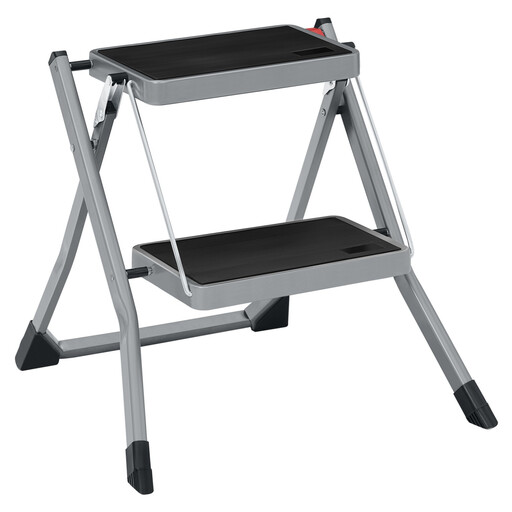
Why this product suits this profile: This two-step folding stool is designed for everyday household tasks. Its folded dimensions of 55 × 50 × 4,5 cm make it easy to store away without taking up much space.
The product details specifically mention an auto-lock mechanism. The ribbed treads and anti-slip rubber feet address the often-overlooked need for grip on both the floor and the steps.
Steel frame, stated maximum load of 150 kg, two steps and a product weight of 3,5 kg.
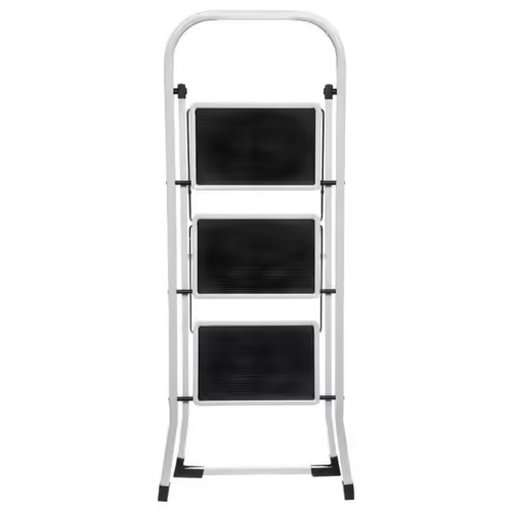
Why this product suits this profile: Three steps, a safety rail and stated EN14183 compliance make this a good fit for households where you regularly need to reach higher cupboards or storage spaces.
The product description lists a locking mechanism, safety bars on the steps and platform, and an anti-slip coating.
Steel construction, three steps, 150 kg maximum load and a folding design. According to the product information, it is TÜV- and EN14183-certified.
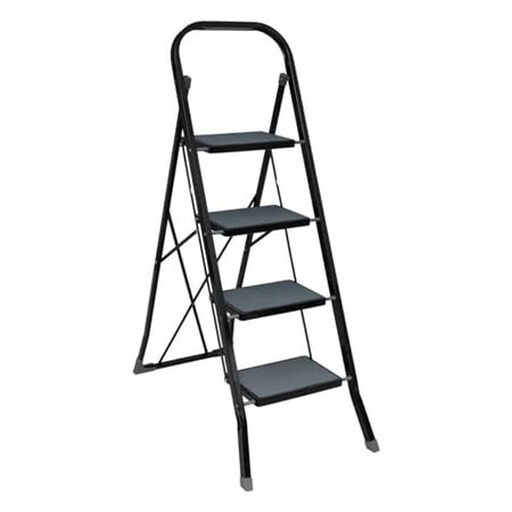
Why this product suits this profile: Four steps and a safety rail are designed for household tasks that require greater reach.
The product details list a secure locking mechanism, as well as anti-slip steps and feet. You should still check the lock before use.
Four steps, 150 kg maximum load, steel frame, handrail and stated folded dimensions of 84,5 × 46,5 cm.
We’ve put together a complete, regularly updated list of products that meet these strict selection criteria and fully comply with the safety regulations in force in the EU.
Place the step stool on a flat, dry surface with good grip. Unfold it fully and check that the locking mechanism is engaged. Face the step stool when climbing up or down. Don’t lean out to the side, and never exceed the stated load limit.
There’s no single answer, as its lifespan depends on how often it’s used, the load it carries, how it’s stored and how well it’s maintained. Before each use, check the joints, rivets, steps, lock and rubber feet. Don’t use the step stool if any parts are loose, damaged or missing.
A household stepladder generally has no running costs. However, you may need to pay for replacement parts if the manufacturer supplies them. Regular visual checks and dry storage can help you spot wear on metal parts, joints and rubber feet early.