Hosts serving a cheese board
You want to cut several even slices of firmer cheese and are particularly concerned with choosing a suitable blade and adjusting the slice thickness.


For hard cheese, an electric food slicer with a serrated blade specifically suited to the job and an adjustable slice thickness is a sensible starting point; Graef explicitly says its SKS100 is suitable for harder cheese. Also compare the food carriage and finger guard, how easy the parts that come into contact with cheese are to clean, and how much space the slicer takes up. A second smooth blade is mainly worth considering if you also want to slice very thin cuts of meat.
You want to cut several even slices of firmer cheese and are particularly concerned with choosing a suitable blade and adjusting the slice thickness.
When portioning cheese down to the last piece, you want a food carriage that moves smoothly, a finger guard and safe operation.
You want to set the slicer up compactly or put it away between meals, and be able to clean it easily after use.
| What you need | What to check before buying | Who cares most about it? |
|---|---|---|
| Even slices of cheese | Check whether the blade supplied is specifically suitable for firmer cheese and whether you can adjust the slice thickness. | If I need even slices of hard cheese for a get-together, I check the blade and slice thickness first. Around 36% of consumers say this is their top priority. |
| Safe handling | Check the food holder, finger guard, stability and the operating instructions for the specific model. | When handling smaller pieces, I want to guide the food safely and take the finger guard into account. Around 29% of consumers put safe handling first. |
| Cleaning up after your meal | Check which blade, cover and support can be removed, and what the instructions say about cleaning them. | After slicing several portions, I want to be able to reach the parts that come into contact with cheese and clean them according to the instructions. Around 21% of consumers put ease of cleaning first. |
| Space and other foods | Compare the size of the appliance with your available worktop space, and check exactly which blades are included. | If I want to put the slicer away after a meal or use it for other foods too, I consider its design and accessories. Around 14% of consumers prioritise storage space or versatility. |
Manufacturers distinguish between serrated blades, which are suited to harder or varied foods, and smooth blades, which are generally described as suitable for thin cuts of meat or softer foods.
First, check whether the blade actually supplied is suitable for the cheese you want to slice. Then decide whether an additional blade is useful for the other foods you plan to cut.
The stated range in millimetres doesn’t, by itself, tell you how easy it is to guide a particular piece of cheese or handle small leftovers.
Compare the food carriage, food holder, finger guard, stability and the dimensions of the appliance too.
Severin does not list a repair service for the AS 3917. This is separate from your statutory rights against the seller if goods are faulty. Your Europe explains that an additional commercial guarantee does not replace those rights.
Check the guarantee terms and service information separately. If there is a fault, contact the seller about your statutory rights.
Worth considering for models specifically stated to be suitable for firmer cheese, and for appliances supplied with an additional smooth blade.
Worth considering when comparing adjustable slice thickness, finger guards and removable parts.
Worth considering if you’re weighing up a serrated blade for a range of foods against a smooth blade for cold cuts.
The AS 2958 is worth considering if you need a folding option for occasional use and have limited storage space.
These electric food slicers are worth considering for portioning cheese. Compare the slice thickness, how the food is guided and how easy the appliance is to clean.
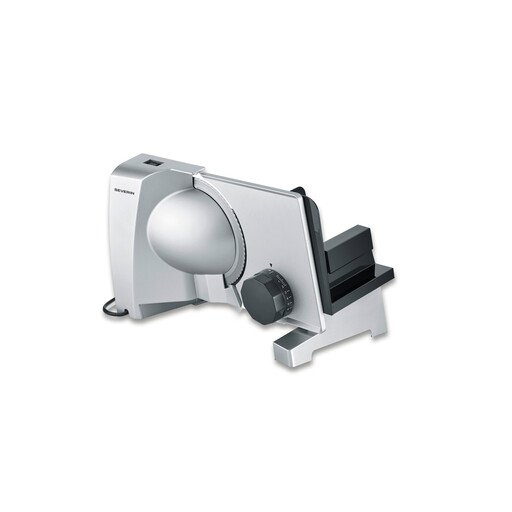 No image available
For portioning cheese when you want to adjust the slice thickness and remove the blade and support for cleaning.
Severin lists an adjustable slice thickness of 0 to 23 mm, as well as a removable blade and support. The manufacturer does not list a repair service for this model.
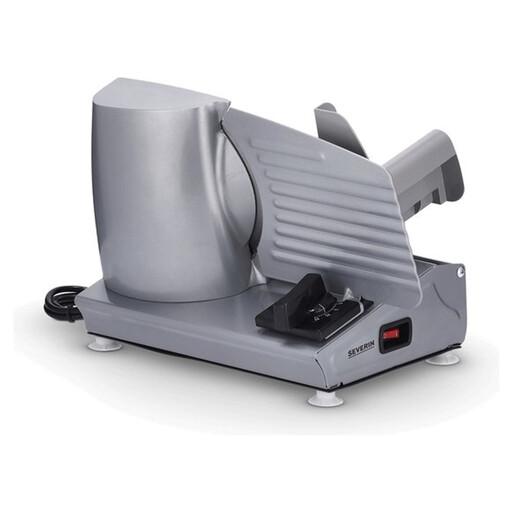 No image available
An option if adjustable slice thickness and a finger guard are important to you when portioning food. Check whether the blade is suitable for the hard cheese you want to slice.
Severin lists a slice thickness of 0 to 15 mm, metal parts and a finger guard for this model.
No. Graef specifically says the serrated blade supplied with the SKS100 is suitable for harder cheese. Graef and ritter describe smooth blades as being mainly for thin cuts of meat or soft foods, so check the details for the specific appliance.
Read the instructions and use the safety and guiding parts provided. Unplug the appliance before taking it apart or cleaning it; ritter specifically recommends this precaution for the E 18. Clean kitchen utensils that come into contact with food between uses.
If you buy from a business seller in the EU, your statutory rights if the goods are faulty are against the seller. The Your Europe consumer information site states that you have at least two years from receiving the goods; an additional commercial guarantee does not replace these rights. A repair service provided by the manufacturer is a separate matter.
EU rules on food-contact materials apply to materials intended to come into contact with cheese. The European Commission lists, among other things, Regulation (EC) No 1935/2004. Depending on the design, relevant EU requirements for electrical appliances may also apply. Any required CE marking is a declaration by the manufacturer, not an independent quality mark. These general rules do not automatically confirm that a specific product listing is compliant.