
Lieferung heute & morgen

Qualitätsgarantie

Willkommens-Angebote freischalten: KOSTENLOSE Lieferung | Bis zu 80 % RABATT | Kostenlose 30-Tage-JoyPlus-Testphase
App herunterladen
Freezer bags are a staple in many British households. They help you portion food, make flexible use of your freezer space, and keep your supplies neatly organised. Yet not every purchase delivers the right result. All too often, shoppers pick the wrong size, an impractical closure, or a film thickness that doesn't suit the contents.
This buying guide explains what matters when choosing freezer bags for food, and which option might suit your home, meal prep, catering or professional kitchen.
A 6L freezer bag offers plenty of space, but it's often overkill for small portions. When you freeze only a small amount, more air remains inside a large bag. For single portions, berries or leftovers, 1L freezer bags are usually handier. Medium sizes like 2L freezer bags or 3L freezer bags often work better for family portions and meal prep.
A bag can have a sturdy closure and still leak if it's overfilled, damaged or not sealed properly. Liquid foods should be cooled before freezing. It's also wise to leave enough room at the top, because water expands when it freezes. For soups, marinades or sauces, freezer bags with a double seal are a practical choice.
A freezer bag with a label panel makes it easier to mark the contents and date. For reliable stock rotation, though, the details need to be legible and permanent. That way, you can tell similar foods apart and use older portions first.
The litre measurement is a useful starting point, but the actual dimensions matter just as much for bulky foods. Here's a quick guide:
Before you buy, check whether the bags will fit your freezer drawers. A wide bag can make filling easier, but it may need more shelf space.
Re-sealable freezer bags with a zip can be opened and closed again after filling. A slider closure can be more convenient for frequent use. With liquid contents, it's important to seal the closure carefully across the full width.
A double seal has two closing lines. This can offer extra security against liquid escaping, but it doesn't replace correct filling and sealing. Stand-up bags stay upright when you fill them and can be more practical in a cluttered freezer.
For solid or sharp-edged foods, extra-strong freezer bags with tear-resistant film are a sensible choice. Multi-layer films can offer greater resistance to tearing. For products labelled BPA-free, the claim should be verifiable on the packaging or product page.
Temperature ranges also need attention. Some models are designed for low temperatures down to around -40 °C. That doesn't automatically mean they're suitable for ovens, hobs, grills or direct heat. A freezer bag should only be used according to its specific instructions.
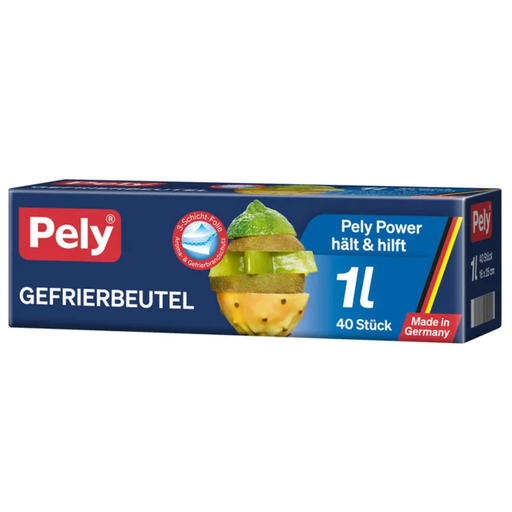
Why this product fits the profile: The 1-litre size is ideal for everyday portions. 40 bags give you a manageable pack size for households that want to try different uses first.
The stated size prevents small amounts of food from taking up unnecessary space. The label panel supports organised stock management.
1 litre capacity, 16 × 25 cm, three-layer BPA-free film and temperature resistance down to -40 °C according to product specifications.
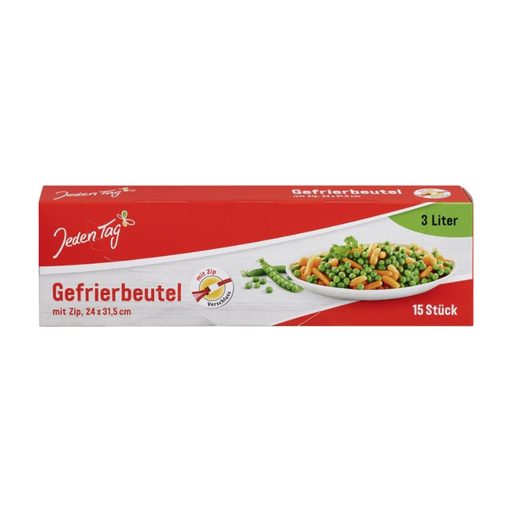
Why this product fits the profile: The zip closure and 3-litre capacity are designed for family portions, meal prep and storing larger quantities of ingredients.
The re-sealable slider closure reduces the risk of a bag being only partially closed. The integrated panel helps you label the contents and date.
3 litre volume, transparent film, zip closure, food storage down to -40 °C according to the product description and a maximum load of 3 kg according to the manufacturer.
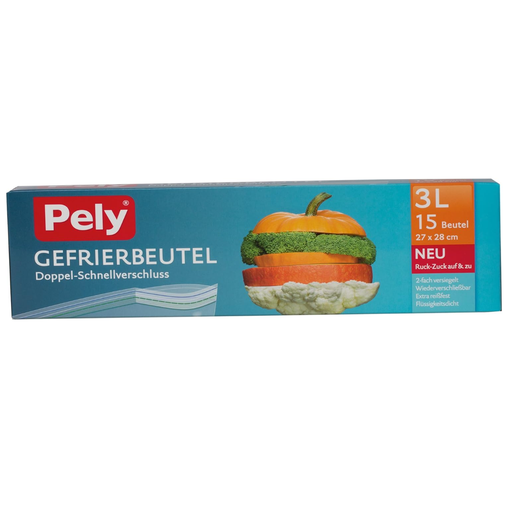
Why this product fits the profile: This model is aimed at users who regularly prepare liquids, marinades, soups or larger quantities and prefer a double seal.
Two closing lines provide an extra sealing barrier. When used correctly, this reduces the risk of leaks, provided the bag isn't overfilled.
3 litre volume, extra-strong PE film, double seal and label panel according to product specifications.
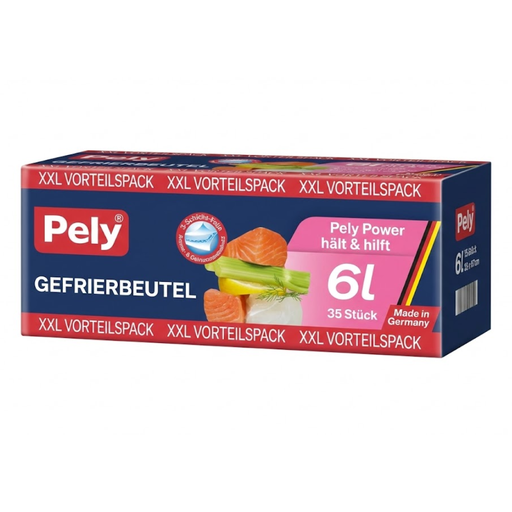
Why this product fits the profile: The 6-litre size and bulk pack of 35 bags are ideal for large supplies, big baked goods, cuts of meat or seasonal quantities of food.
The wide opening makes it easier to fill in bulky foods. A label panel helps you identify the contents of a large frozen stock.
6 litre capacity, 29 × 44 cm, three-layer film and BPA-free material according to the product description.
For neat and safe storage, a few simple steps help:
Freezer bags are not usually intended for ovens, hobs, grills or open flames. Use in a microwave is only allowed if it's explicitly stated on the product packaging. Plastic bags must also be kept away from babies and children, as they pose a suffocation risk.
For small portions and leftovers, a 1L freezer bag is often enough. Two- to three-litre models are good for meals, larger portions of vegetables and meal prep. For bulky foods, 4L or 6L freezer bags are more practical.
A zip bag can be opened and closed again. Whether it should be reused depends on its condition and what was in it before. Don't use the same bags for raw and cooked foods without thorough cleaning. Damaged or heavily soiled bags should be thrown away.
There's no fixed shelf life that applies to all bags. Temperature, film thickness, contents and mechanical stress all affect how long they last. The temperature limit stated on the packaging should be observed. If you notice cracks, brittle film or a damaged seal, don't use the bag any longer.