
Lieferung heute & morgen

Qualitätsgarantie

Willkommens-Angebote freischalten: KOSTENLOSE Lieferung | Bis zu 80 % RABATT | Kostenlose 30-Tage-JoyPlus-Testphase
App herunterladen
By Joybuy Product Recommendation Officer, July 28, 2026
A successful hot pot experience lives and dies by the quality of its meat. But anyone who has tried to buy the right hot pot beef knows the challenges: the selection is vast, the labels are often unclear, and the result in the pot can be disappointing. To help you make the best choice, we've summarised the essential criteria and will show you how to avoid common purchasing mistakes.
A frequent problem is meat that either falls apart immediately or becomes tough during the brief cooking time in the broth. This is often due to the wrong slice thickness or an unsuitable cut of meat. Another annoyance is vague product descriptions that use terms like "premium" without providing objective criteria, such as the exact cut or origin. This can lead to you quickly putting a product in your cart that is completely unsuited for the rapid cooking method of hot pot.
To ensure your next hot pot night is a culinary success, you should pay attention to three key features. These parameters are crucial for texture, flavour, and an authentic experience.
Not every part of the cow is suitable for hot pot. For the characteristically tender texture achieved after just a few seconds in the hot broth, well-marbled cuts are essential. The fine intramuscular fat (marbling) melts during cooking, making the meat juicy and giving it an intense flavour.
Pay close attention to the exact name of the cut on the packaging. General terms like "Beef for Hot Pot" often give no real indication of the actual quality.
The thickness of the meat slices is just as important for a successful hot pot as the cut itself. The ideal is thinly sliced beef with a thickness of 1 to 2 millimetres.
Meat that is cut too thick takes longer to cook and tends to become tough. Slices that are too thin or uneven, on the other hand, can easily fall apart.
Many fans of Asian cuisine deliberately choose to buy Asian meat online, especially in frozen form. Professionally processed, flash-frozen beef offers several advantages:
When purchasing, look for a clean, unbroken cold chain and packaging where the slices are neatly arranged and can be removed individually.
To make your choice easier, we have identified a few products that are suitable for different user profiles.
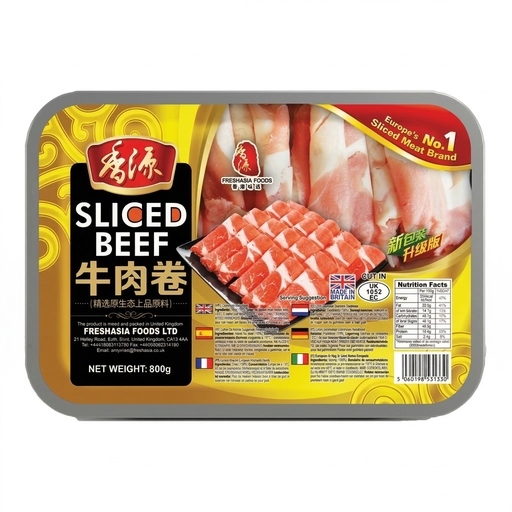
Why This Fits Their Persona: Ideal for beginners or large groups. The 800g bulk pack offers great value for money, and the uniformly cut slices are versatile, not just for hot pot but also for quick stir-fry dishes.
The machine-cut, uniform slices prevent the meat from falling apart during cooking, a common problem with unprofessionally prepared meat.
Even fat distribution for a tender bite; the slices are neatly arranged and easy to separate.
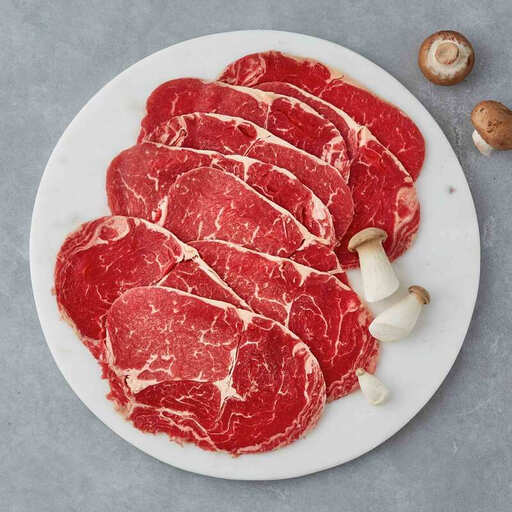
Why This Fits Their Persona: For those who value the ultimate culinary experience. Rib-eye is a famously tender and flavourful cut. The precise 1.2 mm thickness is tailored for the perfect hot pot experience.
The clear declaration as rib-eye with a precise thickness of 1.2 mm eliminates the uncertainty that comes with vague "premium" labels.
Consists of 100% beef (rib-eye) and offers exceptional tenderness and a rich flavour thanks to its fine marbling.
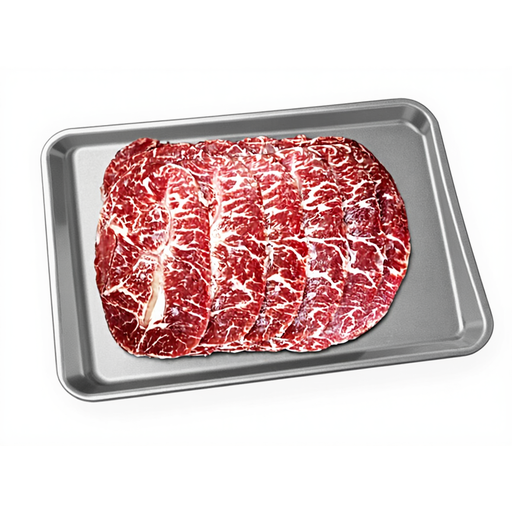
Why This Fits Their Persona: This product is explicitly designated for sukiyaki and hot pot. The 2 mm thickness is ideal for the Japanese preparation method, where the meat is briefly seared in the pan and then simmered in the sauce.
The specific product name "Sukiyaki Hotpot" and the specification of beef chuck with a 2 mm thickness provide clarity and prevent you from buying meat that is too thin for this application.
Offers a robust meat flavour that pairs well with the sweet and savoury sauces of sukiyaki; the thickness provides a satisfying bite.
We've compiled a complete, up-to-date list of products that fully meet these strict selection criteria and German safety regulations.
1. How long does beef need to cook in a hot pot? Thinly sliced hot pot beef (approx. 1-2 mm) cooks extremely quickly. Hold a slice in the boiling broth with your chopsticks. As soon as the meat loses its red colour and turns greyish-brown, which usually takes only 10 to 20 seconds, it's ready. Cooking it any longer will make the meat tough.
2. Can you use any beef for hot pot? Theoretically, yes, but the results will vary greatly. Lean meats like fillet or cuts from the round will quickly become dry and tough with the short cooking time. For a tender and juicy result, well-marbled cuts like rib-eye or beef chuck are a much better choice.
3. How can I identify good quality frozen hot pot meat? Look for a bright to dark red colour in the meat. The slices should be of uniform thickness and have visible, fine marbling. The packaging should be undamaged and free of ice crystals inside, as this could indicate a break in the cold chain. A clear label with information about the cut, origin, and best-before date is also a good sign.