
Lieferung heute & morgen

Qualitätsgarantie

Willkommens-Angebote freischalten: KOSTENLOSE Lieferung | Bis zu 80 % RABATT | Kostenlose 30-Tage-JoyPlus-Testphase
App herunterladen
A heat pump tumble dryer can save households a great deal of time – especially for families, working people and anyone who regularly has large amounts of laundry to dry. However, choosing the right model is often more complicated than it first appears. If you focus only on the energy efficiency class or a long list of programmes, you may overlook important details relating to capacity, maintenance and genuine ease of use.
As a Joybuy Product Recommendation Officer, I filter the relevant information and assess it for different household profiles. This makes it easier to identify which heat pump tumble dryer best suits your needs.
The energy efficiency class is an important reference point, but it is not the only figure that matters. The stated consumption is also crucial, for example in kilowatt-hours per 100 drying cycles. A model with a larger capacity may use more energy per cycle, but it could also accommodate a complete family-sized load.
You should therefore check:
An 8 kg heat pump tumble dryer is suitable for many households. However, this does not mean that every programme should be loaded with 8 kg. Easy-care, delicates and specialist programmes often have lower load limits.
A 9 kg heat pump tumble dryer offers more flexibility for bed linen, towels and larger laundry baskets. The appliance dimensions are also important: standard widths are usually around 60 cm, while the depth can be considerably greater when the door is open.
A tumble dryer with sensor drying measures moisture levels and ends the programme once the selected dryness level has been reached. This can prevent the appliance from running unnecessarily. However, automatic sensor drying does not replace cleaning the fluff filter.
Look out for:
A tumble dryer with app control is not automatically more convenient either. This feature is particularly useful if you want to check status notifications, schedule start times or use additional programmes remotely.
A heat pump tumble dryer uses a recirculated warm-air system and typically dries at lower temperatures than traditional vented or condenser tumble dryers. This can reduce energy consumption and the thermal stress placed on fabrics. However, actual performance depends on the load, programme, residual moisture in the laundry and the appliance’s maintenance condition.
The consumption figures for different models are not always directly comparable if they are based on different test programmes or capacities. Use the energy label and the manufacturer’s specifications together when making your decision.
A tumble dryer with sensor drying monitors residual moisture. This is practical for cottons, mixed fabrics and everyday textiles. For individual garments or very small loads, however, a timed programme may be more suitable.
If you frequently dry shirts, bed linen or sportswear, you should also look for programmes such as Easy Care, Bed Linen, Outdoor or a quick programme.
A quiet tumble dryer is particularly important if the appliance is installed in a flat, near a bedroom or in an open-plan utility area. Figures such as 61 or 64 dB provide objective points of comparison, but they do not alone indicate how disruptive an appliance will feel in everyday use. The flooring, distance from the wall and the spin noise of the washing machine can also affect the perceived noise level.
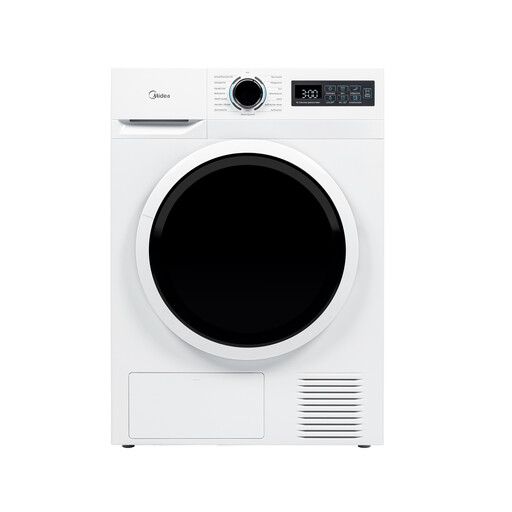
Why this product suits the profile: With an 8 kg capacity, 15 programmes and an LED display, this model is designed for households looking for a straightforward set of essential features.
Sensor drying and the double fluff filter help prevent unnecessarily long running times and regular fluff build-up.
15 programmes, drum lighting, anti-crease function and child lock; according to the product specifications, annual consumption is 142 kWh.
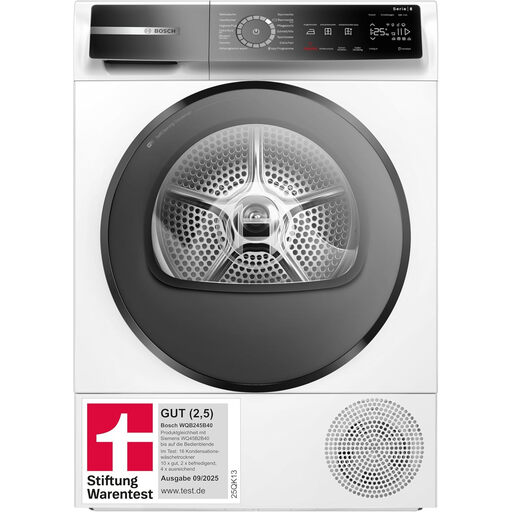
Why this product suits the profile: The 9 kg drum, AutoDry, Home Connect and stated operating noise level of 61 dB make this a good fit for demanding family households.
The moisture sensor, self-cleaning condenser and reversing drum help reduce typical maintenance and tangling problems.
9 kg capacity, 40-minute quick programme, 120 minutes of anti-crease protection and condensation drainage with hose.
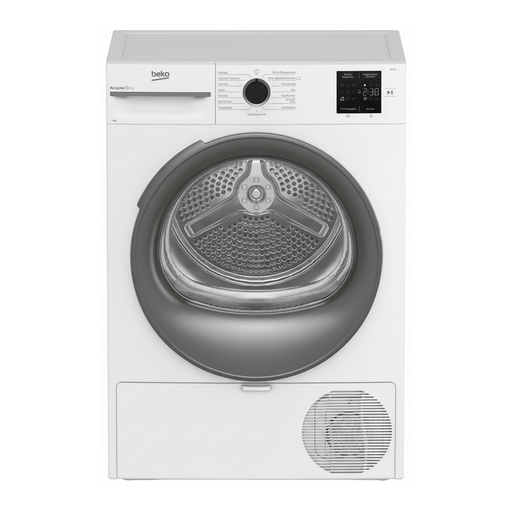
Why this product suits the profile: Households that regularly dry different types of fabric can benefit from programmes for towels, outdoor clothing, bed linen, jeans and hygiene.
The wide range of programmes prevents delicate or specialist fabrics from being treated indiscriminately with a standard programme.
8 kg capacity, 15 programmes, Hygiene Drying, Hygiene Refresh and a delay start of up to 24 hours.
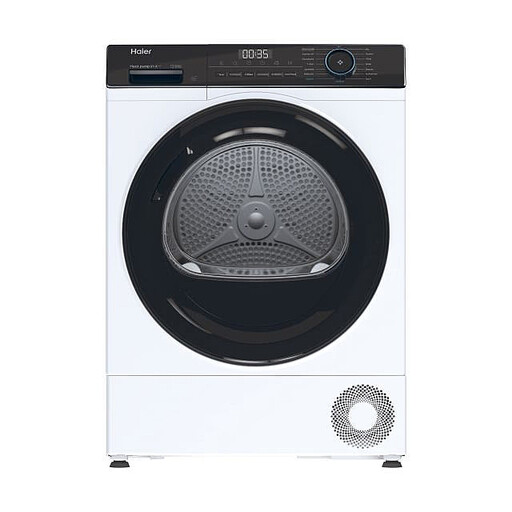
Why this product suits the profile: The combination of a 9 kg capacity, smartphone control, 15 programmes and the i-Refresh steam programme is designed for busy households.
Direct condensation drainage and an easy-to-clean 3-in-1 filter help reduce the need for frequent emptying and unnecessary maintenance.
9 kg capacity, delay start, external drainage with hose and app control according to the product description.
We have put together a complete, regularly updated list of products that fully meet these strict selection criteria and the safety regulations applicable in the EU.
Running costs depend on the electricity price, consumption per cycle, load size and selected programme. A simple calculation is:
Consumption per 100 cycles ÷ 100 × electricity price × number of cycles
Where possible, use automatic drying and spin the laundry at a suitable speed beforehand. A clean fluff filter improves airflow. Appliances with a condensation tank should be emptied regularly; direct drainage can reduce the effort involved in everyday use.
Correct loading, regular filter maintenance, unobstructed ventilation areas and compliance with the operating instructions are all essential for a long service life. Only dry textiles that are suitable for tumble drying according to their care labels. Oil, solvents, rubber or foam components may pose a safety risk.
Consumption varies depending on the model, load and programme. The figure shown in kWh per 100 cycles on the EU energy label provides a useful basis for comparison. For a realistic estimate, multiply this figure by your expected usage and current electricity tariff.
8 kg is often suitable for small and medium-sized households. 9 kg provides more space for family laundry, bed linen and towels. However, a larger drum only makes sense if you regularly dry correspondingly large loads and have enough space for the appliance.
It is not possible to guarantee a fixed service life reliably. Among other factors, it depends on how intensively the appliance is used, maintenance, installation location and build quality. Clean the fluff filter after every cycle, follow the care instructions and have any unusual noises or error messages checked by a qualified professional.