
Lieferung heute & morgen

Qualitätsgarantie

Willkommens-Angebote freischalten: KOSTENLOSE Lieferung | Bis zu 80 % RABATT | Kostenlose 30-Tage-JoyPlus-Testphase
App herunterladen
At first glance, a hole punch may seem like a simple hand tool. In practice, however, the hole diameter, material thickness, mechanism and ease of use all determine whether you get a clean hole or damage your workpiece. A leather hole punch for belts has different requirements from an office hole punch for paper or a craft punch for scrapbooking.
A revolving hole punch with several punches sounds versatile. What matters, though, is whether the punches lock securely into place and whether you can adjust the distance between the hole and the edge of the material. Without this adjustment, it’s easy to end up with uneven rows of holes in belts or straps.
Not every leather hole punch is automatically suitable for plastic, canvas or thick fabrics. Thin sheet metal or hard materials can deform the punches. So look for specific information about which materials the tool is suitable for. If you’re working with a delicate piece, test the punch on a scrap first.
A coated or rubberised handle on its own tells you little about how much effort the tool requires. If you’ll be punching holes frequently, look for a return spring, suitable leverage and a sturdy pivot point. For occasional jobs, a compact design may be more important than a complex mechanism.
First, think about which hole sizes you actually need. A six-hole punch can offer several diameters, while a single-hole punch has just one fixed size. For leatherwork, diameters of a few millimetres are common; for paper projects, precise positioning is often more important than having lots of sizes to choose from.
On a revolving hole punch, the punches should be clearly marked and easy to access. Also check whether replacement parts are available or the tool can be adjusted.
Stainless steel or coated steel can be a good choice for regular use. Look for specific design features to support the material claim, such as a V-shaped needle, a brass base plate or a hardened punch.
A V-shaped needle can create a clean, defined cut in suitable materials. However, it’s no substitute for accurate positioning and a stable surface. Make sure the hole punch is explicitly approved for leather, fabric and plastic. Paper is generally best handled with an office hole punch or paper punch.
An adjustable side guide is useful for creating evenly spaced rows of holes. It controls how far each hole sits from the edge of the material. You should also place your workpiece on a suitable, stable surface. Hard surfaces can damage the cutting tip.
For scrapbooking and card making, metal cutting dies and a compatible die-cutting machine are often more suitable than a traditional hole punch. They create decorative outlines and designs in paper, rather than punching individual round holes.
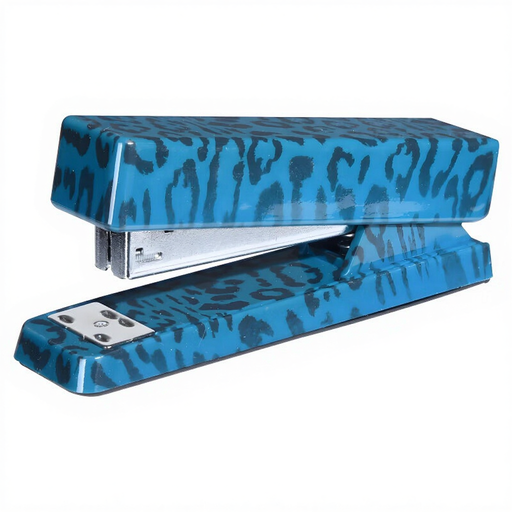
Why it suits this user: This compact hole punch is designed for office tasks, paper projects and simple craft activities. It’s a good choice if you only need to punch documents or lightweight materials occasionally.
It’s clearly intended for paper, documents and light craft work. That helps prevent you from mistakenly using an office tool on thick leather.
PV material box and a design suited to everyday office and craft tasks.
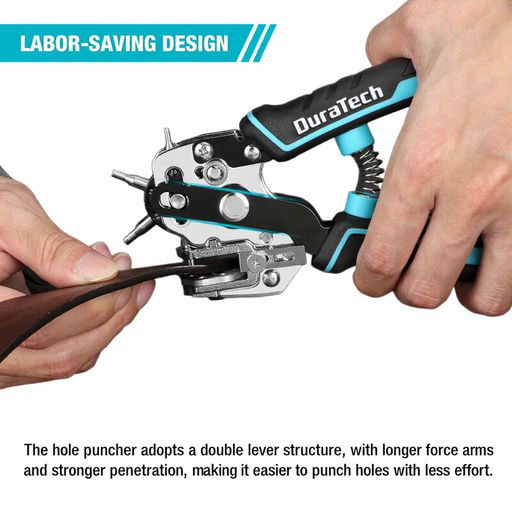
Why it suits this user: This leather hole punch combines six hole sizes with an adjustable side guide and a rotating punch. It’s well suited to leatherwork, belt adjustments and regular DIY jobs.
The product details specify the stainless steel construction, six hole sizes and adjustable distance from the edge. These key buying criteria are clearly explained.
Stainless steel construction, V-shaped needle, rotating punch and spring-assisted mechanism.
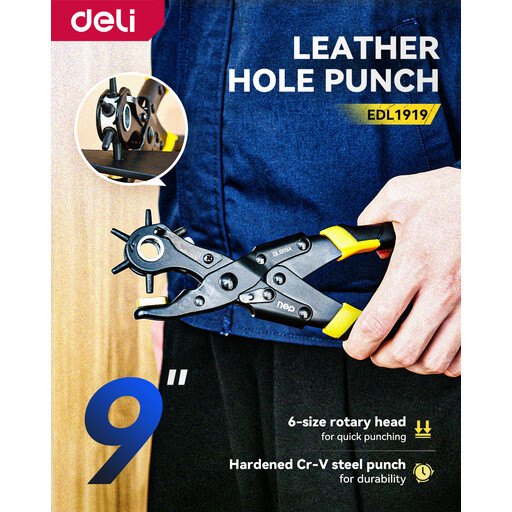
Why it suits this user: With six punches measuring 2 to 4.5 mm in diameter and a double-lever mechanism, this tool is designed for people who need different hole sizes and use their punch regularly.
The hole sizes are listed clearly. The product information also highlights how to secure the punch head and the need to use a stable work surface.
Six interchangeable sizes, padded handles and a double-lever mechanism, according to the product description.
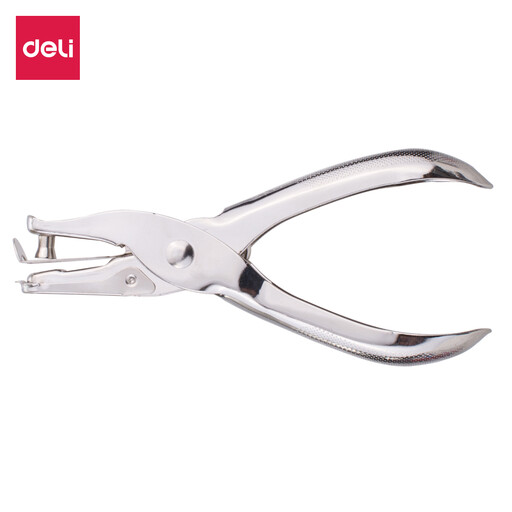
Why it suits this user: This single-hole punch is designed for paper and everyday office or school use. It’s a good alternative to a leather hole punch when you only need to punch individual holes in paper.
The intended material, paper, is clearly specified. This helps prevent the tool from being overstretched by leather, plastic or thick fabrics.
Single-hole design for punching individual holes in paper and documents.
We’ve put together a complete, regularly updated list of products that meet these strict selection criteria and fully comply with the safety regulations in force in the EU.
For paper decorations, scrapbooking dies, metal cutting dies or decorative cutting dies are often a better choice than a round hole punch. Before buying, check whether you need a manual or machine-compatible die, and whether the package includes just the cutting die or a die-cutting machine as well.
For leather, look for models with suitable punches, an adjustable edge guide and a sturdy lever mechanism. A leather hole punch shouldn’t be confused with an office hole punch, which is primarily designed for paper.
How long it lasts depends on the material, how heavily it’s used, how well it’s maintained and the condition of the punches. Use the tool only on approved materials, remove any residue and replace damaged or blunt punches.
As well as the purchase price, you may need to pay for replacement punches, maintenance oil or consumables. If you’ll be using it frequently, check which spare parts are available and how many hole sizes are included.