
Lieferung heute & morgen

Qualitätsgarantie

Willkommens-Angebote freischalten: KOSTENLOSE Lieferung | Bis zu 80 % RABATT | Kostenlose 30-Tage-JoyPlus-Testphase
App herunterladen
A dead car battery or a flat tire usually happens when you least expect it. A multifunctional jump starter with compressor seems like the ideal solution for your glove compartment. However, the market is flooded with devices whose advertised performance specs often fail to deliver in practice. Before you make a purchase, it's crucial to understand the common pitfalls that can render a supposed roadside emergency kit useless.
As your Joybuy Product Recommendation Officer, I'll help you objectively evaluate technical data and make an informed choice that prioritizes safety and longevity.
Many devices promise more than they can deliver. Pay close attention to these three points to avoid a bad investment:
To find a reliable device, you should focus on the technical facts that are relevant for real-world use.
The choice of battery is the most critical decision. While lithium batteries are common, the sodium-ion battery represents a more technologically advanced alternative for automotive applications.
Check the manufacturer's specifications carefully. A good 12V jump starter should specify not only the peak current but also the cranking current, or at least be rated for specific engine sizes (e.g., "up to 8L Gas / 6L Diesel"). For the compressor, in addition to the maximum pressure (in PSI or Bar), the air flow rate (in liters per minute) is an indicator of the actual inflation speed.
Here are some recommendations tailored to different user needs that avoid the pitfalls mentioned.
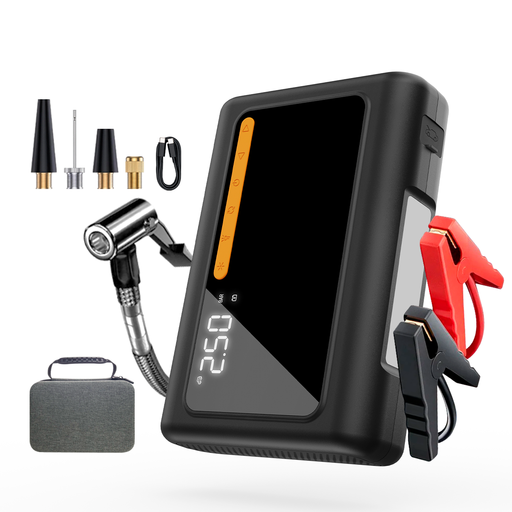
Why This Fits Their Persona: Ideal for drivers who demand maximum safety and reliability in extreme temperatures and want to leave the device in their car permanently. The maintenance-free technology offers long-term peace of mind.
It sidesteps the pitfall of unsuitable battery technology by using a sodium-ion battery. This is intrinsically safe, extremely temperature-resistant (-40°C to 80°C), and durable.
According to the manufacturer, it offers up to 5 years of standby time per charge and a cycle life of ≥ 6,000. Integrated 150 PSI compressor for flat tires.
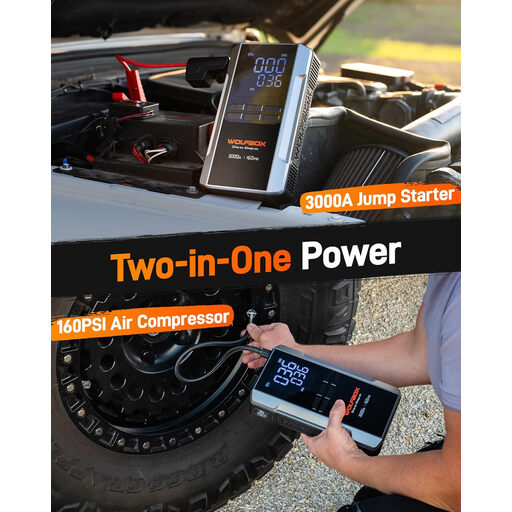
Why This Fits Their Persona: For drivers of standard cars and SUVs who need a reliable 2-in-1 solution for the most common breakdowns (battery and tires). A balanced blend of performance and functionality.
Avoids the underpowered compressor trap with an integrated 160 PSI unit designed for car tires. The 3000A peak current is sufficiently rated for common engines up to 8L Gas/6L Diesel.
Combines a powerful car jump starter with a useful tire inflator in a compact unit. The 65W fast-charging feature ensures the device itself is quickly ready for use again.
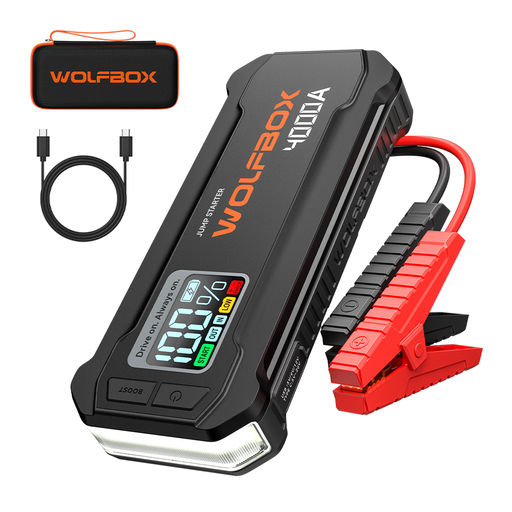
Why This Fits Their Persona: Designed for drivers of large SUVs, RVs, vans, or vehicles with large-displacement diesel engines who need maximum starting power and can do without a compressor.
Evades the "inflated peak current" trap by offering a high power rating that, according to the manufacturer, is designed for engines up to 10L displacement (gas and diesel). It focuses on a single core function: maximum starting power.
High peak current of 4000A for reliably starting large engines. The large 88.8Wh battery capacity also serves as a powerful jump starter power bank for laptops and other devices.
We have compiled a complete, up-to-date list of products that fully meet these strict selection criteria and relevant safety standards.
This largely depends on the battery technology used. Conventional devices with lithium batteries have a higher self-discharge rate and should be checked and recharged every 2 to 3 months to ensure they are ready for use. Models with a sodium-ion battery have an extremely low self-discharge rate. According to manufacturer specifications, these devices can hold a charge for several years, significantly reducing maintenance.
Yes, most modern jump starters are designed for 12-volt systems, which are used in cars, SUVs, and most light commercial vehicles (including diesels). However, the crucial factor is whether the device's power is sufficient for your engine. Due to their higher compression, diesel engines require a significantly stronger cranking current than gasoline engines of a comparable size, especially in cold temperatures. Therefore, always check the manufacturer's specifications for the maximum recommended engine size (e.g., "suitable for up to 6.0L Diesel").