
Lieferung heute & morgen

Qualitätsgarantie

Willkommens-Angebote freischalten: KOSTENLOSE Lieferung | Bis zu 80 % RABATT | Kostenlose 30-Tage-JoyPlus-Testphase
App herunterladen
A good pair of kitchen scissors is an indispensable tool in any household. It cuts herbs, opens packaging, divides pizza, and can even stand in for heavy-duty poultry shears. However, the market is flooded with models whose quality often deteriorates after just a few weeks or months. As a Joybuy Product Recommendation Officer, I analyse product data to help you make an informed decision and avoid common buying traps.
Many buyers get frustrated with scissors that quickly become dull, rust, or wobble at the joint. These issues can often be traced back to three fundamental flaws in design and material that manufacturers rarely disclose.
To avoid a bad purchase, you should pay attention to a few core technical features. These determine the durability, functionality, and safety of your new kitchen scissors.
The quality of a pair of scissors is entirely dependent on the steel used. Look for precise specifications about the material.
The design determines how practical and durable a pair of scissors is in daily use.
Good kitchen scissors should feel secure and comfortable in your hand. Handles made of soft plastic or with silicone inserts offer more comfort than those made of hard plastic or metal, especially for long or strenuous tasks. Some models, like the Tefal Ice Force, are also equally suitable for both left- and right-handed users.
Based on these objective criteria, we have compiled a few products for different user profiles.
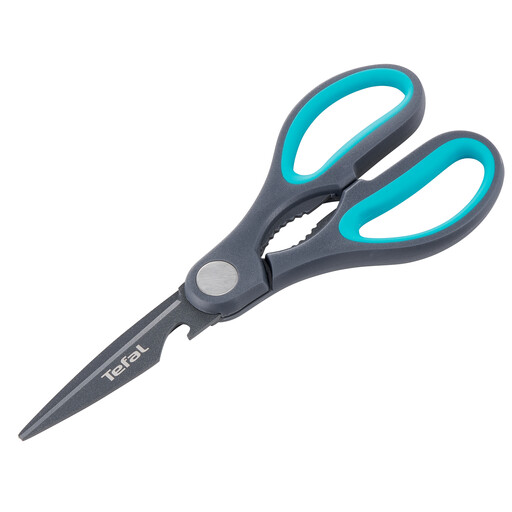
Why This Fits Their Persona: A practical solution for daily kitchen use that combines multiple tools in one and offers great value for the general household.
The stainless steel blades with a titanium-reinforced non-stick coating are more resistant to rust and food residue than basic models. The design is engineered for durability in everyday use.
Integrates a bottle opener and nutcracker; ergonomic soft-touch handles for comfortable handling; dishwasher-safe for easy cleaning.
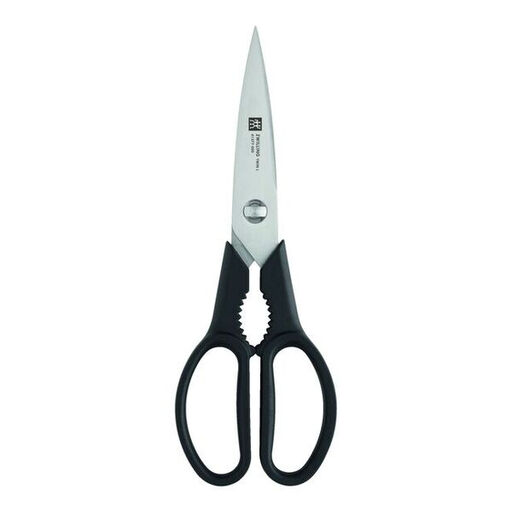
Why This Fits Their Persona: For chefs who value precision, durability, and proven brand quality. A reliable tool that maintains its performance even with frequent use.
The construction from Zwilling's proprietary stainless special steel and the sturdy riveting of the joint prevent the typical problems of rust and wobbling. The fibreglass-reinforced handles are break-proof and durable.
Precision-ground blades for clean cuts; integrated twist-cap opener in the handle; lightweight and ergonomic design for fatigue-free work.
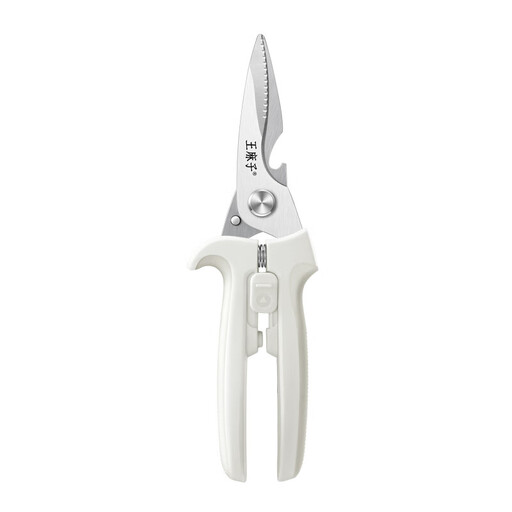
Why This Fits Their Persona: Specifically for users who regularly break down poultry and need robust poultry shears that cut effortlessly through skin, cartilage, and smaller bones.
The solid construction and use of hard 40Cr13 stainless steel counteract the problem of a loose joint and dull blades under heavy strain. The spring-assisted mechanism ensures the necessary power transfer.
Spring-assisted design for high cutting power; soft handles for comfort and a secure grip; specifically designed for breaking down chicken bones and carving.
We have compiled a complete, up-to-date list of products that fully meet these strict selection criteria and all relevant safety standards.
1. Are take-apart kitchen scissors really more hygienic? Yes. With take-apart scissors, you can completely separate the blades. This allows for thorough cleaning and drying of the joint area, where bacteria and rust can otherwise easily form. For households where raw meat or fish is handled, this is a significant advantage for food safety.
2. How do you sharpen kitchen scissors correctly? Special scissor sharpeners or a honing steel are suitable for sharpening kitchen scissors. Guide the blade over the sharpener several times at a shallow angle (approx. 10-20 degrees). It's important to only work on the bevelled edge of the blade. The process is easier with take-apart scissors, as each blade can be sharpened individually. With high-quality models, resharpening is often only rarely necessary.
3. Can I use poultry shears for other tasks? A pair of poultry shears is primarily optimised for cutting poultry and bones. However, due to their robust construction and sharp blades, they can also be used for other demanding tasks in the kitchen and home, such as cutting thick cardboard or tough materials. For delicate jobs like chopping herbs, they are generally less suitable due to their size and power.