
Lieferung heute & morgen

Qualitätsgarantie

Willkommens-Angebote freischalten: KOSTENLOSE Lieferung | Bis zu 80 % RABATT | Kostenlose 30-Tage-JoyPlus-Testphase
App herunterladen
Konjac jelly, often called a jelly drink, has quickly evolved from a niche product to a popular low-calorie snack in the UK. These treats, originating from Asia, offer a fruity refreshment in convenient portions. However, the growing selection also brings uncertainty. Many consumers find that after their purchase, the product doesn't meet their expectations—whether due to an artificial taste, unexpectedly high calorie counts, or an unsuitable consistency.
As your Joybuy Product Recommendation Officer, I'll help you identify the common pitfalls and make an informed decision. We will focus on the objective facts so you can find the exact product that fits your needs.
Before you buy your next fruit jelly, you should be aware of these three common issues that often lead to disappointment:
To avoid these mistakes, you should check three core parameters before purchasing. You can find this information directly on the product packaging or in the online product description.
A key indicator of quality and taste is the percentage of real fruit juice or fruit purée. Products with a fruit juice content of 15% or more typically offer a more authentic and less artificial flavour experience. Some products, especially those considered premium, even have levels of 40% or more. Pay attention to the exact details in the ingredients list to avoid being deceived by mere flavourings.
The nutrition facts table is your most important tool for avoiding the "calorie trap." Compare the calorie content per 100g or per serving. In the ingredients list, check which sweeteners are used:
The product name and packaging provide clues about the consistency.
Here are some recommendations tailored to different needs and preferences.
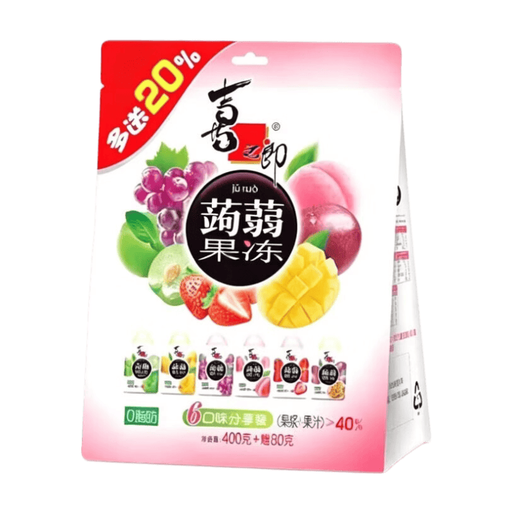
Why it's a match: Ideal for anyone trying konjac jelly for the first time or seeking a variety of flavours without committing to just one. The bulk pack offers excellent value for money.
Avoids the pitfall of low fruit content. According to the manufacturer, the fruit juice content is ≥40%, which ensures a natural and intense flavour.
Six different flavours in one pack (Peach, Grape, Mango, Strawberry, Passion Fruit, Green Plum) offer great variety.
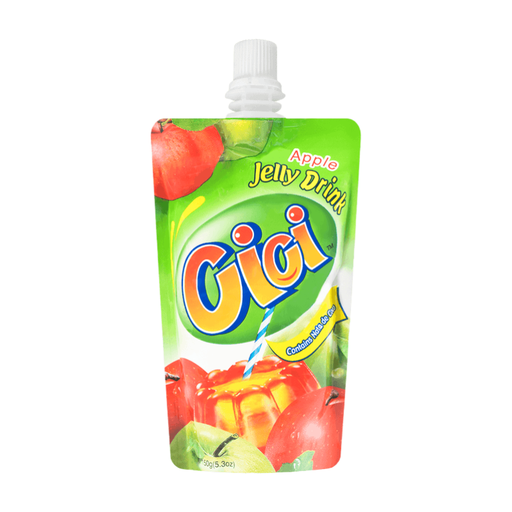
Why it's a match: Perfect for consumption on the go, at the office, or after a workout. The squeeze pouch allows for clean and easy enjoyment without any mess.
The packaging and the name "Jelly Drink" make it clear that this is a drinkable jelly. This prevents incorrect expectations about the texture. The calorie content is transparently declared at 61 kcal per 100 ml.
Also contains Nata de Coco (≥3.5%), which provides an interesting, multi-layered texture with small, chewy pieces.
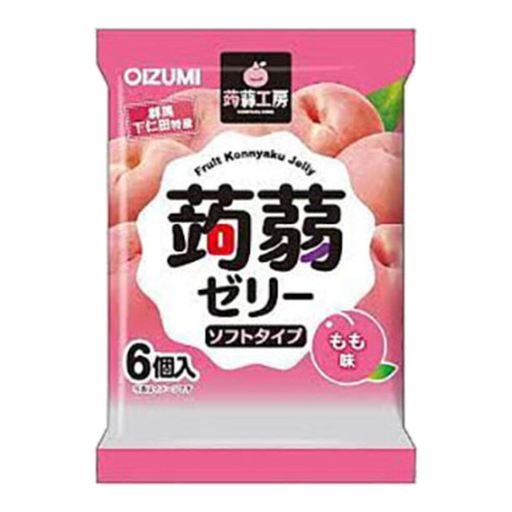
Why it's a match: For lovers of authentic Asian sweets who value origin and a traditional, firm texture. Ideal as a special dessert or a moment of indulgence.
The product description emphasizes the origin of the konjac flour from the Japanese Shimonita region and its "uniquely soft and chewy texture." This sets a clear expectation for a firm, high-quality jelly.
Made in Japan, which for many consumers is a mark of quality for authentic Japanese-style jelly. The texture is characteristically firm and elastic.
We have compiled a complete, up-to-date list of products that fully meet these strict selection criteria and UK regulations.
1. Does konjac jelly need to be refrigerated? As a rule, unopened konjac jellies are shelf-stable at room temperature. Storage in a cool, dry place away from direct sunlight is recommended. However, many manufacturers point out that the taste and texture are enhanced when chilled. After opening, the product should be stored in the refrigerator and consumed quickly.
2. What is the difference between konjac jelly and regular fruit jelly? The main difference lies in the gelling agent used. Konjac jelly is made from the flour of the konjac root. This plant-based gelling agent is rich in glucomannan fibre, is virtually calorie-free, and creates a characteristic, often elastic and chewy texture. Conventional fruit jelly typically uses gelatine (animal-based) or pectin (plant-based) and has a softer, less elastic consistency.
3. Is konjac jelly suitable for children? Due to the firm and chewy consistency of some konjac jellies, there is a choking hazard, especially for small children and the elderly. Many manufacturers print a corresponding warning on the packaging. It is important to chew the jelly thoroughly and not to swallow it whole. Consumption by children should always be supervised. Drinkable jelly drinks can be a safer alternative.