
Lieferung heute & morgen

Qualitätsgarantie

Willkommens-Angebote freischalten: KOSTENLOSE Lieferung | Bis zu 80 % RABATT | Kostenlose 30-Tage-JoyPlus-Testphase
App herunterladen
LED lamps are available for almost every indoor setting: as an LED floor lamp beside the sofa, a smart LED lamp for your smart home, a night light in the hallway or an RGBIC LED strip for gaming and entertainment. However, the wide range of options can make comparisons difficult. Many products appear more attractive than they really are for their intended purpose because of high colour counts, app functions or design promises.
Figures such as 16 million colours or numerous scene modes mainly describe the available creative options. They do not automatically indicate whether a lamp will illuminate a room sufficiently and evenly. For brightness, the luminous flux in lumens is what matters. For example, a decorative LED lamp with 30 or 40 lumens is better suited to accent lighting than to reading or working.
“Wi-Fi LED lamp”, “Alexa LED lamp” and “Google Assistant lighting” are not uniform standards. Before buying, check whether the light actually works with your existing system, whether a 2.4 GHz Wi-Fi network is required and which functions are available by voice command. Some models also require their own app or a bridge.
Adhesive lights and LED strips only adhere reliably to clean, dry and smooth surfaces. On uneven walls or dusty cupboard surfaces, the fixing may come loose. With a rechargeable LED lamp, the charging port, battery capacity and runtime are also important. A plug-in light with a sensor, on the other hand, is always ready to use, but requires a suitable free socket.
For an LED reading lamp, directional adjustment, a stable base and suitable brightness are more important than RGB colour changes. An LED arc lamp, by contrast, can cast light over a sofa or table, but requires enough floor space and a sturdy base.
The IP20 rating typically indicates that a light is intended for indoor use without special protection against water. Such models should not be used in damp rooms or close to splashing water. A protective coating on an LED strip does not automatically make it suitable for outdoor use either. Follow the manufacturer’s instructions regarding temperature, moisture and installation.
With integrated LEDs, the light source is permanently built in. This allows for slim designs, but the light source usually cannot be replaced. Lamps with an E27 or E14 fitting, on the other hand, can be equipped with a suitable bulb. Also check the maximum wattage, the fitting and whether a bulb is included.
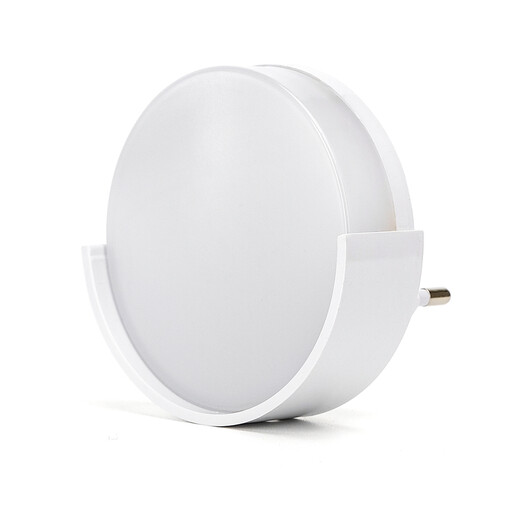
Why this product suits this profile: The compact LED night light with sensor plugs directly into a 220–240-volt socket and switches on automatically when ambient light levels are low.
The specifications state 1 W, 40 lm, 6,500 K and IP20. This makes it easier to assess the product realistically as an orientation light.
Light sensor, no batteries required, 120-degree beam angle and compact dimensions of 75 × 56 × 73 mm.
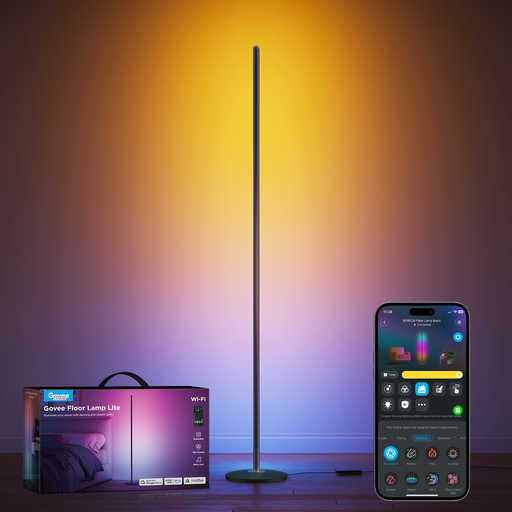
Why this product suits this profile: This slim LED floor lamp combines app, Wi-Fi and Bluetooth control with Alexa and Google Assistant compatibility for living rooms, gaming areas or home cinemas.
The technical data states 1,000 lm, 24 W, a height of 136 cm and a base measuring 20 cm in diameter. This makes it easier to assess its effect in a room than with colour figures alone.
RGBIC lighting, 58 scene modes, timer, dimming function and music synchronisation via the Govee Home app.
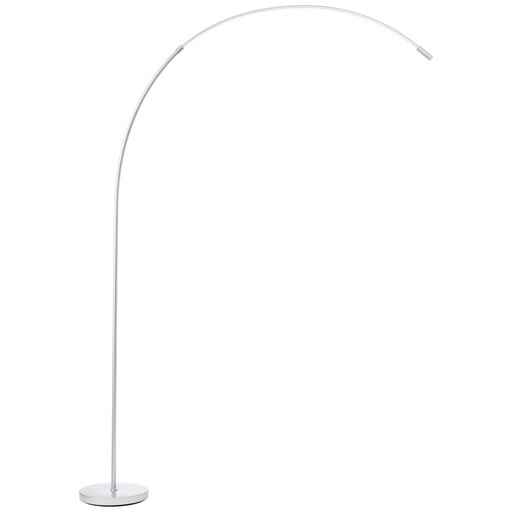
Why this product suits this profile: This LED arc lamp is designed to provide even lighting beside a sofa, armchair or table, and is suitable for changing lighting moods.
The light offers 1,300 lm, 14 W, a height of 179 cm and an integrated touch dimmer. The colour temperature can also be adjusted from 3,000 to 6,500 K.
Continuous brightness adjustment, CCT function and 2.28 m cable. The IP rating is stated as IP20.
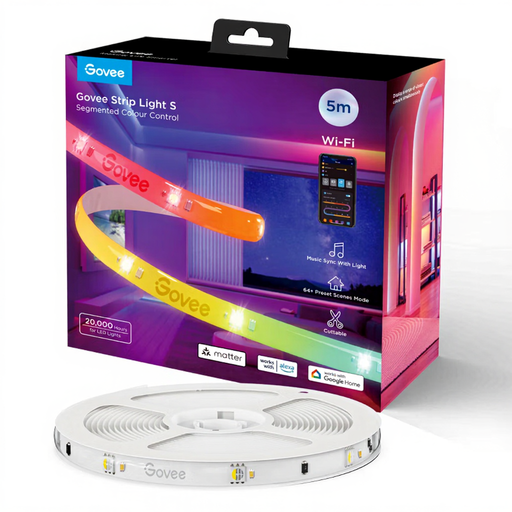
Why this product suits this profile: The 5-metre strip is designed for TV, monitor and wall accents, and supports Matter as well as integration with Apple Home, Google Home, Alexa and Samsung SmartThings.
The product details state the length, 24 W, 24 LEDs per metre and indoor use. The strip should not be operated while coiled or sharply bent.
Segmented RGBIC control, more than 64 scene modes, music synchronisation and Matter support.
Before ordering LED lamps, compare the following points:
Consumption depends on the power rating in watts and the daily operating time. A light rated at 10 W and operated for five hours a day uses 50 Wh per day in theory. To calculate the individual cost, multiply this consumption by your electricity tariff. RGB modes, high brightness and permanently active standby functions can increase consumption.
The service life depends on the LED technology, heat dissipation, operating time and number of switching cycles. Manufacturer specifications should be treated as technical guidelines. With integrated LEDs, replacement is often not предусмотрed. With lights using an E27 or E14 fitting, the bulb can be replaced separately, provided the fitting and wattage limit are observed.
First, connect the lamp according to the instructions and install the relevant manufacturer’s app. The next steps usually involve connecting to Wi-Fi and adding the lamp to your smart-home system. Some devices require a 2.4 GHz Wi-Fi network. Before buying, check that voice control, dimming, timers and colour changes are actually available on your preferred platform.