
Lieferung heute & morgen

Qualitätsgarantie

Willkommens-Angebote freischalten: KOSTENLOSE Lieferung | Bis zu 80 % RABATT | Kostenlose 30-Tage-JoyPlus-Testphase
App herunterladen
An LED light bar can brighten up worktops, shelves or cupboards without needing to install a new ceiling light. However, there are a few technical details you should check before buying. A long bar isn’t automatically bright, a motion sensor won’t work reliably in every installation situation, and a self-adhesive LED strip won’t stay stuck on every surface forever.
This guide explains which features matter for private customers in the UK and which models suit different uses.
A five-metre LED light strip can create decorative accents, but it may not provide enough light for a work surface. For a kitchen run or a desk, details like lumens, power consumption and light distribution are more important than length alone. A model with around 150 lumens, for example, works better as supplementary lighting for a mirror, cupboard or shelf than as the sole room light.
An LED light bar with a motion sensor will only switch on reliably if the sensor has a clear view of the detection area. In a deep cupboard, shelves, doors or side walls can restrict detection. So check the stated detection range and the automatic light duration. With a model that has roughly two metres of range and around 30 seconds of illumination time, the mounting position is especially important.
An LED strip with an IP20 rating is intended only for dry indoor spaces. For the kitchen, bathroom or covered outdoor areas, the relevant IP rating is crucial. IP44 offers better protection against splashing water, but it doesn’t replace full waterproofing. The power supply should also suit the location: USB-rechargeable LED lights need regular charging, whereas mains-powered models require a nearby socket.
Brightness is given in lumens (lm). The higher the value, the more light is emitted under comparable conditions. For drawers and wardrobes, a compact bar is often sufficient. Under kitchen cabinets or at a workstation, the light output should match the size of the area.
Colour temperature in Kelvin (K) describes the shade of light:
An LED under-cabinet light with several selectable colour temperatures can be more practical if you plan to use it in the kitchen, bedroom and hallway. RGB models, on the other hand, are mainly for atmosphere. With RGBIC, multiple colour zones can be shown at the same time, whereas standard RGB strips usually display one colour across the whole strip.
Before buying, measure the usable length and the available space. Pay attention to the actual product dimensions, not just the length of the light source. For wardrobes or drawers, slim models with magnetic or adhesive mounting are practical.
Self-adhesive strips need a dry, smooth and grease-free surface. On rough wood, dusty walls or damp tiles, the adhesion can weaken. An LED strip may only be cut at the clearly marked cutting points. With non-cuttable models, cutting them incorrectly will cause loss of function or damage.
A USB-rechargeable LED light is flexible to mount and doesn’t need a fixed cable. The key factors are battery capacity, charging time and expected run time. For frequent use in a hallway or kitchen, a mains-powered model can be more practical.
A smart LED light bar should be compatible with your existing system. Terms like Wi-Fi, Bluetooth, Matter, Apple Home, Google Home or Alexa describe different connection and control options. With Wi-Fi models, you should also check whether a 2.4 GHz network is required. For basic colour and brightness control, a remote control is often enough; for schedules and voice control, an app or smart home connection is useful.

Why this product fits the profile: Two compact lights at 20 cm long, with USB charging and three colour temperatures, are ideal for cupboards, shelves, hallways or small kitchen areas.
The fixed length and three stated colour temperature ranges make planning easier. According to the product details, the PIR sensor works within a range of 3 to 5 metres.
2-pack, 800 mAh battery, USB charging and tool-free adhesive mounting.
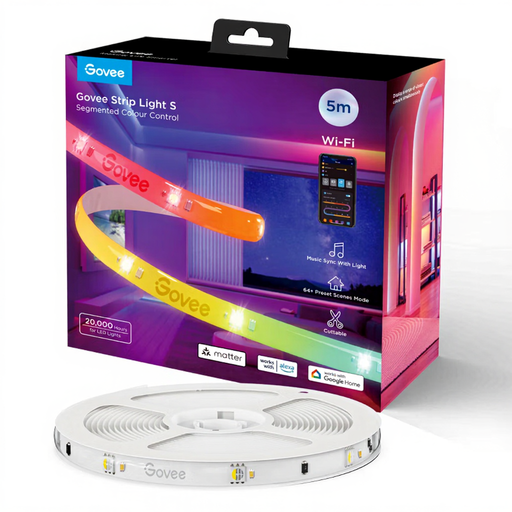
Why this product fits the profile: The 5-metre RGBIC strip is aimed at users who want to integrate their TV, gaming setup or living space via app, voice and Matter.
The specifications list Wi-Fi, Bluetooth and Matter separately. This means you can check before installation which connection works with your smart home system.
RGBIC segment control, 24 W power consumption, protective coating and app or voice control.
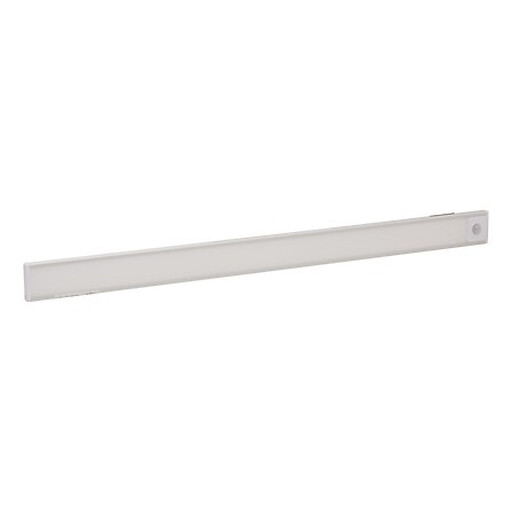
Why this product fits the profile: With a 60 cm length, 6,000 K colour temperature and motion detection, this bar is designed for larger wardrobes, work areas and shelves.
The product details state the detection range, illumination time and battery data. This lets you match the automatic operation to your actual location.
2,200 mAh battery, USB charging, magnetic holder and automatic lighting on motion.
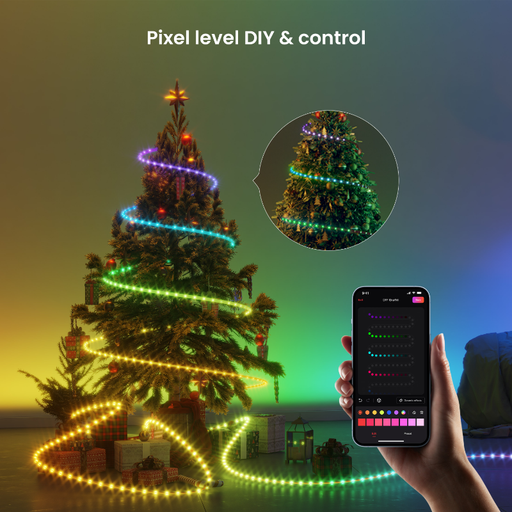
Why this product fits the profile: The compact length is ideal for a desk, TV back or gaming area when you want RGBIC background lighting with limited space.
The two-metre length means you won’t have to plan for unnecessary leftover pieces when buying. For larger areas, measure the required perimeter beforehand.
RGBIC colour segments and flexible use around TV, desk and gaming setup.
We’ve put together a full, regularly updated list of products that fully meet these strict selection criteria and the safety regulations in force in the EU.
First, measure the area and clean it of dust and grease. For adhesive mounting, the surface should be dry and smooth. Magnetic holders make it easier to remove the bar for charging. The motion sensor must not be blocked by doors, shelves or objects.
The actual lifespan depends on LED quality, operating time, heat dissipation and power supply. With battery models, the ageing of the lithium battery is also a factor. Continuous operation while coiled up should be avoided, as heat can build up. Lifespan figures should be checked directly on the product page.
LED technology generally uses much less energy than many older light sources. For a reliable estimate, however, you need to consider power consumption in watts, daily operating time and, for smart home models, the standby consumption. An LED light bar with a motion sensor can limit operation because it only switches on when movement is detected.