Joybuy Insights

LED String Light Buyer's Guide: Avoiding Common Mistakes

A well-chosen LED string light can transform a balcony, garden, or living space into an atmospheric oasis. However, the market is flooded with products whose descriptions overpromise and underdeliver. Many buyers only discover after a short time that their new lighting can't withstand the elements, the cable length is impractical, or the light quality is disappointing. This guide will help you identify the crucial features and make an informed decision.

The 3 Most Common Pitfalls When Buying String Lights

Before you invest, you should be aware of the typical problems that often lead to frustration and unnecessary expense. Marketing promises frequently conceal quality defects that only become apparent with use.

  1. Misleading "Waterproof" Claims: Many products are advertised as "suitable for outdoor use" but only have a low IP rating (e.g., IP20). This rating only protects against solid objects, not moisture. Using such an outdoor string light on a balcony or in the garden will almost inevitably lead to rapid failure from corrosion or a short circuit.
  2. Inflexible and Impractical Power Supply: A common annoyance is an insufficient cable length between the plug and the first LED, which severely limits placement options. For a battery-powered string light, the battery type or expected runtime is often not specified. A solar string light, in turn, requires optimal sun exposure, which is not available year-round in many UK gardens and on many balconies.
  3. Poor Material Quality and Craftsmanship: Thin, brittle cables and poorly made plastic housings are susceptible to weather and mechanical stress. This is especially true for garden lighting or Christmas lighting that hangs outdoors for weeks or months, which is where high-quality products truly distinguish themselves from the rest.

What to Look for Before You Buy: The Decisive Parameters

To avoid the pitfalls mentioned above, focus on objective technical data instead of flowery product descriptions.

The IP Rating: The True Indicator for Outdoor Use

The IP (Ingress Protection) rating is an international standard that indicates how well an electrical device is protected against the ingress of foreign objects (first digit) and water (second digit).

  • IP20: Protection against solid objects >12.5 mm, no protection against water. Suitable for indoor use only.
  • IP44: Protection against solid objects >1.0 mm and protection against splashing water from all directions. This is the minimum standard for an outdoor string light used in a sheltered location, such as a covered balcony or patio.
  • IP65: Complete protection against dust and protection against water jets (e.g., from a garden hose) from any angle. These string lights are robust enough for unprotected use in the garden, even in heavy rain.

Power Source: Flexibility vs. Reliability

The choice of power source determines where and how you can use your string lights.

  • Mains-Powered: Provides a constant and reliable power supply for consistently bright illumination. Ideal for stationary Christmas lighting or accent lighting where an outlet is within reach. Pay attention to a sufficient length of the lead cable.
  • Battery-Powered: A battery-powered string light offers maximum flexibility. It can be placed anywhere, without depending on outlets. This makes it perfect for table decorations, wreaths, or party lighting in places without a power connection. Check which batteries are required (e.g., AA) and whether a timer function is included to extend battery life.
  • Solar-Powered: A solar string light is an eco-friendly and cost-effective option for garden lighting. The solar panel charges during the day and automatically turns the lights on at dusk. However, the duration and intensity of the light depend heavily on sun exposure, which can be a limitation during the winter months.

Light Colour and Functions: Setting the Atmosphere

The colour of the light has a major impact on the mood.

  • Warm white string lights (approx. 2700–3300 Kelvin): Creates a cosy, inviting light, often compared to candlelight. Ideal for living spaces and relaxed outdoor areas.
  • Cool White (approx. 5300–6500 Kelvin): Creates a modern, crisp, and bright effect. Well-suited for highlighting architectural details or for energetic party lighting.
  • Multi-coloured (RGB): Offers colourful light effects for festive occasions. Models like a meteor shower string light create dynamic effects that are particularly striking as Christmas lighting. A memory function is practical, as the string light retains the last selected mode after being switched off.

Our Recommended Options

Instead of making a blanket recommendation, we have selected products that meet specific requirements and avoid the previously mentioned pitfalls.
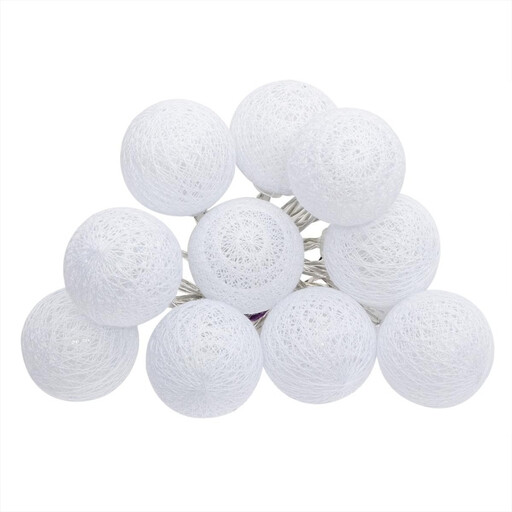
MATCH FOR: Flexible Indoor Decoration
Atmosphera Battery-operated LED garland 10 balls diam. 6 cm white

Atmosphera Battery-operated LED garland 10 balls diam. 6 cm white

Why This Fits Their Persona: Perfect for anyone who wants to quickly and easily create accent lighting in living rooms, on shelves, or around mirrors without tangled cables or searching for an outlet.

How It Avoids the Trap

This model is clearly specified for indoor use (IP20) and makes no false promises about weather resistance. The battery operation is explicitly stated, providing planning certainty.

Key Advantage & Pros

The cotton balls produce a soft, diffuse warm white light. Being powered by standard AA batteries allows for maximum placement flexibility.
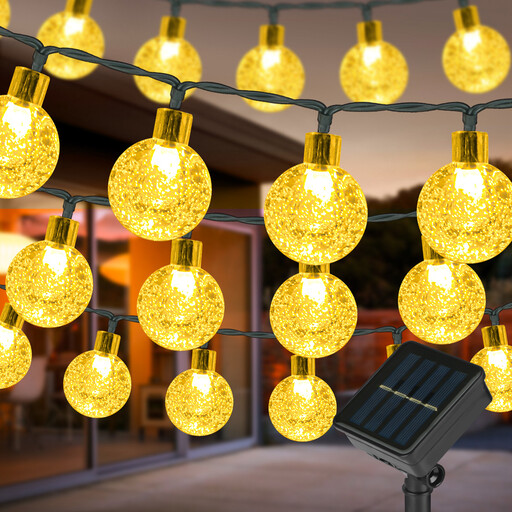
MATCH FOR: Year-Round Garden Design
VIVREAL Solar Bubble Ball String Lights – 7M (23 ft) 50 LEDs Warm White

VIVREAL Solar Bubble Ball String Lights – 7M 50 LEDs Warm White

Why This Fits Their Persona: Ideal for garden and balcony owners looking for uncomplicated, energy-self-sufficient, and weatherproof lighting for year-round use.

How It Avoids the Trap

The high IP65 rating ensures reliable protection against dust and water jets, making it suitable for unprotected outdoor use. Solar power makes it independent of outlets and cable lengths.

Key Advantage & Pros

No electricity costs and automatic operation thanks to a dusk-to-dawn sensor. Eight different lighting modes with a memory function offer creative variety for garden lighting.
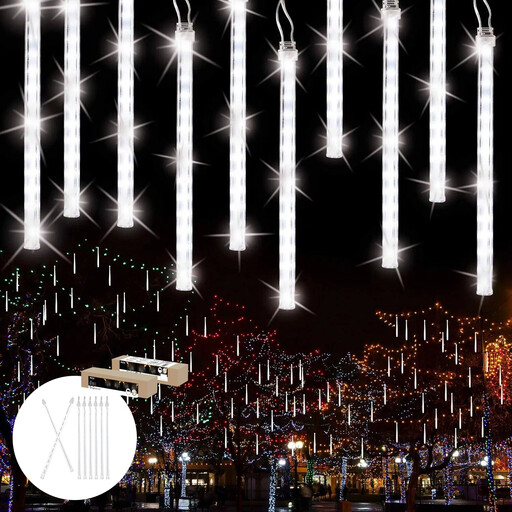
MATCH FOR: Impressive Festive Lighting
M.TK Meteor Shower Lights with 8 Tubes 192 LEDs

M.TK Meteor Shower Lights with 8 Tubes 192 LEDs

Why This Fits Their Persona: For anyone seeking dynamic and eye-catching Christmas lighting or party lighting that leaves a lasting impression.

How It Avoids the Trap

The IP44 rating is sufficient and clearly specified for outdoor use (e.g., on trees or gutters). Mains power provides the necessary energy to consistently maintain the impressive effect.

Key Advantage & Pros

The meteor shower effect simulates falling snow or shooting stars and is a guaranteed eye-catcher. The memory function saves the last setting, so the effect doesn't need to be reconfigured daily.

Looking for More Options?

We have compiled a complete, up-to-date list of products that fully meet these strict selection criteria and relevant safety regulations.

Frequently Asked Questions (FAQ)

1. How much power does an LED string light use?

The power consumption of LED string lights is extremely low. A typical string with 100 LEDs often consumes only between 3 and 7 watts. Assuming an electricity price of 30p per kilowatt-hour, running a 5-watt string light for 6 hours a day for a whole month (30 days) would cost just a few pennies. Battery and solar models incur no direct electricity costs.

2. Can I use outdoor string lights indoors?

Yes, that is perfectly fine. An outdoor string light is built to higher standards to withstand moisture and temperature fluctuations. This more robust construction makes them completely safe for indoor use. Conversely, string lights declared for indoor use only (e.g., with an IP20 rating) must never be used outdoors.

3. How do I safely attach a string light to a balcony railing or an exterior wall?

For mounting, it's best to use transparent cable ties, special self-adhesive mounting clips, or insulated hooks. Absolutely avoid driving nails or staples directly through the cable, as this can damage the insulation and pose a significant safety risk (short circuit, electric shock). Ensure that the cable is not bent or stretched over sharp edges.