
Lieferung heute & morgen

Qualitätsgarantie

Willkommens-Angebote freischalten: KOSTENLOSE Lieferung | Bis zu 80 % RABATT | Kostenlose 30-Tage-JoyPlus-Testphase
App herunterladen
For many coffee lovers, a thick, hazelnut-brown crema is the hallmark of a perfect espresso. Yet, the thought of an expensive and high-maintenance portafilter machine is often a deterrent. The solution seems to be a stovetop espresso maker with a crema system—a Moka pot that promises to combine the best of both worlds. However, the market is flooded with models whose promises turn out to be nothing more than fleeting foam upon closer inspection.
As your Joybuy Product Recommendation Officer, I'm here to help you identify the crucial features and avoid common purchasing mistakes. This guide will show you what to look for to brew a rich, aromatic coffee with a stable crema right at home.
Before you make a decision, you should be aware of the most common issues that lead to disappointment and wasted money.
To avoid these pitfalls, focus on three core technical features. These determine whether you will actually get an espresso-like coffee with crema.
The crucial difference between a standard Moka pot and a stovetop espresso maker with a crema system is the pressure-building system.
Therefore, explicitly look for a patented valve or a pressure-building system mentioned in the product description.
The material affects not only durability but also handling and taste.
Before purchasing, ensure the espresso maker is suitable for your type of hob. The "induction-compatible" label is crucial here. Also, check the base diameter, as some induction hobs require a minimum size for pot detection. The pot's size is indicated in cups, where one "cup" corresponds to a small espresso of about 30-50 ml. Choose the size that matches your typical coffee consumption.
Instead of making a blanket recommendation, we have selected models for different user profiles that meet the criteria mentioned above.
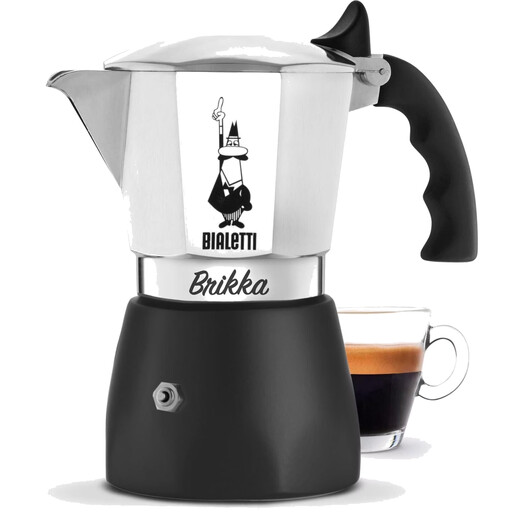
Why This Fits Their Persona: Anyone specifically looking for a stovetop pot to produce a stable crema can't go wrong with this model. It is specially designed for this purpose and delivers a result that comes closest to that of a portafilter machine. Ideal for those who appreciate the ritual of coffee making and value the final result. If you want to buy a Bialetti Brikka, this is the reference model.
This model bypasses the "empty crema promise" with its patented pressure valve, which is proven to build higher pressure and thus produce a thick, stable crema.
Patented pressure valve: Creates a dense, hazelnut-brown crema. High-quality aluminium: Ensures optimal heat conduction and the classic taste.
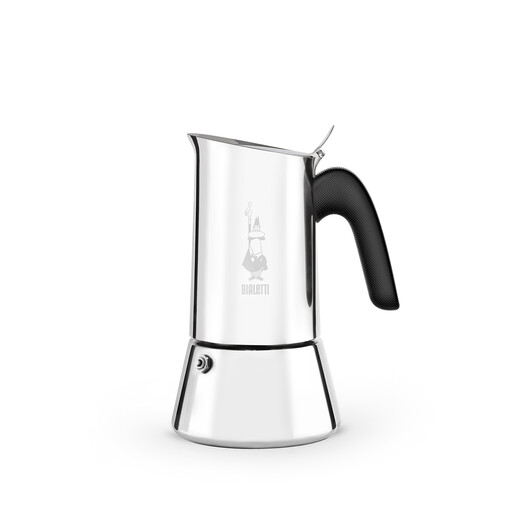
Why This Fits Their Persona: This model is ideal for users with a modern kitchen and an induction hob. The elegant stainless steel design is easy to clean, and its compatibility with all hob types makes it a hassle-free daily companion for strong coffee.
This stainless steel model directly solves the "stovetop incompatibility" problem, as the manufacturer explicitly states it is suitable for induction hobs. This eliminates the risk of a bad purchase.
Suitable for all hob types: Including induction. Robust 18/6 stainless steel: Durable, taste-neutral, and easy to maintain.
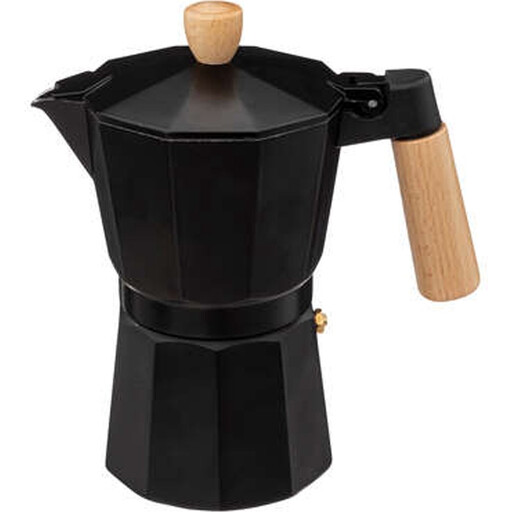
Why This Fits Their Persona: For those who want to try out the classic Moka pot preparation method without a large investment, this is a solid entry-level model. It offers the traditional coffee experience and good build quality for its price, without making false promises about crema.
This model avoids the "material flaws" trap common in the low-price segment. It relies on proven aluminium and a solid construction that ensures reliable function without pressure loss.
Good value for money: An affordable entry into the world of stovetop espresso makers. Classic design: Offers the authentic preparation ritual.
We have compiled a complete, up-to-date list of products that meet these strict selection criteria and comply with current safety regulations.
1. Why doesn't my stovetop espresso maker produce any crema? Most standard Moka pots operate at a pressure that is too low, around 1.5 bars. A higher pressure is necessary for a stable crema, which consists of emulsified coffee oils. Only models with a special pressure valve, like the Bialetti Brikka, are designed to generate this higher pressure and thus produce a thick crema.
2. What's the ideal grind size for a stovetop pot with a crema valve? A fine grind size, slightly coarser than what you'd use for a professional portafilter machine, generally works best. If the coffee grounds are too fine, they can clog the filter and block water flow. If they are too coarse, the water will pass through too quickly, and the coffee will be watery. Always fill the filter basket loosely to the rim and do not tamp the grounds down.
3. Can I use an aluminium espresso maker on an induction hob? No, generally you cannot. Aluminium is not ferromagnetic and therefore won't be detected by an induction hob. To use a traditional aluminium pot on an induction cooktop, you need a special adapter plate. Alternatively, you can choose a model made from induction-compatible stainless steel, such as the Bialetti Venus.