
Lieferung heute & morgen

Qualitätsgarantie

Willkommens-Angebote freischalten: KOSTENLOSE Lieferung | Bis zu 80 % RABATT | Kostenlose 30-Tage-JoyPlus-Testphase
App herunterladen
As a renter or homeowner looking for a hassle-free solution for privacy and sun protection, a no-drill pleated blind is often the first choice. The ability to install it without tools and without causing permanent damage to window frames or walls is a significant advantage. However, the market is flooded with products of widely varying quality. Before you make a decision, it's crucial to understand the typical pitfalls that can lead to disappointment and unnecessary expense.
This guide will help you separate the wheat from the chaff. We'll highlight the critical features to look for and show you how to make the right choice for your needs.
Many buyers focus on colour and price, overlooking the technical details that determine the product's longevity and functionality. Here are the three most common problems:
To avoid these mistakes, you should focus on three core aspects before buying. These will determine whether a product is suitable for your purposes.
The mounting system is the heart of any drill-free solution. The most common systems have specific pros and cons:
The choice of fabric depends on the desired level of privacy and light control.
Measure carefully to avoid fitting issues. In most cases, the rule is:
Always check the manufacturer's specific measuring instructions, as there can be variations.
Here are some product recommendations tailored to different needs and living situations.
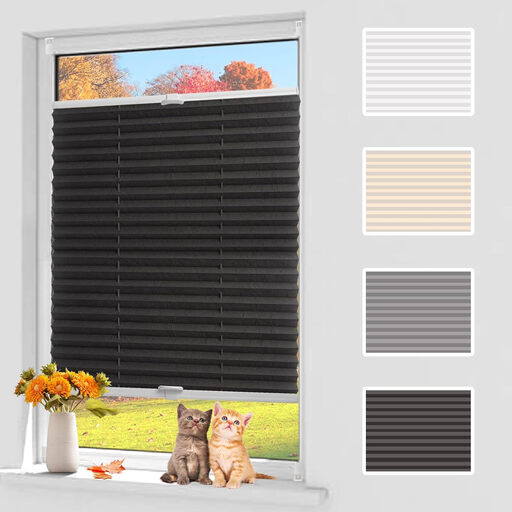
Why This Fits Their Persona: Ideal for student dorms or a first rental apartment. It offers a functional and cost-effective solution for basic privacy and sun protection that can be installed and removed without leaving a trace.
The product description includes a clear measuring guide (order width = glass width + 4 cm), which minimises typical measuring errors. The included clamp-fit system is designed for standard windows and provides a reliable basic solution.
Simple and quick installation without tools. Provides both privacy and sun protection and is available in many common sizes and colours.
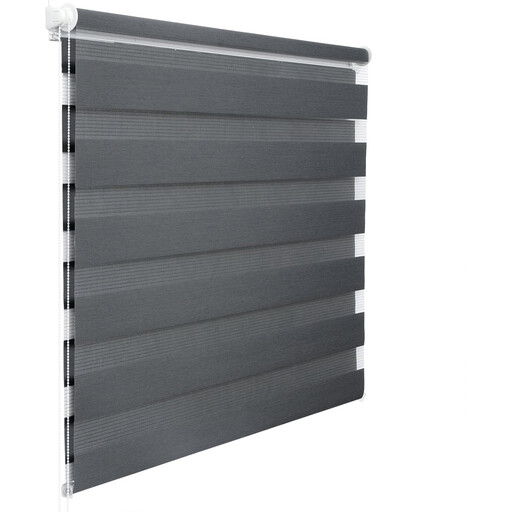
Why This Fits Their Persona: Perfect for living rooms, home offices, or kitchens where lighting conditions vary throughout the day. Users can flexibly switch between transparency, light privacy, and near-complete darkness.
The duo roller blind principle solves the problem of a fixed fabric choice. Instead of having to decide between "opaque" or "translucent," it offers both in one. The clamp brackets are designed for a specific frame thickness (13-23 mm), ensuring compatibility.
Stepless regulation of light and privacy thanks to two parallel fabric panels. The chain pull can be flexibly mounted on the left or right side.

Why This Fits Their Persona: Suitable for bedrooms, children's rooms, or rooms with intense sun exposure. The focus is on complete blackout for restful sleep and additional thermal insulation in both summer and winter.
The silver-coated backing provides a demonstrable blackout and thermal function, unlike simple dark fabrics. The cordless design enhances safety as there is no risk of strangulation from cords.
Provides blackout and thermal insulation. The OEKO-TEX certified polyester material is water-repellent and tear-resistant. The cordless operation is safe and convenient.
We have compiled a complete, up-to-date list of products that fully meet these strict selection criteria and UK safety regulations.
The durability of a clamp-fit system depends on the material quality and correct installation. Systems with robust plastic or metal brackets designed for the specific window frame thickness can last for many years. Avoid very cheap models with thin, flexible plastic parts, as they can fatigue more quickly under the permanent tension of the pleated blind.
Most clamp-fit systems are designed for modern uPVC windows with a standard rubber seal and a specific rebate depth. Problems can arise with older or very narrow wooden window frames. Some manufacturers explicitly state that their clamp brackets are not suitable for wooden windows. In such cases, an adhesive or suction cup version can be an alternative, provided the surface is smooth and can bear the load.
A regular pleated blind consists of a single, zig-zag folded fabric panel. The tension cords run through small, visible holes in the fabric. A honeycomb blind, on the other hand, consists of two fabric panels joined together to form a honeycomb structure in cross-section. The tension cords run inside these honeycombs, so no holes are visible. This results in better blackout performance and higher thermal insulation, as the air trapped in the honeycombs acts as a buffer.