For bread-makers who like a hearty texture
If you want the oats to be visible in your bread or rolls, jumbo oats are worth considering. EDEKA recommends this type of oat for baking.


Jumbo oats are an obvious choice if you want the flakes to stand out in your bread, while porridge oats or fine porridge oats can give it a finer texture. Oat bran is best used in a recipe that accounts for the liquid and binding it needs, rather than as a like-for-like replacement for oats or flour. If fibre content matters to you, compare the nutrition information per 100 g on the specific pack. If you need to follow a gluten-free diet, also check for an explicit gluten-free label and review all the other ingredients.
If you want the oats to be visible in your bread or rolls, jumbo oats are worth considering. EDEKA recommends this type of oat for baking.
Porridge oats or fine porridge oats are an option for bread and rolls with less noticeable pieces of oat. Alnatura specifically recommends its fine porridge oats as a baking ingredient; the same type can also be used for porridge.
Check the label on the specific pack of oats rather than relying on the type of grain alone. For a gluten-free baking recipe, you’ll also need to choose the other ingredients accordingly.
Best for: Bread with a more pronounced oat texture; EDEKA recommends jumbo oats for baking.
Worth considering: Coarser oats are less suitable if you’re aiming for a fine, even crumb.
Best for: Recipes where you want the oats to be less noticeable, or if you’d also like to use the pack for porridge. Alnatura recommends fine porridge oats as an ingredient for bread and rolls.
Worth considering: Finer oats won’t give you the same pronounced texture as jumbo oats.
Best for: Recipes that specifically call for oat bran. For example, a bran bread recipe from REWE combines it with spelt flour, quark and eggs.
Worth considering: Bran isn’t a direct substitute for oats or flour; the recipe needs the right amount of liquid and binding ingredients.
| Criterion | What to check when buying | Who might find this especially important |
|---|---|---|
| Fibre content | Compare the fibre per 100 g in the nutrition information and the ingredients list on the specific pack. | I want to compare the fibre content of different oat products on the same serving basis. For around 46% of consumers, this comparison would be a priority when buying. |
| Oat texture and recipe | Choose between jumbo and porridge oats, and check what quantity of oats and binding ingredients the bread recipe calls for. | Should my bread have noticeable pieces of oat or a finer texture? The type of oats is the first thing I’d consider. Around 36% of consumers would prioritise their preferred texture in baked goods. |
| Gluten-free and allergen information | If needed, check for an explicit gluten-free label, as well as the ingredients and allergen advice for every recipe component. | If I need to bake gluten-free or avoid certain ingredients, I need a suitably labelled pack. This would be a priority for around 18% of consumers. |
The type of oats affects how noticeable the pieces will be in your bread. EDEKA recommends jumbo oats for baking; Alnatura also lists fine porridge oats as an ingredient for bread and rolls.
Before you buy, decide what texture you want and follow the type of oats specified in the recipe.
According to EDEKA’s baking advice, dough made entirely from oats won’t reliably turn out well without an additional binding ingredient.
Use a recipe that takes the amount of oats and binding ingredients into account, rather than replacing all the flour with oats without making any other changes.
EDEKA Bio Jumbo Oats may contain traces of other cereals containing gluten. So the type of grain alone doesn’t tell you whether a product is suitable; check the label on the pack.
If you need to bake gluten-free, choose oat products explicitly labelled gluten-free and check the other baking ingredients too.
A bread recipe designed for oats isn’t necessarily suitable for bran with the same amount of liquid.
Use a recipe that accounts for the bran, as well as the liquid and binding ingredients it needs.
Oats in different varieties, including porridge oats and options explicitly labelled gluten-free.
Oat bran is a distinct product option alongside other oat products.
Fine-flake and fine porridge oats for different baking recipes.
A range that includes porridge oats, jumbo oats and oat bran.
Own-label brands to consider when choosing between porridge oats and jumbo oats.
A manufacturer of oat-based cereal products and own-label ranges for retailers.
The products below suit three different needs: jumbo oats for a more pronounced oat texture, finer oats, and bran for recipes that specifically call for it. To compare fibre content, check the nutrition information on the pack you choose.
 No image available
An option if you want a more pronounced oat texture in your bread.
The pack contains 500 g. If your dough contains a high proportion of oats, make sure the recipe includes suitable binding ingredients.
 No image available
For baking recipes where you want fewer coarse pieces of oat.
The pack contains 500 g. If oats make up a large part of the dough, check that the recipe includes the right binding ingredients.
 No image available
This porridge oat variety is explicitly labelled gluten-free and could suit a baking recipe designed accordingly.
The pack contains 500 g. Kölln states that its gluten-free porridge oats contain 11 g of fibre per 100 g. If you need to follow a gluten-free diet, check the other ingredients in your recipe too.
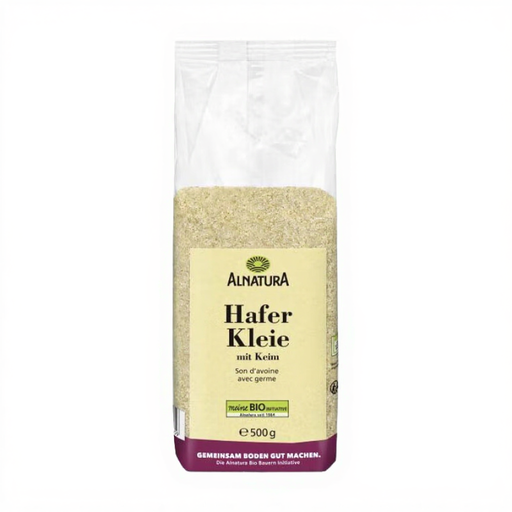 No image available
For bread recipes that specifically account for bran, as well as the liquid and binding ingredients it needs.
The pack contains 500 g. Pay particular attention to the ingredients list before buying: the product information lists wheat bran as well as oats.
 No image available
Finely rolled oats for recipes where coarse pieces of oat aren’t the main feature.
The pack contains 400 g. If you have allergies, check the ingredients and allergen advice on the specific pack, and make sure your bread recipe includes suitable binding ingredients.
Not without using a recipe designed for it. EDEKA points out that dough made entirely from oats won’t reliably turn out well without an additional binding ingredient, so choose a recipe that specifies the amount of oats and binding ingredients together.
Jumbo oats are the obvious choice. EDEKA recommends them for baking; if you want the oats to be less noticeable, try porridge oats or fine porridge oats instead.
No. The words ‘oats’ or ‘porridge oats’ alone aren’t enough. EDEKA Bio Jumbo Oats may contain traces of other cereals containing gluten; if you need to follow a gluten-free diet, choose oat products explicitly labelled gluten-free and check every other ingredient in your recipe.
A like-for-like swap isn’t advisable without adapting the recipe. Use a recipe that accounts for the bran, liquid and binding ingredients together. For example, REWE’s bran bread recipe also uses spelt flour, quark and eggs.
For a proper comparison, also check the nutrition information per 100 g and the ingredients list on the specific pack. The Verbraucherzentrale explains that nutrition claims in the EU are subject to regulations; however, the label alone doesn’t tell you whether the oat texture or product is right for your recipe.