If you want porridge that can be eaten without much chewing, instant oat products are an obvious choice when you want to minimise the texture of the flakes. Extra-fine oats are worth considering if you like soft porridge with a little more texture. Kölln describes its instant oats as dissolving in liquid, while Alnatura says its extra-fine oats become soft and porridge-like, even when prepared with cold liquid. Oat bran can be considered as an ingredient, but it will change the recipe. If you have a swallowing disorder, the finished dish must meet the consistency prescribed for you.
Who might be interested in the different types of oats?
People who prefer very smooth porridge
If you find noticeable flakes off-putting, it’s worth looking at instant or melt-in-the-mouth oat products. Kölln and Alnatura describe some of their products as dissolving in liquid. This is relevant if you generally prefer soft porridge, but it does not mean the product is suitable for a medically prescribed dysphagia diet.
People comparing fibre content
If fibre content is a priority when you shop, compare the nutritional information per 100 g and take account of how much you use in your recipe. Oat bran is a different ingredient from fine oats and can change the consistency.
People with specific labelling or shopping requirements
If organic labelling, a particular supermarket brand or allergens influence your choice, check the current packaging and where the product is sold. For coeliac disease, the Verbraucherzentrale specifically recommends choosing oats labelled “gluten-free”; an organic or wholegrain label is not a substitute.
What should you look for when buying?
First, choose the type of oats according to the consistency you want when prepared. Then compare fibre values on the same basis and check for any labelling you need.
| Criteria |
What to check |
Who it matters to |
| Soft, even consistency |
Distinguish between “instant” and “melt-in-the-mouth” products and fine oats. Follow the preparation instructions and check the consistency of the finished porridge. |
If I don’t want to feel distinct flakes, an evenly soft porridge matters more to me than a particular type of flake. This is the top priority for around 50% of consumers. |
| Fibre content |
Compare the nutritional information per 100 g and take account of the amount you actually use. If you choose oat bran, check how it works in your recipe. |
If you want to compare the amount of fibre in your breakfast, you need figures on the same basis, while keeping the desired porridge consistency in mind. Around 30% of consumers prioritise this. |
| Labelling and where to buy |
Check the current packaging for any allergen, gluten-free or organic information you need, and confirm availability with your chosen retailer. |
If I need a particular label or prefer to shop with a specific supermarket brand, that will determine my shortlist. This is the priority for around 20% of consumers. |
Which mistakes can you avoid?
-
Assuming “fine” means suitable for a dysphagia diet
Soft porridge is not automatically suitable for someone with dysphagia. The International Dysphagia Diet Standardisation Initiative (IDDSI) guidelines state that the required consistency depends on an individual professional assessment and the dish as prepared.
If you have a swallowing disorder, follow the consistency prescribed by your doctor or therapist and have the finished dish assessed using the appropriate methods. Product descriptions are no substitute for this guidance.
-
Comparing fibre figures on different bases
A figure per 100 g and one per portion do not refer to the same amount of product. The amount of fibre in your porridge also depends on how much oat product you use.
Start by comparing the figures per 100 g, then calculate them based on the amount in your own recipe. If you use oat bran, also check the amount of liquid and the consistency of the finished porridge.
-
Overlooking the gluten-free label if you have coeliac disease
“Organic”, “fine” and “wholegrain” do not mean that oats are specifically labelled gluten-free. The Verbraucherzentrale recommends that people with coeliac disease only buy oats carrying this label.
Check the label on the current packaging before choosing a product.
-
Assuming online information matches the packaging and local stock
EDEKA points out that a listed product may not be available in every store, and the information on the packaging may differ from the online listing. This is particularly important if you need a specific label.
Check what’s available in your local store before shopping, and check the information on the current packaging when your product arrives.
Key brands to consider
Kölln
Kölln offers various types of oats. Its instant oats are particularly worth considering if you want very smooth porridge.
- Kölln says its instant oats dissolve in hot and cold liquids; the brand lists 12 g of fibre per 100 g.
- The fact that they dissolve does not mean they are suitable for an individually prescribed dysphagia diet.
Seitenbacher
Seitenbacher oat bran may be worth considering if you want to compare the fibre content of your porridge.
- Seitenbacher lists 18 g of fibre and 16 g of protein per 100 g for its oat bran.
- Oat bran is not the same as instant oats. Check the amount of liquid and the consistency of the finished recipe.
Alnatura
Alnatura offers organic melt-in-the-mouth and extra-fine oat products for different porridge textures.
- Alnatura describes its melt-in-the-mouth product as dissolving instantly, and its extra-fine oats as becoming soft and porridge-like, even with cold liquid. For its extra-fine oats, Alnatura lists 9.7 g of fibre per 100 g.
- “Melt-in-the-mouth” and “extra-fine” refer to different products here; don’t apply the information for one to the other.
REWE Bio
An own-label option for shoppers looking for fine organic oats.
- REWE lists its organic oats as fine, small-flake oats, with 9.4 g of fibre per 100 g.
- Fine oats are not automatically instant. Check the preparation instructions to get the texture you want.
EDEKA Bio / EDEKA Herzstücke / GUT&GÜNSTIG
Depending on the store, EDEKA offers fine or extra-fine oats from a range of own-label brands.
- EDEKA lists allergen information on the product page for EDEKA Bio fine oats.
- EDEKA notes that products may vary between stores and that the online listing may differ from the packaging. Check the information for the specific product before buying.
Brüggen
Brüggen is a relevant manufacturer and processor of oats and other cereal products.
- Brüggen describes processing steps for cereal flakes, including steaming and rolling.
- This does not tell you what the consistency of any individual product will be; check the information for the specific product.
Oat products on Joybuy
This selection includes instant oats, a porridge mix, fine oats and oat bran. Choose according to the texture and recipe you have in mind: bran won’t automatically work as a substitute for a base of oats.
 No image available
Kölln Instant Melting Oats, 250 g
For porridge where you want a particularly even texture. Kölln describes its instant oats as dissolving in hot and cold liquids and lists 12 g of fibre per 100 g. If you’re following a medically prescribed dysphagia diet, the consistency of the finished dish must be assessed separately.
View on Joybuy
 No image available
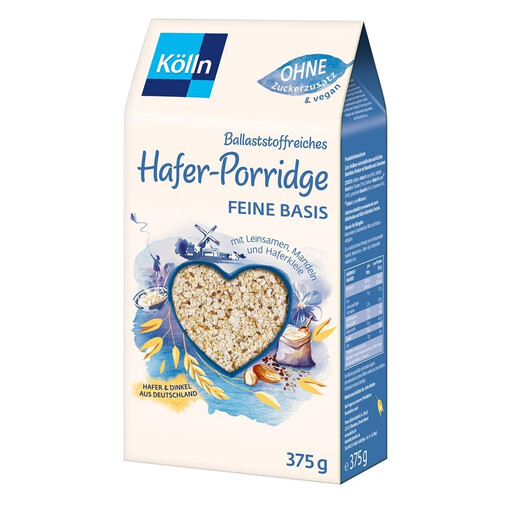
Kölln Pure Rolled Oat Porridge, 375 g
A porridge mix for cooking, where soaking and simmering help create a soft texture. If allergens are a concern, check the current packaging before use. A creamy texture does not prove that the porridge meets medically prescribed swallowing requirements.
View on Joybuy
 No image available
Alnatura Organic Fine Rolled Oats, 400 g
Fine oats for soft porridge with a base of flakes. If you want to use cold liquid or need a specific label, check the preparation instructions and packaging for this variety. The consistency of the finished porridge remains an important factor in your choice.
View on Joybuy
 No image available
Kölln Fine Rolled Tender Oats, 500 g
Fine, tender oats for anyone who would rather use rolled oats than an instant product. Adjust the amount of liquid and the preparation to get the texture you want. If you specifically need oats labelled gluten-free, check the current packaging.
View on Joybuy
 No image available
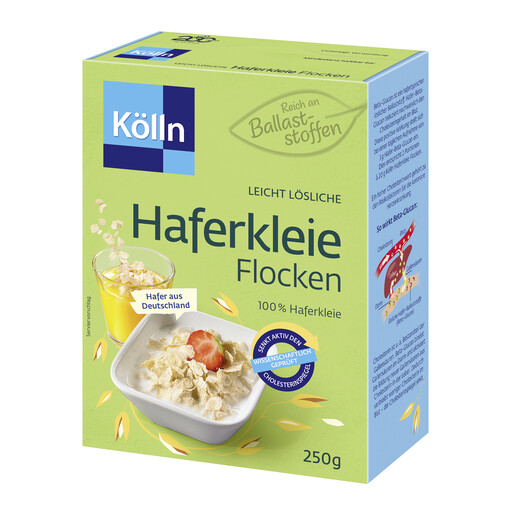
Kölln Oat Bran Flakes, 250 g
Oat bran to add to porridge that’s already soft. Compare the nutritional information on the packaging to check the fibre content, and see how the amount of liquid and the consistency of the finished porridge change when you stir it in.
View on Joybuy
Frequently asked questions
Which type of oats is best for very smooth porridge?
Start by looking at instant or melt-in-the-mouth products if you want as little flake texture as possible. Kölln describes its instant oats and Alnatura its melt-in-the-mouth product as dissolving in liquid. Depending on how they’re prepared, fine oats may retain more texture.
Is oat bran always the right choice if you want more fibre?
No. Fibre content alone doesn’t determine which ingredient is right for your porridge. Seitenbacher lists 18 g of fibre per 100 g for its oat bran; if you use it, you’ll also need to consider the amount in your recipe and how it changes the consistency.
Does a portion of porridge provide all the fibre you need?
That depends on the product and portion size. The German Nutrition Society recommends that adults consume at least 30 g of fibre a day, across their diet as a whole and not in a single meal.
What should I look for in oats if I have coeliac disease?
For coeliac disease, the Verbraucherzentrale specifically recommends choosing oats labelled “gluten-free”. Check for this information on the current packaging; “organic” or “fine” is not a substitute.
Are extra-fine oats enough if you have a swallowing disorder?
No. A product name does not determine whether the consistency is suitable for someone with a swallowing disorder. The International Dysphagia Diet Standardisation Initiative recommends that doctors or qualified therapists determine the required consistency for each person. The finished dish must be assessed under the intended serving conditions.


