Working people who also exercise
If you want to eat a bar at the office or around your workout, compare the protein content per bar. The figure per 100 g alone doesn’t tell you how much protein is in your snack portion.


When choosing a protein bar for the office, don’t rely on the words ‘high protein’ alone. What matters is the amount of protein in the bar you actually eat, its ingredients and the information for the specific flavour. If you need to avoid animal-derived ingredients or have allergies to consider, the ingredients and allergen information take priority over a high protein content. A bar can make a handy portioned snack, but according to the German Nutrition Society, healthy adults who exercise for no more than five hours a week do not automatically need more protein.
If you want to eat a bar at the office or around your workout, compare the protein content per bar. The figure per 100 g alone doesn’t tell you how much protein is in your snack portion.
If you’re looking for something sweet to keep in your desk drawer, check the sugar per bar, sweeteners and ingredients list as well as the protein content.
If you avoid animal-derived ingredients or need to take certain allergens into account, check the labelling for the specific flavour. A general claim about protein won’t tell you what you need to know.
First, decide which feature matters most for your office snack. Then compare the information per bar and the ingredients in the flavours that meet your needs.
| Criteria | What to check | Particularly important for |
|---|---|---|
| Protein per bar | Compare the protein in the nutrition information per bar and per 100 g, and check the bar’s weight. | If I exercise after work, I want to know how much protein is in an individual portion. Around 27% of consumers prioritise this protein portion. |
| Sugar and sweeteners | Check the sugar per bar, ingredients list and any information about sweeteners. | When choosing a sweet desk snack, I want to consider the ingredients as well as the sugar content. Around 27% of consumers make this their main criterion. |
| Ingredients and allergens | Read the ingredients and allergen information for the specific flavour; don’t assume ‘vegan’ or ‘lactose-free’ means allergen-free. | If I avoid animal-derived ingredients or need to consider an allergen, the recipe determines whether a flavour is suitable. For around 20% of consumers, this compatibility comes first. |
| Pack size for stocking up | Compare the number and weight of the bars, along with the storage instructions on the pack. | If I’m getting snacks ready for several days at the office, I need individual portions that suit me and a suitable place to store them. For around 26% of consumers, planning what to stock up on takes priority. |
The claim alone doesn’t tell you how much protein is in the portion you actually eat. Bar weights can vary, too.
Check the nutrition information per bar, and use the figures per 100 g to compare products of different sizes.
A bar with this claim may still contain sweeteners. Product-specific advice about eating larger quantities is particularly relevant if you’re planning to have several bars.
Check the ingredients list and any warnings for the flavour before buying a larger quantity.
According to its product information, dm’s Sportness Natural Protein Bar Salty Chocolate Nut is labelled vegan and lactose-free, but contains peanuts, almonds, hazelnuts and soya, among other ingredients.
If you have an allergy, the full ingredients and allergen information for the specific flavour is what matters—not just the label on the front.
Pack size, ingredients and protein per bar can vary between flavours. Stocking up is only practical if the specific flavour meets your needs.
Compare the information on the packs first and, if you’re unsure, try a smaller quantity before buying several packs.
Barebells makes protein bars in a range of varieties, including a range described as vegan. Protein content and ingredients vary by flavour.
Designer Bar is a range of protein bars for which ESN lists 14 g of protein per 45 g bar.
Sportness offers a range of protein bars. dm labels the Natural Protein Salty Chocolate Nut flavour as vegan and lactose-free.
Layenberger offers high-protein bars in a mixed-flavour range; the manufacturer lists between 15.8 and 16.1 g of protein per bar, depending on the variety.
These bars could make handy individually portioned snacks for the office. Compare the ingredients and nutrition information for each flavour on the pack, particularly if protein content, sugar or allergens will determine your choice.
 Image unavailable
An option if you’re planning to have individual bars over several days at the office. The product name states that the pack contains 12 bars of 45 g each; check the nutrition and allergen information for Hazelnut Nougat.
 Image unavailable
For stocking up on individually portioned office snacks: the product name states that the pack contains 12 bars of 55 g each. Compare the information for Cookies & Cream rather than assuming the protein content is the same as other Barebells flavours.
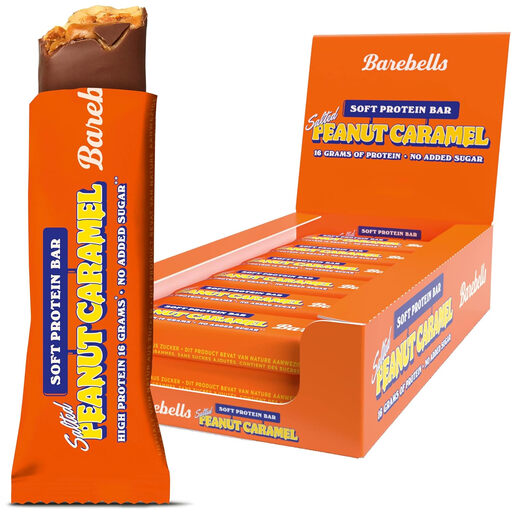 Image unavailable
Individually portioned bars for the office; the product name lists 12 bars of 55 g each. If peanuts or other allergens are a concern for you, check the information for this specific flavour.
 Image unavailable
This variety, described as vegan, may suit you if you’re avoiding animal-derived ingredients; the product name lists 12 bars of 55 g each. Check the ingredients and allergens for this flavour, as well as the protein content on the pack, before comparing figures per bar.
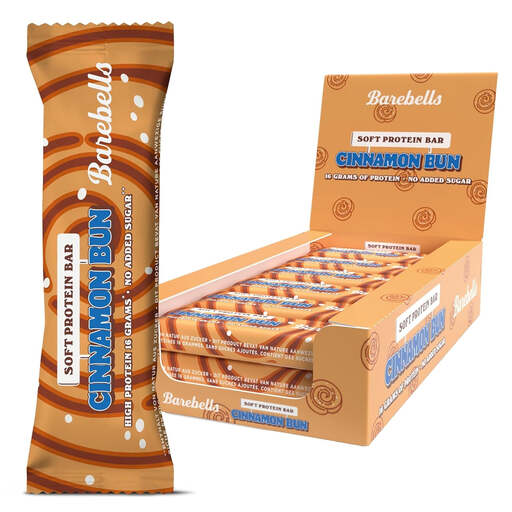 Image unavailable
Another individually portioned option for your office stash, with 12 bars of 55 g each according to the product name. For an accurate protein comparison, check the nutrition information on the pack for the Cinnamon Bun flavour.
No. The claim doesn’t replace the protein information for the portion. Check the nutrition information to see how much protein is in each bar, and take its weight into account.
Not necessarily. The German Nutrition Society says that healthy adults who exercise for no more than five hours a week don’t need more protein just because of this activity. Whether a bar works as a snack for you also depends on the rest of your diet.
Not necessarily. Check the ingredients list and any information on the pack, particularly if you’re planning to eat several bars or want to avoid certain ingredients. ‘No added sugar’ doesn’t mean ‘no sweeteners’.
No. A bar labelled vegan can still contain peanuts, tree nuts or soya, for example. If you have an allergy, always check the ingredients and allergen information for the specific flavour.
Follow the storage instructions on the pack. The Sportness bar described by dm should be stored in a cool, dry place away from direct sunlight.