
Lieferung heute & morgen

Qualitätsgarantie

Willkommens-Angebote freischalten: KOSTENLOSE Lieferung | Bis zu 80 % RABATT | Kostenlose 30-Tage-JoyPlus-Testphase
App herunterladen
In rental apartments, dorm rooms, or simply in compact living spaces, extra storage is often at a premium. A no-drill over-the-door rack seems like the ideal solution: it's quick to install, flexible, and leaves no permanent damage on walls or doors. However, not every model lives up to its promise. Many buyers only discover after their purchase that the new rack wobbles, scratches the door, or bends under the weight of a single winter coat.
This guide will walk you through the crucial criteria to consider before you buy, helping you avoid a bad purchase and find a functional, long-lasting solution for your home.
Before you decide on a model, you should be aware of the three most common problems that occur with low-quality products:
To avoid these problems, focus on three objective features. These will help you identify a suitable and sturdy over-the-door rack.
The most important technical specification is the door leaf thickness. This is the thickness of the top edge of the door where the rack will be hung. Measure this value on your door precisely.
Compare your measurement with the hook depth (also referred to as bracket depth or rebate depth) in the product specifications for the over-the-door rack. The hook should securely grip the door without having too much play. Also, check the gap between the top of the door and the frame to ensure the door can still close properly.
The material determines the rack's durability and where it can be used. Stainless steel door hooks are an excellent choice as they are robust and corrosion-resistant. This also makes them an ideal no-drill over-the-door towel holder for the humid environment of a bathroom.
Be sure to look for protective padding on the contact surfaces. Small but crucial details like foam, rubber, or silicone pads on the inside of the hooks prevent scratches and ensure the rack sits securely without slipping.
Consider what you plan to hang. A single over-the-door clothes hook might be enough for a bathrobe, but a jacket rack for the door in the hallway must be able to support the weight of several heavy coats.
Here are some recommendations tailored to different needs and living situations.
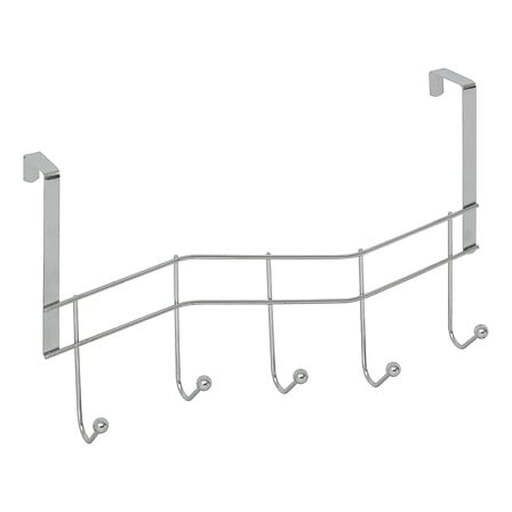
Why This Fits Their Persona: Ideal for anyone needing a straightforward, ready-to-use solution for the hallway or bedroom. It provides ample space for jackets, bags, and scarves without damaging the door or requiring complex installation.
The specified hook depth of 4.5 cm is suitable for many standard and older doors. The steel construction with a declared total load capacity of 10 kg prevents it from bending under normal use.
Tool-free installation; five hooks offer a good balance between a compact footprint and storage space; clean, functional design.
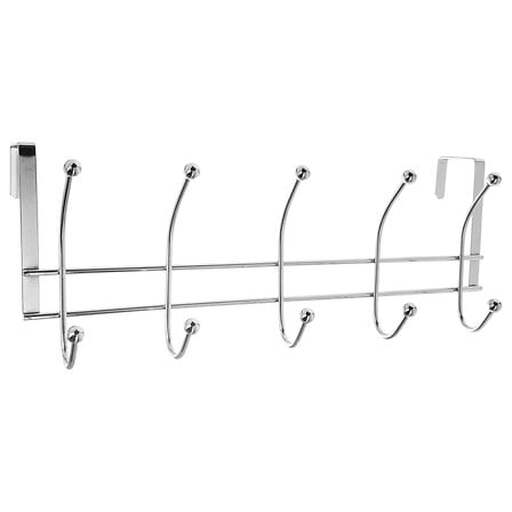
Why This Fits Their Persona: When jackets, backpacks, and gym bags are cluttering the hallway, this ten-hook model quickly and efficiently restores order. It makes optimal use of the often-wasted space on a door and is robust enough for daily family use.
The steel construction is designed for a higher load than simpler models. The generous 5 cm hook depth fits many doors, but should be measured beforehand to avoid the incompatibility pitfall.
Maximum storage with 10 hooks; durable steel material; simple design that fits into most environments.
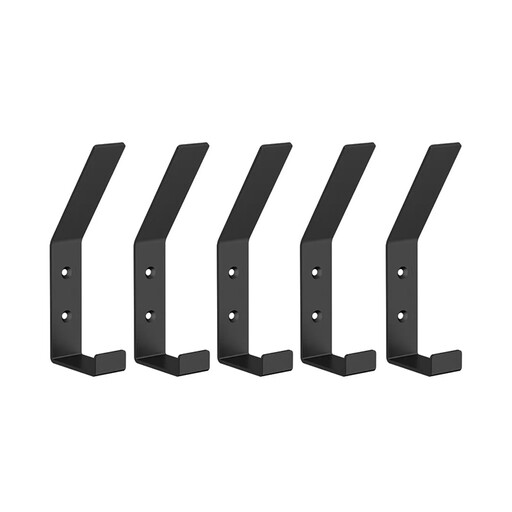
Why This Fits Their Persona: For the bathroom, rust resistance is crucial. This set of individual stainless steel hooks offers a flexible solution for hanging towels, bathrobes, and other items without having to worry about corrosion.
The stainless steel material is naturally suited for humid environments and prevents rust. Since these are individual hooks, the problem of an incompatible total width or a bending rail is eliminated.
Corrosion-resistant stainless steel; flexible arrangement of hooks as needed; simple, minimalist design.
We've compiled a complete, up-to-date list of products that fully meet these strict selection criteria and quality standards.
No, the fit is not universal. It is essential to measure the door leaf thickness (the thickness of the top edge of the door) before buying and compare it with the product's specified hook depth. Also, check that there is enough clearance between the top of the door and the door frame (at least the thickness of the hook's material) so that the door can still close smoothly.
The load capacity varies greatly depending on the model and material. Simple single hooks often only support 1–2 kg (2-4 lbs), while sturdy over-the-door rails made of steel can be designed for 10 kg (22 lbs) or more. Always follow the manufacturer's stated maximum load capacity and distribute the weight evenly across the hooks.
Models without protection can damage the paint surface. To prevent this, you should specifically look for products that feature protective padding. Integrated pads made of foam, rubber, or felt on the contact points not only prevent scratches but also increase the rack's slip resistance.