
Lieferung heute & morgen

Qualitätsgarantie

Willkommens-Angebote freischalten: KOSTENLOSE Lieferung | Bis zu 80 % RABATT | Kostenlose 30-Tage-JoyPlus-Testphase
App herunterladen
Red dates, also known as jujubes or Chinese dates, are increasingly popular in Germany for tea, soups, porridge, desserts and eating straight from the pack. The choice ranges from 35-g snack bags to 1-kg bulk packs. However, products vary considerably in their ingredients, stones, texture and preparation requirements.
Anyone who focuses only on terms such as “premium”, “natural” or “extra sweet” can easily overlook important details. Three common buying pitfalls are particularly relevant:
For the most unadulterated flavour possible, choose products with a short ingredients list. Pure dried red dates should, for example, be labelled “100% jujube” or “100% dried red dates”. This does not mean that the product is low in sugar: dates naturally contain sugar. It is therefore important to distinguish between naturally occurring sugar and added sugar, glucose syrup or maltose.
An example containing several ingredients is Changsi Ejiao Royal Jujube 227 g. According to the product information, it contains red dates, sucrose, glucose syrup and donkey-hide gelatine. Anyone looking for Chinese dried fruit with as few ingredients as possible should compare these details with a pure jujube product.
Pitted dates are convenient for snacking, baking and preparing porridge. They save time when chopping and reduce the risk of biting into a stone while eating. Nevertheless, shoppers should check the exact product labelling. Mechanically pitted products may occasionally contain residual pieces of stone.
Dates with stones are also suitable for tea and soups, but require more care when eating. For households with children or for snacks at work, pitted varieties are often more convenient. If a product states “cook before consumption”, this instruction should be followed.
The right quantity depends on your daily routine:
Texture is also important. Soft jujubes work well in porridge and desserts, while crunchy varieties are more suitable as snacks. Products containing palm oil or added sugar should not be treated as equivalent to natural dried fruit. The nutrition table and ingredients list provide more objective guidance here than advertising claims.
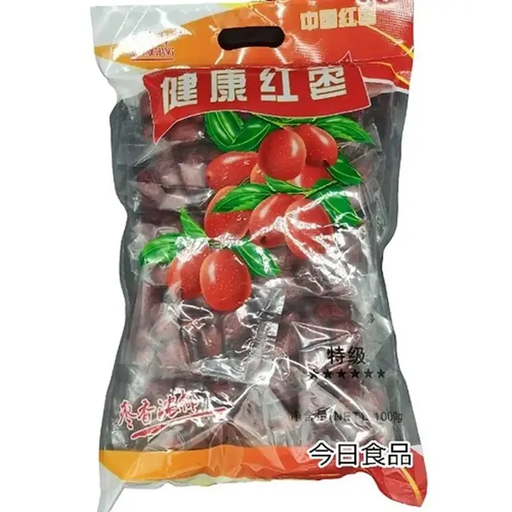
Why this product suits this profile: The 1-kg pack is suitable for shoppers who use red dates regularly and are looking for a versatile staple ingredient for tea, soups, porridge or desserts.
The ingredients information states 100% dried red dates. No added ingredients such as syrup or palm oil are listed.
100% dried red dates, 1 kg of product and, according to the product information, suitable for eating straight away as well as for tea, soups, porridge and desserts.
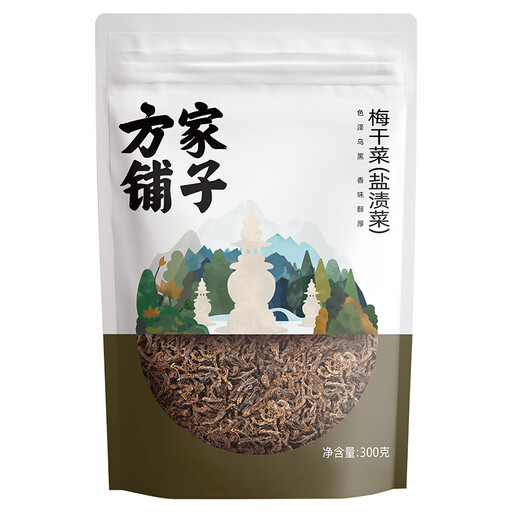
Why this product suits this profile: The 500-g pack of pitted jujubes is suitable for people who prefer a Chinese dried fruit for snacking and cooking without having to remove stones regularly.
The product information explicitly states that these are pitted jujubes. Nevertheless, check the packaging before buying for any warning about possible residual pieces of stone.
100% dried, pitted grey jujubes; according to the product information, suitable for eating straight away and for use in tea, soups, porridge and baked goods.
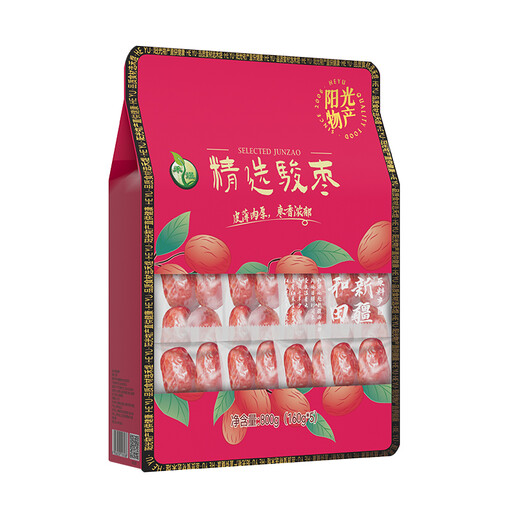
Why this product suits this profile: The five individual 160-g bags are practical when larger quantities of jujubes are regularly needed for tea, soups, stews or porridge.
The labelling clearly states that the jujubes must be washed and cooked before consumption. This makes the preparation method unambiguous.
800 g total, divided into five bags; according to the product information, 100% jujubes with no listed allergens.
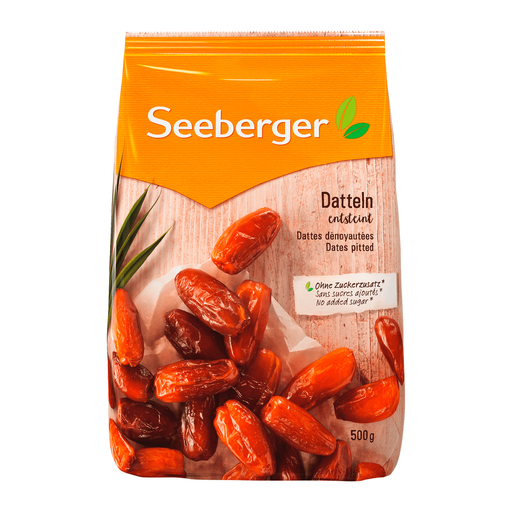
Why this product suits this profile: If you are looking for pitted dates for muesli, yoghurt, baking recipes or eating straight from the pack, this is an alternative to Chinese jujubes.
The ingredients list states 100% pitted dates with no added sugar. However, these are Deglet-Nour dates from Tunisia, not red jujubes.
500 g of product, pitted, 100% dates and, according to the product information, with no added sugar.
We have put together a complete, regularly updated list of products that fully meet these strict selection criteria and the safety regulations applicable in the EU.
Dried jujubes should be stored in a cool, dry place away from direct sunlight, in accordance with the packaging instructions. Once opened, an airtight container is recommended. This helps prevent the fruit from becoming sticky due to moisture or hard due to dry air.
For tea, whole red dates can be briefly rinsed and then steeped in hot water, provided the pack does not give different instructions. In soups, porridge and stews, they are usually cooked along with the other ingredients. For desserts or baked goods, they are easier to slice after soaking. For products that must be cooked, follow the manufacturer’s instructions for use.
You should also check:
In Germany, jujubes are often sold as red dates or Chinese dates. However, they are not the same as Deglet-Nour dates, which come from countries such as Tunisia. When choosing ingredients for recipes, check the exact product type and origin.
That depends on the product. Some pitted or ready-to-eat jujubes can be eaten immediately. Others, such as HEYU Premium Jujube, must first be washed and cooked according to the product information. The instructions for use on the packaging should be followed.
You will find the best-before date on the packaging. After opening, moisture, heat and exposure to air affect the texture. Storing the product in a dry, tightly sealed container and using it promptly will help maintain its quality within the stated period.