Fans of classic coffee-time treats
You’re looking for a crisp rusk that you can enjoy on its own or pair with a sweet or savoury topping. Brandt describes these uses for its classic branded rusk.


Classic rusk is a good choice for a coffee break if you’re after a fairly plain baked snack that you can enjoy on its own or top with something. A digestive biscuit is a better fit if you’d prefer a biscuit with wholemeal flour. For chocolate or gluten-free options, check the ingredients and allergens on the specific pack too. The name ‘digestive’ is not evidence that the biscuit aids digestion.
You’re looking for a crisp rusk that you can enjoy on its own or pair with a sweet or savoury topping. Brandt describes these uses for its classic branded rusk.
You’d prefer a biscuit with wholemeal flour rather than classic rusk. The McVitie’s varieties described by EDEKA24 differ in ingredients and nutritional values, as well as in flavour: Original and Dark Chocolate.
You’re looking for a biscuit that’s specifically labelled gluten-free. For the Schär Digestive Choc described by EDEKA24, you’ll also need to check that the information about milk, soya and possible traces of lupin meets your requirements.
First, check whether any specific allergen information is essential for you. Then choose between plain rusk, a digestive biscuit with wholemeal flour or a chocolate variety. When comparing nutritional values, look at the figures per 100 g rather than relying on the product name alone.
| Criterion | What to check | Who it matters to |
|---|---|---|
| Plain rusk | Check the ingredients, allergens and nutritional values per 100 g, as well as the portion size. | If I want to eat my rusk on its own or add my own topping, a versatile slice is my priority. Around 40% of consumers put this need first. |
| Digestive with wholemeal flour | Check the ingredients list and compare fat, sugar and salt per 100 g. | I’d rather have a biscuit made with wholemeal wheat flour than classic rusk with my coffee. For around 30% of consumers, this biscuit-style option is the main reason for buying. |
| Gluten-free labelling | Check that the specific pack is labelled gluten-free, and look out for other allergens and any ‘may contain’ warnings. | If I need to avoid gluten, I can’t simply swap ordinary wheat rusk for a wheat digestive. This requirement is the main consideration for around 20% of consumers. |
| Chocolate variety | Compare the chocolate content, sugar and saturated fat per 100 g, as well as the allergens. | I’m specifically looking for a chocolate biscuit to have with my coffee, and I want to choose the other ingredients carefully too. This is the priority for around 10% of consumers. |
For the products covered here, the name describes a style of biscuit, not a proven effect on digestion. Wholemeal flour doesn’t mean you can overlook the other ingredients and nutritional values either.
Choose based on the ingredients list and nutritional information rather than assuming the name promises a particular effect.
The Schär Digestive Choc described by EDEKA24 is labelled gluten-free, but contains milk and soya. The pack also warns that it may contain traces of lupin.
Check every pack for all the allergens and ‘may contain’ warnings that are relevant to you.
Different biscuit sizes can make comparisons between rusks and biscuits misleading. The information for one portion alone won’t show how their nutritional values compare per 100 g.
Start by comparing the same quantity, then consider how many pieces you’re actually likely to eat.
The McVitie’s Dark Chocolate variety described by EDEKA24 contains 30% chocolate. Its ingredients are therefore different from those of classic Brandt Markenzwieback.
Check the ingredients and nutritional information for the exact variety you choose.
Brandt offers classic branded rusk to enjoy on its own or with a topping.
The Digestive Original and Dark Chocolate varieties described by EDEKA24 are biscuits with different ingredients.
The Digestive Choc described by EDEKA24 is a biscuit made with milk chocolate and specifically labelled gluten-free.
This selection includes rusk varieties for your coffee break. When choosing between rusk and digestive biscuits, the differences in type of bake, ingredients and allergens remain key.
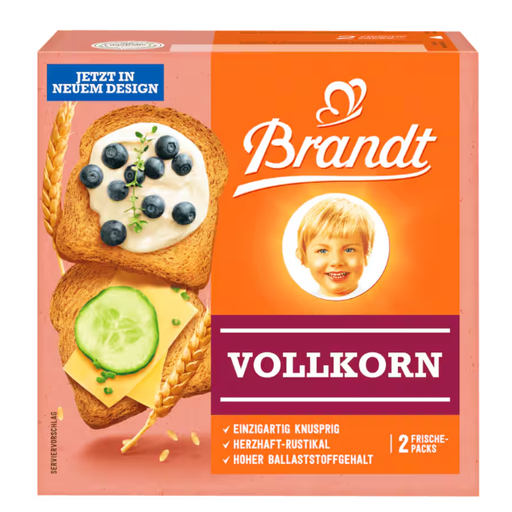 No image available
A rusk option if you’re looking for a wholemeal variety to enjoy with your coffee. Before buying, check the ingredients and allergen information on the specific pack.
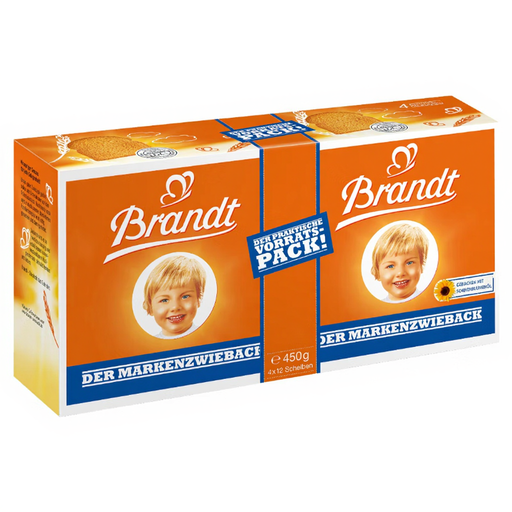 No image available
A rusk option if you’re planning ahead and want several packs for your coffee breaks. The twin pack contains 2 × 225 g; check the ingredients and allergen labelling on the specific pack.
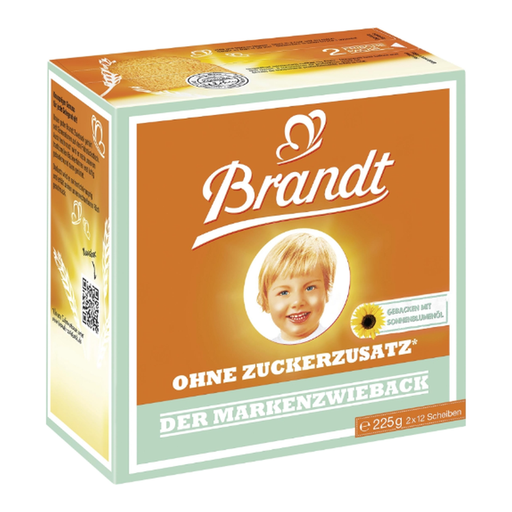 No image available
Another wholemeal rusk option for your coffee break. The pack contains 225 g. Check the ingredients list and nutritional information before using the variety name ‘No Added Sugar’ to help you decide.
No. You can’t infer an effect on digestion from the product name. When comparing rusks and digestive biscuits for your coffee break, look instead at the ingredients, allergens and nutritional information.
Classic Brandt Markenzwieback is not gluten-free; it contains wheat and barley. If you need a gluten-free option, look for a clear gluten-free label on the specific alternative and check its other allergens too.
For packaged rusks and digestive biscuits, compare the ingredients list, highlighted allergens, nutritional information per 100 g and net weight. The Federal Ministry of Agriculture, Food and Home Affairs explains allergen labelling, while the EU’s Your Europe information portal outlines the general labelling requirements for prepacked foods.
Follow the instructions on the relevant pack. The Brandt Markenzwieback described by EDEKA24 should be stored in a cool, dry place; for a chocolate variety, be sure to follow its own storage instructions too.