
Lieferung heute & morgen

Qualitätsgarantie

Willkommens-Angebote freischalten: KOSTENLOSE Lieferung | Bis zu 80 % RABATT | Kostenlose 30-Tage-JoyPlus-Testphase
App herunterladen
A leaky, unsightly, or slow-draining sink drain is more than just a minor annoyance. It can lead to water damage and spoil the overall look of a well-maintained bathroom. However, replacing one is often fraught with uncertainty. As your Joybuy Product Recommendation Officer, I'll help you navigate the common pitfalls and make an informed decision.
Before you spend money on a new model, you should be aware of the most common issues that lead to frustration and unnecessary costs.
To avoid these traps, focus on three objective criteria. These will ensure your new drain assembly fits, functions, and lasts.
Check your sink: Do you see one or more small openings in the upper part of the basin?
The choice of material is critical for longevity.
In the UK and Europe, a standard size has been established for basin drain assemblies.
Here are some recommendations tailored to different needs and use cases.
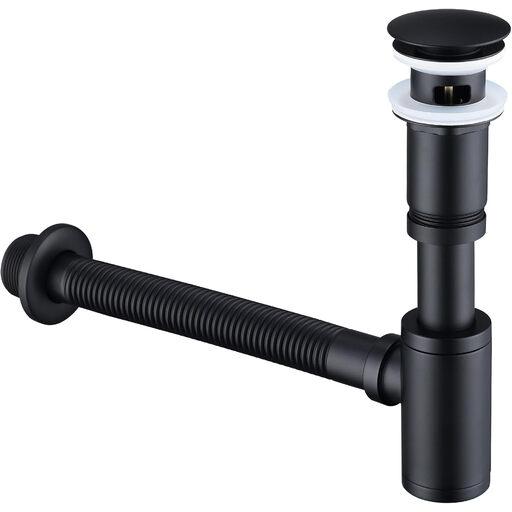
Why This Fits Their Persona: Ideal for users creating a modern bathroom with a cohesive aesthetic, who value a consistent look with other matte black fixtures.
The high-purity brass construction prevents the material dilemma of rust and corrosion. The clear specification "with overflow" and the standard G1 1/4 inch size prevent the compatibility trap.
It comes as a complete Basin P-Trap Kit. The P-trap's flexible stainless steel bellows significantly simplifies installation, as it can be adjusted to fit the wall connection.
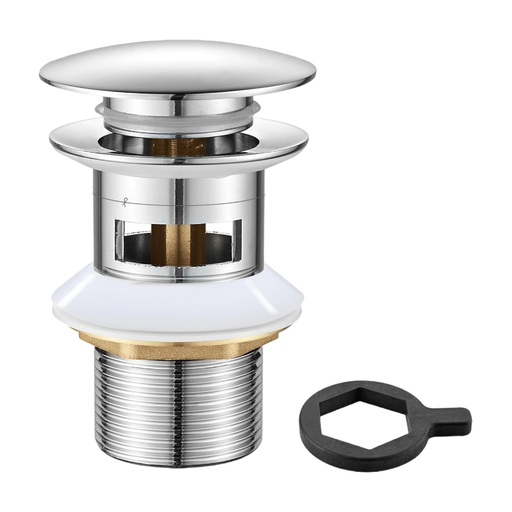
Why This Fits Their Persona: For users seeking a reliable, standards-compliant, and easy-to-install replacement solution that works without complications and promises a long service life.
Strictly adheres to the G1 1/4 inch standard and is explicitly designed for basins with an overflow. The robust brass construction with a chrome finish and silicone gaskets addresses the material defects trap.
Simple click-clack sink stopper (pop-up mechanism) for convenient operation. According to the manufacturer, it can be installed tool-free by hand, which avoids the installation trap.
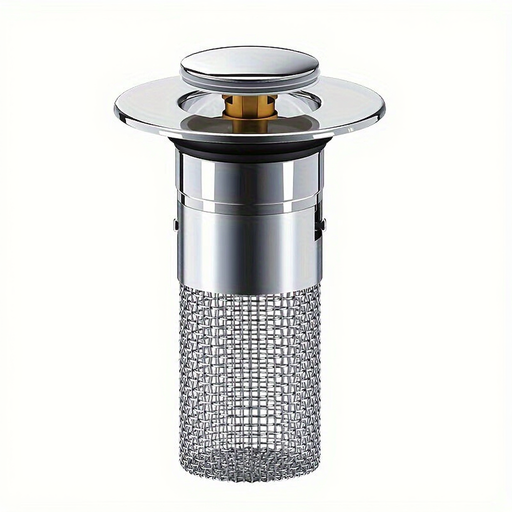
Why This Fits Their Persona: For users whose drain assembly is intact but who constantly struggle with drains clogged by hair, or who simply want to replace a lost stopper.
Completely bypasses the traps of compatibility and complex installation, as it is a universal insert that requires no installation. It's an add-on, not a full replacement.
Extremely cost-effective and offers an instant 2-in-1 solution: it catches hair and debris while also serving as a reliable stopper for filling the basin.
We've compiled a complete, up-to-date list of products that meet these strict selection criteria and UK/EU standards.
The process to replace a sink drain typically follows these steps:
The terms pop-up valve and click-clack stopper essentially describe the same mechanism. It is a spring-loaded valve that is opened or closed by a simple press on the stopper. This technology is modern, hygienic, and replaces old stoppers with chains or impractical rod-operated pop-up drains.
Many modern drain assemblies are designed for tool-free installation, where hand-tightening the nuts is sufficient. However, to loosen an old, rusted, or calcified assembly, a pipe wrench or a special basin wrench may be helpful. It's advisable to check how tight the old components are before starting the job.