
Lieferung heute & morgen

Qualitätsgarantie

Willkommens-Angebote freischalten: KOSTENLOSE Lieferung | Bis zu 80 % RABATT | Kostenlose 30-Tage-JoyPlus-Testphase
App herunterladen
A leaking, rusted, or sticking basin waste is more than just a minor annoyance. It can lead to water damage, compromise bathroom hygiene, and spoil the overall aesthetic. However, replacing it is often more difficult than expected, as the market is flooded with products whose weaknesses only become apparent after installation. Many buyers invest in models that wear out quickly or are incompatible with their basin from the start.
Before you make a decision, it's essential to understand the three most common pitfalls that lead to a bad buy:
To avoid these problems, you should check three technical features before buying. These define the durability, compatibility, and functionality of your new basin waste.
Check your basin: Do you see a small hole in the upper part of the bowl? That is the overflow. It prevents water from spilling over the edge if the tap is left running while the drain is closed.
For bathroom sinks in the UK and Europe, the G 1 ? inch connection thread (corresponding to an outer diameter of approx. 41.9 mm) has become the established standard. Almost all commercially available P-traps are designed for this size. Look for this specification to ensure compatibility with your existing or a new P-trap. This size does not apply to kitchen sinks or bathtubs, which use larger diameters.
The choice of material determines the lifespan. While plastic quickly becomes brittle, solid brass with a high-quality chrome plating offers high resistance to corrosion and mechanical wear.
The closing mechanism should be practical and reliable. A push-open drain valve, also known as a click-clack sink plug, offers the greatest convenience here. The drain is opened or closed by simply pressing on the plug. Good models also allow the plug to be easily unscrewed by hand to effortlessly clean the underlying strainer of hair and dirt.
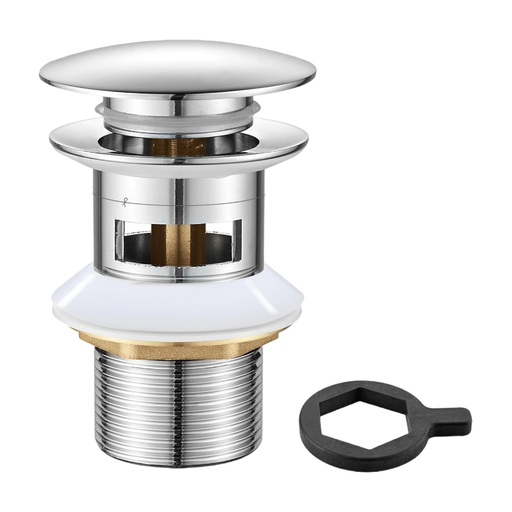
Why This Fits Their Persona: Ideal for anyone renovating their bathroom or simply looking for a durable and visually appealing solution. This model meets all the criteria for modern and functional bathroom fittings.
The solid brass body with a chrome finish prevents flaking and rust (Trap 1). The design for basins with an overflow ensures a correct fit (Trap 2). The pop-up lid can be unscrewed for cleaning (Trap 3).
Robust all-metal construction for maximum durability. Tool-free installation thanks to precision seals and a hand-tightening nut.
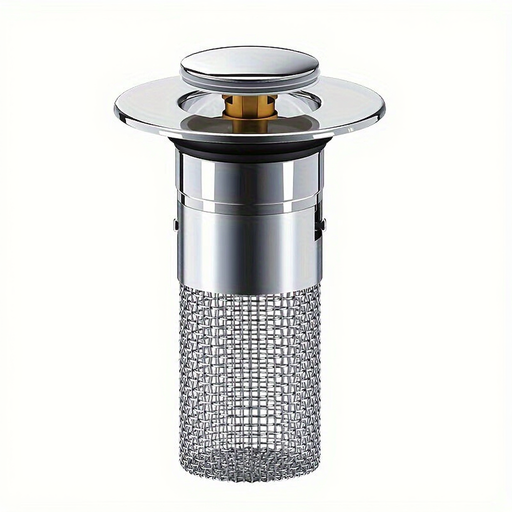
Why This Fits Their Persona: For users who don't want to replace the entire waste assembly but need an immediate, simple solution for clogs and a functional plug.
This product completely bypasses the trap of complicated maintenance (Trap 3). It is simply inserted into the existing drain and can be removed for cleaning at any time, without any disassembly.
Combines a hair strainer and a plug in one. Made of stainless steel for durability and easy cleaning.
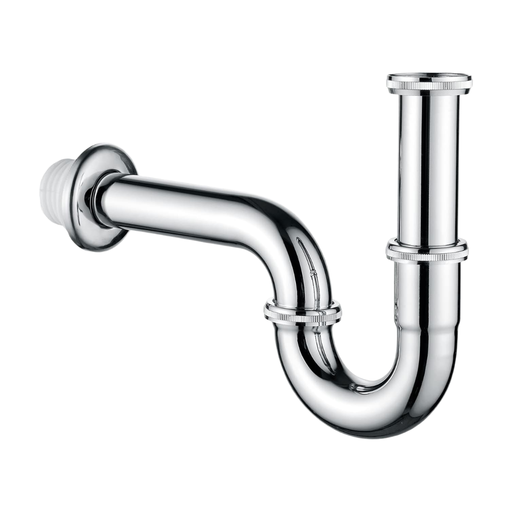
Why This Fits Their Persona: For DIY enthusiasts who are replacing the entire drainage system. A new P-trap is the logical complement to a new basin waste to prevent odours and blockages in the long term.
Addresses the often-overlooked problem of an old, hard-to-clean P-trap. This model is designed for easy, tool-free disassembly for cleaning, thus preventing odour build-up (indirectly avoiding Trap 3).
Effective odour trap thanks to the integrated water seal. Perfectly fits the standard 1 1/4 inch connection and is made from corrosion-resistant stainless steel.
We have compiled a complete, up-to-date list of products that fully meet these strict selection criteria and UK/EU standards.
On most modern push-open drain valves, the top plug (the cap) can be unscrewed anti-clockwise. Underneath, there is often a removable basket that catches hair and coarse debris. Clean this basket and the visible part of the waste with a brush and mild detergent. Do not use aggressive, acidic cleaners as they can damage the chrome surface.
No. The 1 1/4 inch size is the established standard for hand basins in the bathroom. A larger size (1 1/2 inches) is typically used for kitchen sinks, while different standards apply to shower trays and bathtubs. Therefore, always check the product's intended application.
A basin waste with an overflow has a side opening in its threaded body. This is positioned at the level of the overflow channel in the basin and safely drains away overflowing water. A waste without an overflow is completely sealed and designed for basins without this safety feature (e.g., solid countertop basins). Using the wrong type will either cause leaks or render the overflow non-functional.