
Lieferung heute & morgen

Qualitätsgarantie

Willkommens-Angebote freischalten: KOSTENLOSE Lieferung | Bis zu 80 % RABATT | Kostenlose 30-Tage-JoyPlus-Testphase
App herunterladen
Smart glasses combine a spectacle frame with Bluetooth, microphones and, depending on the model, a camera, audio, AI or a display. For travellers, a translation pair can be handy, while cyclists tend to focus on field of view, weight and operation. Professionals are often interested in navigation, notifications or a teleprompter.
However, choosing based on a long list of features alone isn't sensible. What really matters is whether the glasses work with your smartphone, how they operate in daily use, and what limitations exist around data protection, battery life and weather resistance.
Terms like AI glasses, ChatGPT glasses or real-time translation initially tell you little about actual use. Many features require an app, an active Bluetooth connection or internet access. You should also check the number of supported languages: a translation pair may list numerous languages, but the operation, translation speed or monthly free allowances could be limited.
With the Verbex models, for example, up to 1,200 free translation minutes per month are stated. That's a concrete figure, but you should check it against the current app terms before buying.
A camera pair records from the wearer's perspective. In the UK, data protection and privacy laws apply. Recordings in private spaces, during conversations or in public areas can be problematic if other people are recognisably captured. A visible camera therefore doesn't automatically mean that every recording is permitted.
If you want to avoid a camera, you can choose a model with a display and audio but no integrated camera. The Even G2 is explicitly offered without a camera according to product specifications.
Glasses with voice control and a camera need more power than a pure audio pair. With sports models, wind noise, sweat, changing light and fast movements come into play. Additionally, high-resolution video recording isn't always available with every smartphone.
Before buying, battery life, charging method, weight, app platform and weather resistance should be more important than extra AI labels.
For video recording, resolution, frame rate and electronic stabilisation are relevant. The BleeqUp Ranger is specified with a 16 MP camera, 3K video at 60 frames per second, a 120-degree field of view and EIS. According to product information, the high frame rate is currently tied to certain iPhone models and software versions; you should check the specific compatibility before buying.
The LAWAKEN LAWK ONE, according to the manufacturer, features an 8 MP camera, 4K video, a 120-degree wide-angle lens and a recording time of 15 seconds to 5 minutes. For longer recordings, you'll need to check whether multiple clips can be created one after another and how they are saved.
An audio pair transmits music, phone calls or voice prompts through open speakers. You can still generally hear your surroundings, but high volume can impair your awareness. For cycling and hiking, the volume should be set so that traffic and environmental sounds aren't masked.
An AR pair with a display can show navigation, translation or prompts directly in your field of view. The Even G2 is described as having a micro-LED display with an unobstructed view and voice-controlled navigation. At the same time, display content must not distract you when driving or operating machinery.
Weight and material determine whether the glasses remain comfortable for several hours. The Even G2 is specified at 36 grams, the BleeqUp Ranger at 49 grams. The LAWAKEN LAWK ONE weighs over 80 grams without lenses according to the specification, making it more focused on sports functions than on a particularly lightweight feel.
An IP rating describes resistance to dust and water, not suitability for swimming. The Even G2 is rated IP65, the LAWK ONE IPX4 for water and IP5X for dust. Prolonged immersion is not intended with these ratings.
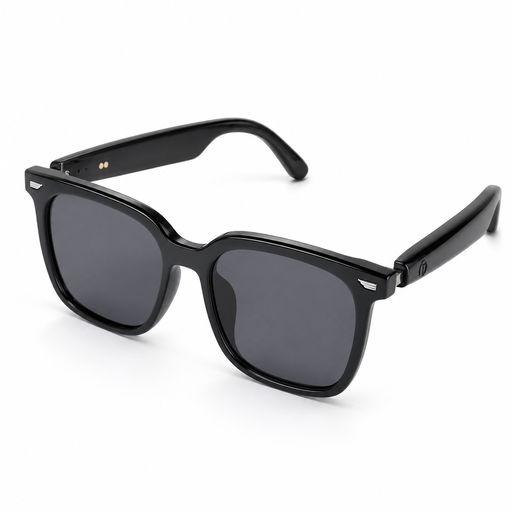
Why this product fits the profile: The GS01 combines translation, Bluetooth calling, music playback and voice control in a pair of glasses for travel, everyday life and business visits.
The translation allowance of 1,200 minutes per month and the required app connection make usage more predictable than a mere advertising claim.
Polarised lenses, UVA/UV400 rating, integrated camera and magnetic charging.
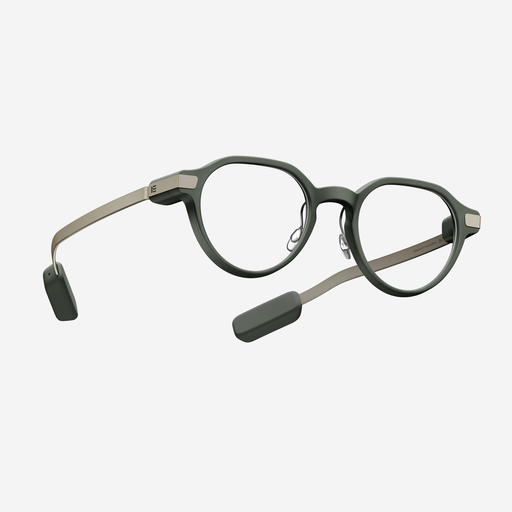
Why this product fits the profile: The camera-free display pair is aimed at users who want discreet prompts, translation, navigation and conversation support.
The absence of a camera reduces recording risks. The stated battery life of up to two days refers to regular use.
36 grams weight, micro-LED display, open navigation and charging case with up to two weeks of additional reserve according to product specifications.
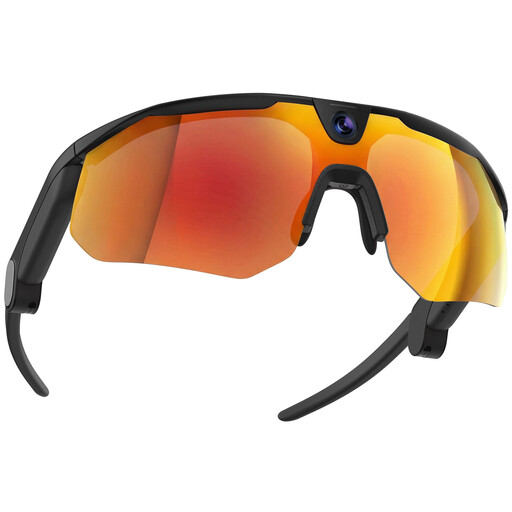
Why this product fits the profile: The smart sports glasses combine a camera, open-ear audio and AI-powered video editing for cycling, hiking and other outdoor activities.
The product data specifies weight, battery capacity, field of view and the compatibility limits of 3K60 recording concretely.
49 grams weight, EIS, 16 MP camera, open-ear speakers and walkie-talkie function.
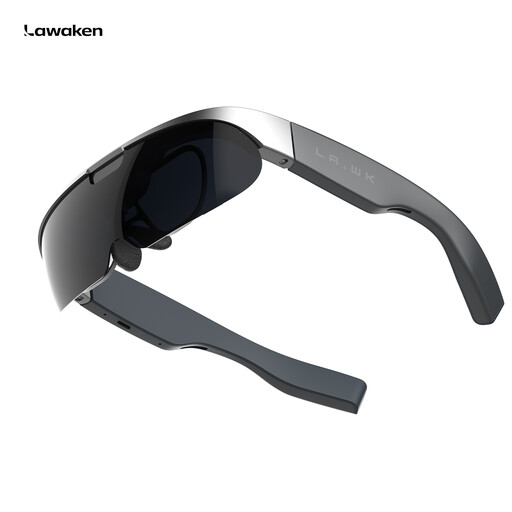
Why this product fits the profile: The glasses are designed for sports data, AR navigation, recording and hands-free communication during outdoor use.
IPX4, IP5X, Bluetooth 5.3 and a stated usage time of eight hours provide concrete guidance for the area of use.
AR display with 640 × 480 pixels, 120-degree camera, UV380 rating, open-ear audio and support for prescription lenses.
We've put together a complete, regularly updated list of products that fully meet these strict selection criteria and the safety regulations in force in the EU.
Generally, you first fully charge the glasses and the associated app. Then you install the app from the relevant app store, activate Bluetooth and pair the device following the instructions. For translation and AI functions, an internet connection may also be required.
The runtime depends heavily on the camera, display, phone calls and volume. Verbex states up to eight hours for the V03-T5 model, and LAWAKEN also states eight hours. The Even G2 is specified with up to two days of regular use. These values aren't directly comparable, as the usage scenarios are defined differently.
The glasses themselves aren't generally banned. However, the camera, display and audio must not distract you from traffic conditions. Recordings of other people must be checked for data protection compliance. When riding, electronic functions should only be used if the traffic situation safely allows it.