
Lieferung heute & morgen

Qualitätsgarantie

Willkommens-Angebote freischalten: KOSTENLOSE Lieferung | Bis zu 80 % RABATT | Kostenlose 30-Tage-JoyPlus-Testphase
App herunterladen
A socket set for car repairs can save you plenty of time when carrying out maintenance, changing tyres and making minor repairs. However, sets vary considerably in their drive sizes, size range, materials and storage. A high piece count alone says little about how practical a set will be.
A large socket set may contain plenty of bits and sockets, yet still be missing important metric sizes. For vehicles in the UK, metric sockets are generally the most useful. So check the sizes actually included, rather than just the number of pieces.
A metric and SAE socket set can be useful if you also work on older or imported vehicles, machinery or bicycles, as well as European vehicles. For a basic car toolkit, though, a well-chosen metric set is often all you need.
The terms 1/4-inch, 3/8-inch and 1/2-inch ratchet refer to the size of the square drive. They are not automatically compatible with one another.
An adaptor can help, but it increases the overall height and may not be suitable for applying high force. For use with an impact wrench, you’ll also need impact sockets specifically approved for that purpose. Standard chrome-plated sockets are not automatically suitable.
Cr-V steel, or chrome vanadium steel, is a common material for hand tools. It describes the steel alloy, but on its own it doesn’t guarantee a particular lifespan or load capacity. Also look for clearly marked sizes, a secure fit and clear information about the tool’s intended use.
Cr-Mo steel is often used for impact sockets. These are designed to withstand impact loads. A Cr-V steel tool set, on the other hand, is typically intended for manual ratchets and socket wrenches.
A suitable car tool set should match the jobs you have in mind. For general repairs, a combination of 1/4-inch and 3/8-inch drives is often versatile. A 1/2-inch drive is commonly used for wheel nuts and larger suspension bolts.
Also check:
A fine-tooth ratchet needs a smaller swing arc to reset. This makes it easier to work in tight spaces, but it doesn’t replace the need to stay within the permitted torque.
A ratchet is no substitute for a torque wrench. For safety-critical fasteners, such as wheel nuts, follow the vehicle manufacturer’s specifications. A torque wrench set is a more suitable addition for this purpose.
Torque values shown on product pages should be treated as technical product specifications. Do not exceed the stated load limit. Never use sockets that are damaged, cracked or visibly worn.
A car tool case should hold the pieces securely and make them easy to identify. Loose sockets can easily disappear among other tools, so a case or roll-up pouch with dedicated slots is useful both in the car and in the workshop.
After use, wipe away grease and moisture with a dry cloth. Store the set in a dry place and check the ratchet mechanism regularly. Specialist attachments for spark plugs, Torx screws or wheel nuts are useful if you do these jobs frequently.
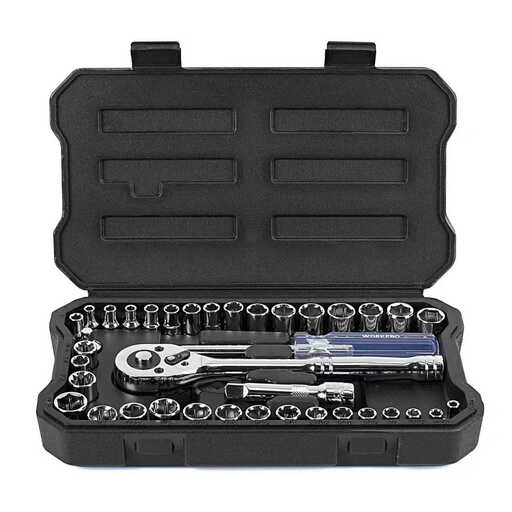
Why this product suits this user: This set combines 1/4-inch and 3/8-inch drives with metric and imperial sockets, making it suitable for basic car repairs, household jobs and DIY projects.
The range of drive sizes and the mix of metric and SAE sockets reduce the risk of ending up with a basic set that is too limited or doesn’t fit the job.
39 pieces, Cr-V steel, a quick-release ratchet and compact storage.
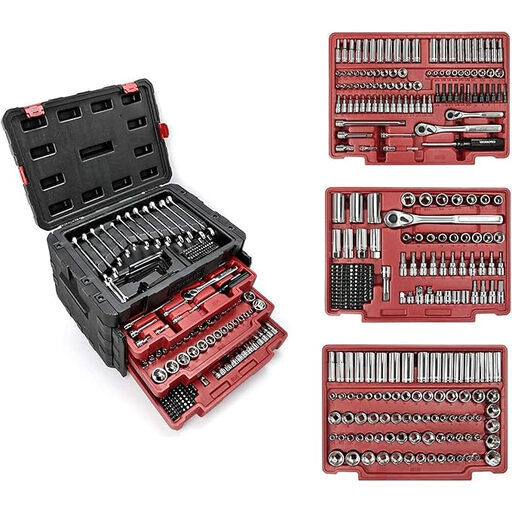
Why this product suits this user: For a well-equipped workshop, this comprehensive automotive tool set brings together several drive sizes, sockets, bits and combination spanners in one case.
The four-part case makes it easier to check what’s included and prevents a high piece count from making storage disorganised.
450 pieces, metric and SAE sockets, plus polished, chrome-plated Cr-V steel tools.
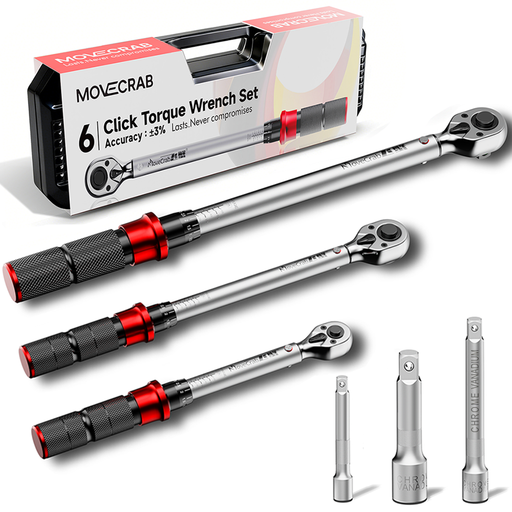
Why this product suits this user: This set is designed for anyone who wants to apply specified torque settings accurately when working on a bicycle, motorbike or car.
It doesn’t replace the vehicle manufacturer’s specifications, but offers three torque ranges and helps prevent a standard ratchet from being used for precision tightening.
A range of 5 to 220 N.m and three extension bars for 1/4-inch, 3/8-inch and 1/2-inch drives.
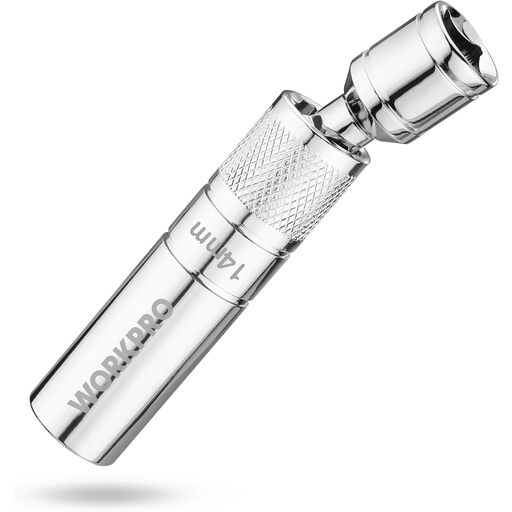
Why this product suits this user: This 3/8-inch spark plug socket is a useful choice if you regularly work on vehicles or small engines.
Its clearly specified 14 mm size, slim profile and magnetic holding function are designed for a particular job, rather than vague all-purpose use.
100 mm length, magnetic core, 360-degree swivel joint and heat-treated Cr-V steel.
We’ve put together a complete, regularly updated list of products that meet these strict selection criteria and fully comply with the safety regulations in force in the EU.
1/4-inch sockets are suitable for smaller jobs. A 3/8-inch drive covers many general repairs, while 1/2 inch is often used for wheel nuts and larger fasteners. The key is to choose the right combination of drive size, socket size and permitted torque.
Its lifespan depends on how it is used, maintained and stored, and whether it’s suited to the job. Clean the tools after use, store them somewhere dry and don’t use hand sockets with an impact wrench. Replace any damaged or worn parts.
A torque wrench is useful for fasteners with a specific torque setting from the vehicle manufacturer. A ratchet set is mainly for loosening and tightening fasteners. It won’t reliably tell you how much force you’re applying.