
Lieferung heute & morgen

Qualitätsgarantie

Willkommens-Angebote freischalten: KOSTENLOSE Lieferung | Bis zu 80 % RABATT | Kostenlose 30-Tage-JoyPlus-Testphase
App herunterladen
A cup of coffee without a coffee machine, filter or lengthy washing-up: soluble coffee is a practical solution for many professionals, travellers and households. But not all instant coffee is the same. Pure coffee granules, 3-in-1 blends, cappuccino powder and ready-to-drink varieties can differ significantly in their ingredients, portion sizes and nutritional values.
If you focus only on the brand name, pack size or terms such as “creamy” and “intense”, you may end up buying something that does not suit your needs. The following criteria will help you assess marketing claims and choose a product for the office, travelling, home or coffee on the go.
With pure soluble coffee, the ingredients list generally consists exclusively or predominantly of soluble coffee. 3-in-1 coffee usually also contains sugar and milk or coffee whitener. This can mean that the coffee content is significantly lower than in black instant coffee.
One example is Jacobs 3in1 Classic Soluble Coffee: according to the product information, the blend contains 54% sugar and 8% soluble coffee. Trung Nguyen G7 3-in-1 lists 46.94% sugar and 13% soluble coffee. If you are looking for a sweet, creamy drink, these recipes may be a good fit. For a stronger coffee profile, a product with a high coffee content is usually the more obvious choice.
A 400-g bag may seem advantageous at first glance. However, what matters is how many portions it makes and how much powder is recommended per cup. For occasional users, coffee sticks with individually portioned quantities can be more practical, as they make measuring and storage easier. Frequent users are generally better off with a larger tin or bag, provided the aroma remains dry and protected from air after opening.
Cappuccino powder and 3-in-1 blends often contain milk ingredients, lactose or milk protein. Some products may also list soya, hazelnuts or gluten, or include corresponding trace allergen warnings. AGF Blendy Stick Espresso au Lait Less Sugar, for example, highlights milk and soya, as well as aspartame as a source of phenylalanine. The ingredients list and allergen information on the packaging delivered are therefore decisive, particularly if you have any intolerances.
First, be clear about which type of drink you are looking for:
The stated coffee content is a useful point of comparison, but it does not tell you everything about your personal taste preferences. The roast, flavouring and preparation quantity also affect the result.
Single portions are practical for the office, train journeys, hotels or camping. Trung Nguyen G7 Instant Coffee 3in1 16 g × 20, for example, is prepared with approximately 75 ml of hot water. Other blends recommend 100 to 150 ml. The amount of water has a significant effect on sweetness, intensity and creaminess.
For quickly prepared coffee, you should also consider the water source and temperature. Very hot water, although not necessarily boiling, will usually dissolve the powder reliably. A single portion may taste weaker in a larger cup; using a second portion, however, also increases the amount of sugar and calories.
With sweet blends, it is worth checking the values per 100 g and, where available, per portion. According to the product information, Jacobs Typ Cappuccino Choco Milka contains 51 g of sugar per 100 g, while Jacobs 3in1 Strong lists a higher coffee content, with around 20% soluble coffee beans. These figures allow you to make an informed initial selection.
Soluble coffee contains caffeine unless the product description states that it is a decaffeinated recipe. If you are sensitive to caffeine, you should take your individual consumption into account. Store powder in a dry place away from heat and keep it tightly sealed after opening. With sticks, each portion is protected separately until opened; once mixed, the drink should be consumed promptly.
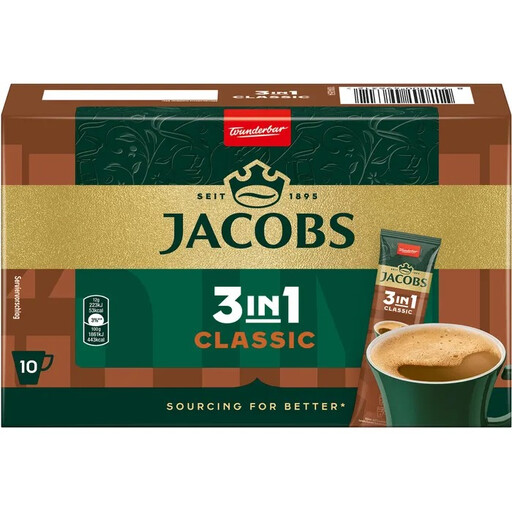
Why this product suits the profile: The individual portions combine coffee, creamer and sugar, requiring only hot water. This makes measuring easier for occasional use.
The portion format prevents inaccurate measuring. At the same time, the 54% sugar content is clearly stated in the ingredients list.
20 individual portions, a 3-in-1 recipe and preparation without additional milk or sugar.
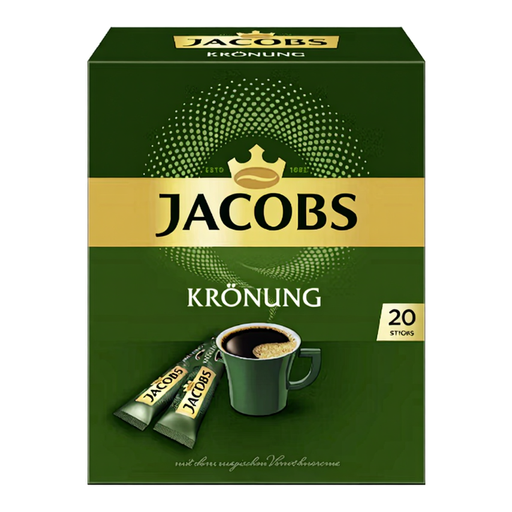
Why this product suits the profile: The product information states that it contains 100% pure soluble coffee, with no added sugar or milk ingredients. This is ideal for a cup prepared to your own taste.
The straightforward recipe reduces the risk of confusing a sweet mixed drink with classic coffee. Sugar and milk can be added separately to taste.
20 sticks containing 1.8 g each, with a recipe containing no declarable added ingredients according to the product description.
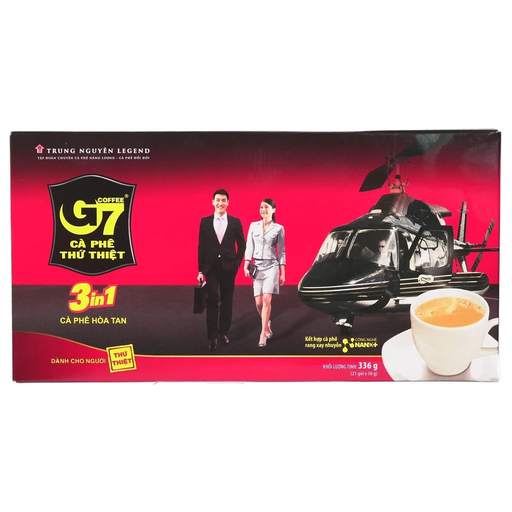
Why this product suits the profile: The pack of 21 sachets at 16 g each is aimed at households and users who want Vietnamese G7 coffee available for several preparations.
The recommended water quantity of around 75 ml makes the portion size easy to understand. For a Vietnamese-style drink, two sachets and ice cubes are suggested.
21 individual portions, sourced from Vietnam, and a soluble coffee content of 12% according to the product information.
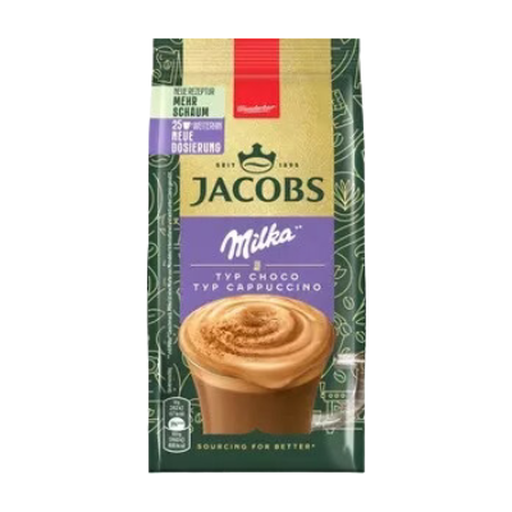
Why this product suits the profile: The recipe combines chocolate, coffee and nut flavours in a soluble cappuccino for preparation at home.
The coffee content of 3.4% and sugar content of 56 g per 100 g are stated. This makes it easier to assess the sweet cappuccino recipe realistically.
400-g pack, 34% chocolate powder according to the ingredients information, and milk ingredients for a creamy drink recipe.
We have put together a complete, regularly updated list of products that fully meet these strict selection criteria and the safety regulations applicable in the EU.
Add the powder or granules directly to a cup and pour over hot water. The exact quantity depends on the packaging instructions. With individual portions, the contents of one stick are usually sufficient. For cappuccino powder, it is often recommended to stir while adding the water and leave the drink to stand briefly. Too much water can weaken the flavour and sweetness.
The best-before date is printed on the packaging. After opening, store the powder in a dry, cool place and keep it as airtight as possible. Moisture can cause it to form lumps. Individual portions offer practical protection here, as only one stick is opened at a time.
That depends on the pack size, portion quantity and product type. Pure granules may work out differently per cup from a 3-in-1 drink containing creamer and sugar. For a fair comparison, look at the price per 100 g and the recommended quantity per cup. For coffee on the go, coffee sticks can also reduce the cost of accessories and preparation, as no filter or coffee machine is required.