
Lieferung heute & morgen

Qualitätsgarantie

Willkommens-Angebote freischalten: KOSTENLOSE Lieferung | Bis zu 80 % RABATT | Kostenlose 30-Tage-JoyPlus-Testphase
App herunterladen
The purchase of an electric car is a significant step. Yet, a crucial accessory is often overlooked: the right Type 2 charging cable. An unsuitable cable can not only unnecessarily extend charging times but, in the worst-case scenario, pose a safety risk. Many buyers fall into avoidable traps, driven by marketing promises or a simple lack of technical knowledge.
This guide serves as your roadmap. We'll show you the three most common mistakes when buying a charging cable and explain which parameters truly matter, so you can make an informed and safe decision for your vehicle and your charging setup.
Before we dive into the technical specifications, it's important to know the typical pitfalls. Avoiding them not only saves money but also frustration in your daily charging routine.
To avoid these mistakes, you should carefully examine three core aspects. These determine how efficient, convenient, and safe your charging process will be.
The maximum charging power is determined by the weakest link in the chain: the vehicle, the charging station, and the charging cable. The decisive factor is the vehicle's built-in On-Board Charger (OBC).
Important Note: You can safely use a 22 kW cable with an 11 kW vehicle. The vehicle communicates with the charging station and automatically limits the charging power to 11 kW. The charging process won't be any faster, but the cable is future-proof should you later switch to a vehicle with a higher charging capacity.
The choice of length depends entirely on your individual parking situation.
A Type 2 to Type 2 cable is a high-performance product. Therefore, you must pay close attention to recognised safety certifications.
Based on the criteria mentioned, we have compiled a selection of cables suitable for different user profiles.
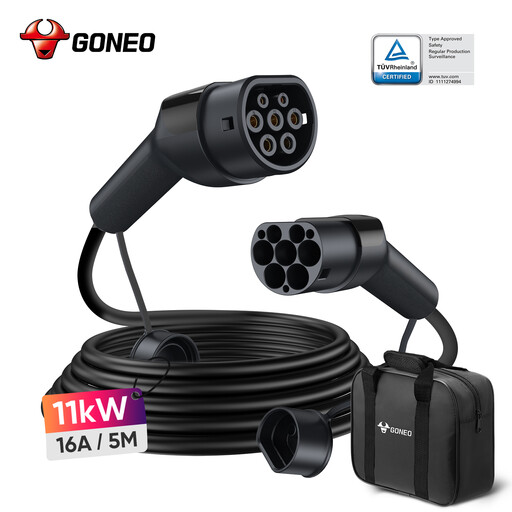
Why This Fits Their Persona: Perfect for daily charging with a home wallbox when the vehicle is parked right next to it. The 11 kW power is optimally sized for a full overnight charge for most current EVs.
Avoids unnecessary spending on a 22 kW cable when the vehicle or wallbox is limited to 11 kW. The 5-metre length is ideal for fixed home setups and prevents unnecessary cable clutter.
T?V Rheinland certified safety; Robust TPU cable sheath for durability.
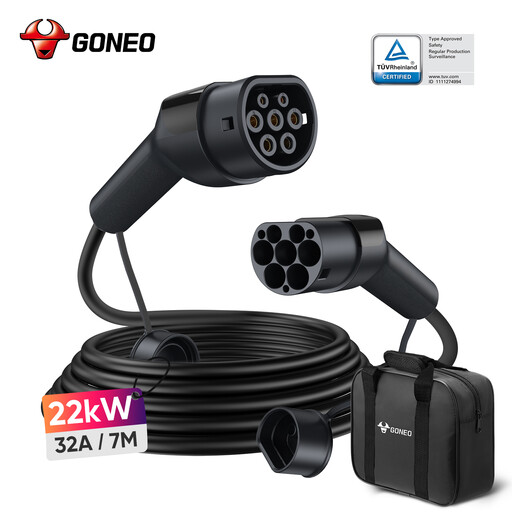
Why This Fits Their Persona: The 7-metre length provides the necessary flexibility for most public AC charging stations, where parking isn't always ideal. The 22 kW capacity future-proofs the cable for vehicles with faster on-board chargers.
Solves the problem of cables being too short at public charging points. It enables the maximum AC charging speed for compatible vehicles, thus avoiding an artificial limitation by the cable.
High charging power of 22 kW; 7-metre length for high everyday flexibility.

Why This Fits Their Persona: For users who are regularly confronted with difficult parking situations, whether due to a long driveway, shared parking lots, or charging on the street at a greater distance from the charging station.
Completely eliminates the "reach" problem and offers maximum flexibility where 5- or 7-metre cables fall short. This makes "cable stress" a thing of the past.
Maximum flexibility thanks to the 10-metre cable length; Run-over and drop-proof plugs for demanding daily use.
We have compiled a complete, up-to-date list of products that fully meet these strict selection criteria and safety regulations.
Yes, that is perfectly safe and works without any issues. The vehicle's charging system communicates with the charging station and only requests the power it can handle (in this case, 11 kW). The 22 kW cable simply acts as an oversized but fully functional connection. You won't charge any faster, but you'll be prepared for a future vehicle with a higher charging capacity.
The IP (Ingress Protection) rating classifies the degree of protection an enclosure provides against the ingress of foreign objects and water. IP54 means:
A T?V certification is independent proof that the product meets strict safety and quality standards. When charging an EV, high currents flow for extended periods. A T?V-certified charging cable has been tested for aspects like electrical safety, overheating protection, the material quality of the cable sheath, and the mechanical resilience of the plugs. It minimises the risk of damage to the vehicle's battery and home electronics and helps prevent fire hazards. It is an essential feature of a trustworthy and durable product.