
Lieferung heute & morgen

Qualitätsgarantie

Willkommens-Angebote freischalten: KOSTENLOSE Lieferung | Bis zu 80 % RABATT | Kostenlose 30-Tage-JoyPlus-Testphase
App herunterladen
A spilled glass of wine on the new sofa, muddy paw prints on the carpet, or the inevitable snack stains on car seats—stains on textiles are an everyday nuisance. An upholstery cleaner promises a quick fix, but the market is flooded with devices making bold advertising claims. Many buyers only realise after their purchase that their new machine is impractical or that its cleaning performance doesn't meet their expectations.
This guide will help you identify the crucial features and avoid common purchasing traps. We focus on the technical fundamentals that truly matter, so you can make an informed decision.
Before you invest, you should be aware of two widespread marketing pitfalls that often lead to disappointment:
To separate the wheat from the chaff, you should focus on three objective criteria that determine a device's functionality and practical value.
An effective wet cleaner for upholstery, often called a carpet washer, operates on the spray-extraction principle. This process consists of three steps:
This method enables a deep clean that goes far beyond what is possible with manual scrubbing or a standard vacuum cleaner.
A crucial feature for practicality is a dual-tank system. This ensures that clean water and cleaning solution are kept separate from the extracted dirty water. This prevents re-soiling the cleaned area and simplifies handling. Look for a capacity of at least 1 litre for the fresh water tank to minimise work interruptions, especially if you plan to clean larger upholstered furniture.
The included attachments determine the device's versatility. A wider brush is well-suited for carpets, while a narrower nozzle is ideal for spot-cleaning stains on the sofa or in the tight spaces of car seats. A sufficient length of hose (at least 1 metre) and power cord (at least 3 metres) is also important to work flexibly without constantly changing power outlets.
Here are some models that are worth considering based on their technical specifications for different user profiles.
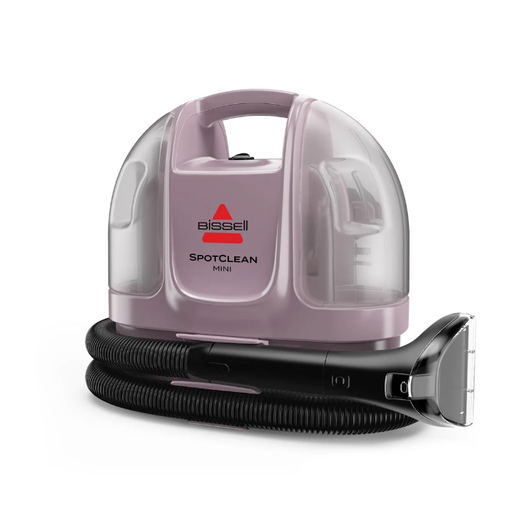
Why This Fits Their Persona: A great choice for smaller households or individuals looking for a compact device for occasional stain removal. Its light weight and compact design make it easy to store and ready for everyday mishaps.
The device focuses on the essentials: The "Triple Action" cleaning system combines spraying, scrubbing, and suction without getting lost in exaggerated performance specs. The tank size is designed for targeted spot cleaning.
Very lightweight (approx. 3.4 kg) and compact, ideal for stairs, car interiors, and apartments with limited storage space. Based on the proven cleaning system of an established brand.
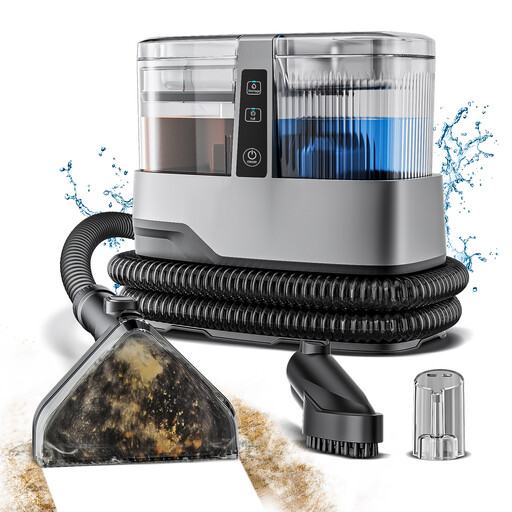
Why This Fits Their Persona: Suitable for families with children and pet owners who regularly face tough stains. The high performance is designed to effectively remove even deep-seated dirt and stains from pet hair and mud.
This model avoids the pure suction power trap by combining a high value (17 kPa) with a powerful 600W motor specifically designed for wet cleaning. It's a specialised stain remover, not a weak all-rounder.
The combination of high motor power and strong suction allows for intensive deep cleaning. The device features a dual-tank system for hygienic separation of fresh and dirty water.
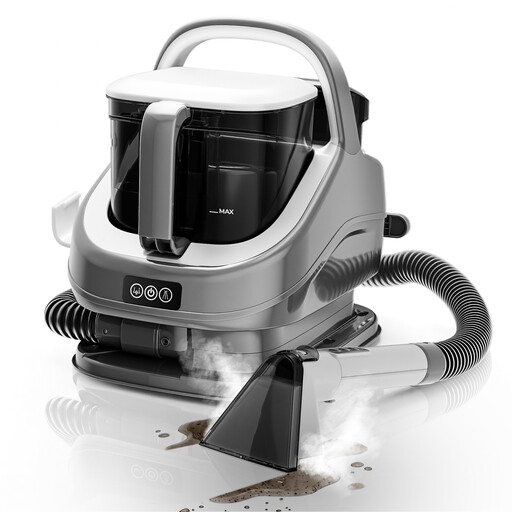
Why This Fits Their Persona: Ideal for users looking for a versatile solution for different types of stains. The modes for cold water, hot water, and steam offer the flexibility to treat both fresh spills and dried-in or greasy stains. Also suitable as a mattress cleaner.
Instead of being a vague 'all-in-one' cleaner, this device offers clearly defined functions. The different modes are not marketing gimmicks but provide real added value for treating various types of stains.
Three cleaning modes (cold water, hot water, steam) for maximum flexibility. The device combines strong suction power (13 kPa) with a hygienic dual-tank system (1400 ml / 1200 ml).
We've curated a complete, up-to-date list of products that fully meet these stringent selection criteria and safety standards.
It is recommended to use low-foaming or non-foaming cleaning solutions specifically designed for carpet washers and upholstery cleaners. Conventional detergents can create excessive foam, which can impair suction performance and potentially damage the motor. Always follow the device manufacturer's instructions.
An upholstery cleaner (spray-extraction device) cleans by spraying a cleaning solution and immediately vacuuming it up along with the dissolved dirt. A steam cleaner, on the other hand, uses hot steam to loosen dirt and sanitise surfaces but typically does not have a suction function to remove the loosened dirt and moisture. For targeted stain removal from textiles, a spray-extraction device is often the more effective method.
For general hygiene and maintenance, a deep clean is recommended every 6 to 12 months. In households with pets, children, or heavy use, more frequent spot cleaning as needed and a deep clean every 3 to 6 months can be beneficial to maintain the longevity and appearance of the upholstered furniture.