
Lieferung heute & morgen

Qualitätsgarantie

Willkommens-Angebote freischalten: KOSTENLOSE Lieferung | Bis zu 80 % RABATT | Kostenlose 30-Tage-JoyPlus-Testphase
App herunterladen
It happens in a careless moment: a red wine stain on the light-coloured sofa, muddy paw prints on your favourite armchair, or spilled coffee on the car seat. Such mishaps are frustrating and often difficult to remove. An upholstery cleaner, also known as a carpet washer or spray extraction device, promises a quick fix. However, the market is flooded with devices making grand advertising claims that often fail to deliver in practice.
As your Joybuy Product Recommendation Officer, I'm here to help you separate the wheat from the chaff. Instead of falling for marketing hype, you should focus on the crucial technical features. We'll highlight the most common pitfalls when buying and show you what really matters to make an informed decision.
Many devices look convincing at first glance but turn out to be impractical or underpowered upon closer inspection. Pay special attention to these three points to avoid a bad purchase:
To ensure your new wet cleaner performs its job reliably, focus on the following objectively measurable criteria.
Suction power is the most important criterion for a spot cleaner. It is specified in kilopascals (kPa). For the effective cleaning of upholstery, carpets, or mattresses, a value of at least 13 kPa is recommended. Strong suction not only ensures that dirt particles are loosened from deep within the fibres but also that a large portion of the cleaning fluid is recovered. The result: shorter drying times and a lower risk of water spots or musty odours. This is especially important when you want to clean your sofa or use a mattress cleaner.
A high-quality spray extraction device always features a two-tank system.
This system ensures that only clean liquid is sprayed onto the area being treated. Look for sufficient capacity (e.g., over 1 litre for fresh water and 0.8 litres for dirty water) to avoid constant refilling or emptying. Easily removable and simple-to-clean tanks are another plus for hygiene and user convenience.
A good upholstery cleaner is as versatile as its attachments. Specialised brushes are essential for thoroughly cleaning various surfaces.
Check which accessories are included in the scope of delivery before buying to be prepared for any situation.
Based on the objective criteria mentioned above, we have identified some models that are suitable for specific user groups.
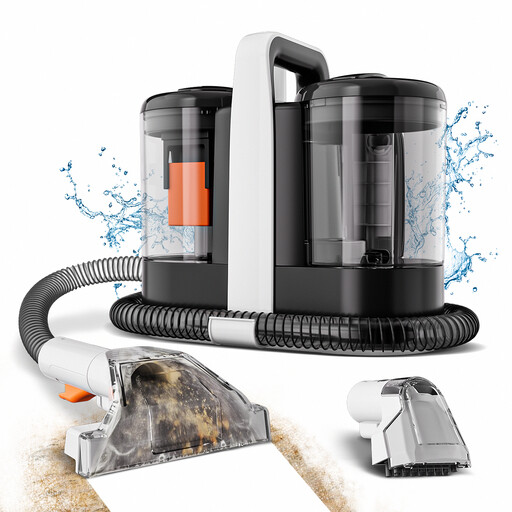
Why This Fits Their Persona: This device is designed for users seeking a flexible solution for various cleaning tasks throughout the house and in the car. Thanks to its compact design and the combination of a long hose and power cord, it is highly mobile.
With a suction power of 15 kPa, it offers transparent and strong performance (Trap 1). The large dual-tank system (1.5L / 0.8L) prevents cross-contamination (Trap 2), and the two included brush heads provide flexibility for different surfaces (Trap 3).
The combination of high suction power and long reach allows for uninterrupted cleaning of even larger items like sectional sofas or complete car interiors.
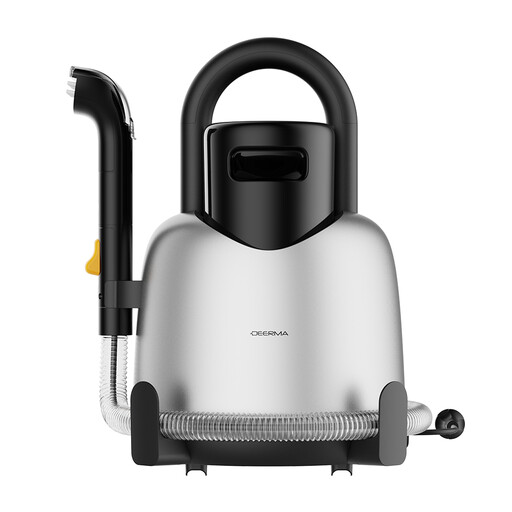
Why This Fits Their Persona: Ideal for users who desire a particularly intensive clean, e.g., for households with pets or for heavy soiling. The additional hot water and steam function enables a deep-pore clean.
The device offers a solid 13 kPa suction power and three clearly defined cleaning modes (Steam, Hot Water, Normal) instead of a single exaggerated promise (Trap 1). The very large tanks (1.7L / 1.4L) are extremely practical (Trap 2), and the five included attachments offer true versatility (Trap 3).
The ability to work with up to 100°C steam or 60°C hot water can help dissolve stubborn grease, oils, and organic stains more effectively than cleaning with cold water alone.
We have compiled a complete, up-to-date list of products that fully meet these strict selection criteria and German safety regulations.
1. How long does it take for a sofa to dry after cleaning with an upholstery cleaner? The drying time depends on several factors: the suction power of the device, the room temperature, and ventilation. A device with a high suction power of 13-15 kPa extracts most of the water, which can reduce the drying time to just a few hours. Ensure good air circulation during and after cleaning by opening windows or using a fan.
2. Can I use normal tap water in a spray extraction device? Yes, in most cases, using normal tap water is fine. However, if you live in a region with very hard (calcareous) water, using distilled water can be beneficial. This prevents limescale deposits in the device's pump and nozzles, thereby extending its lifespan.
3. Are upholstery cleaners also suitable for removing pet odours? Yes, they are very well-suited for this. Unlike sprays that only mask odours, upholstery cleaners tackle the problem at its root. The process of flushing water (with a suitable cleaning solution) into the fabric and then vacuuming it out along with the source of the odour ensures lasting odour elimination. This is particularly effective for removing pet stains and neutralising the associated smells.