
Lieferung heute & morgen

Qualitätsgarantie

Willkommens-Angebote freischalten: KOSTENLOSE Lieferung | Bis zu 80 % RABATT | Kostenlose 30-Tage-JoyPlus-Testphase
App herunterladen
Seasonal clothes, bedding and blankets can take up a lot of room in your wardrobe or under your bed. Vacuum bags for clothes can reduce the volume of textiles by removing the air, making them easier to store. However, bags vary considerably in their construction, closures, sizes and pumping systems.
Claims such as “up to 80% space saving” often come from manufacturers and depend on the material, how full the bag is and the type of textile. A thick winter duvet compresses differently from T-shirts. That’s why the actual dimensions, the shape of the bag and the recommended fill level matter.
Not every vacuum storage bag works with every accessory. Some models need a vacuum cleaner, while others use a hand pump or a supplied electric pump. Before you buy, check that the bag is compatible with the equipment you already have. For travel, vacuum bags for clothes with a pump are handy when you don’t have access to a vacuum cleaner.
A basic zip or damaged valve can let air back into the bag. A double zip, a visible closure indicator and a sturdy valve area make it easier to check the seal. Sharp zips, buckles or jewellery can damage the film, so cover or pad them before packing.
Compact sizes are ideal for T-shirts, underwear and smaller travel wardrobes. Hanging garment bags are a good choice for coats and suits. If you want to store duvets, pillows or bulky winter textiles, look for cube or jumbo sizes.
Common sizes include:
Make sure the dimensions suit the space where you plan to store the bag. A larger bag isn’t automatically more practical if it won’t fit in your wardrobe, under your bed or in a storage box.
Many models are made from polyethylene (PE) or a combination of polyamide (PA) and polyethylene. Product descriptions often say that PA-PE composite films are more tear- and water-resistant than basic films. For everyday use, a sturdy double closure and an easily accessible valve are important.
Make sure textiles are clean and completely dry before sealing the bag. Vacuum bags don’t automatically prevent odours or moisture from developing. For long-term storage, choose a dry place that isn’t too warm. Some manufacturers advise against fully compressing down-filled and feather-filled items, recommending that you only compress them partially.
Some reusable vacuum bags come with a cordless pump. Other versions require a standard vacuum cleaner. Hand-compression bags don’t need a separate device, making them suitable for travel.
Check for:
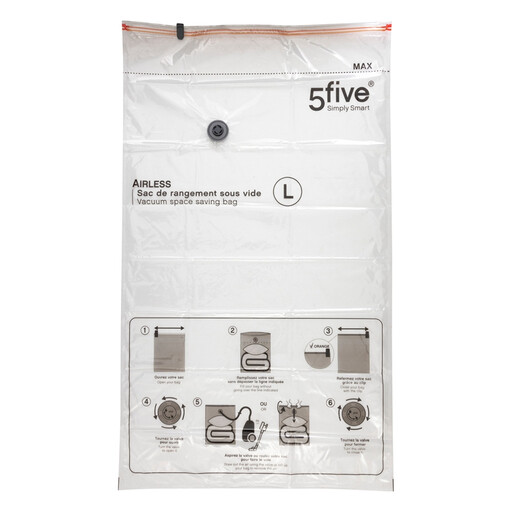
Why this product suits this profile: This two-piece set contains two large 120 × 70 cm bags, ideal for seasonal clothes, bedding and under-bed storage.
The transparent bags make it easy to see what’s inside. The secure zip and valve system are designed for use with a compatible vacuum cleaner.
Two polyethylene bags with transparent material and a large size for clothes and bedding.
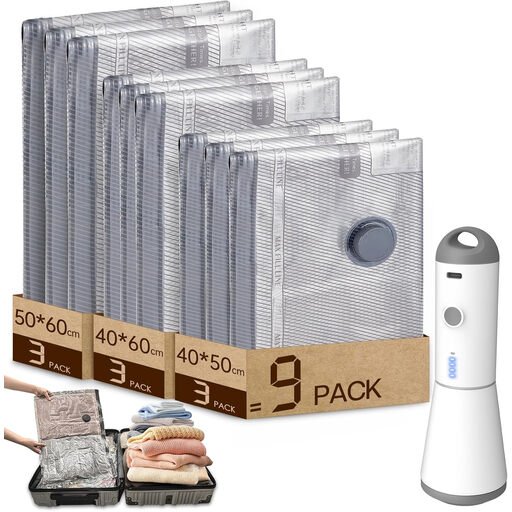
Why this product suits this profile: The set includes three sizes and a cordless pump, making it suitable for regular use at home, when moving house or when travelling.
The three sizes reduce the risk of storing small textiles in oversized bags. The double zip and separate valve make it easy to check the seal.
Nine PA-PE bags in 40 × 50, 40 × 60 and 50 × 60 cm, plus a cordless pump with a lithium-polymer battery.
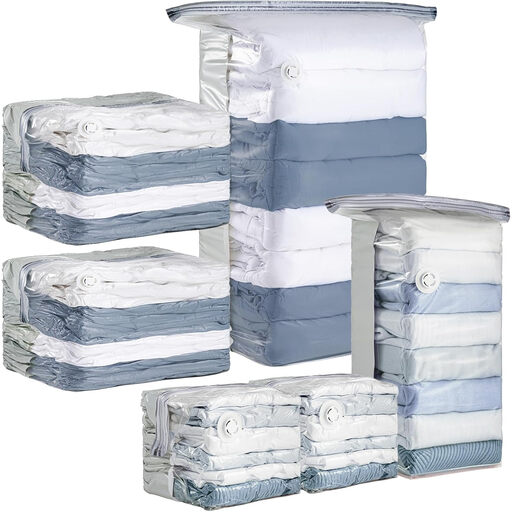
Why this product suits this profile: These freestanding cubes are designed for blankets, duvets, pillows and larger quantities of seasonal textiles. They work with a standard vacuum cleaner.
The cube shape makes filling easier and stops large textiles from being crammed into a narrow bag. A slider clip helps secure the double closure.
Six jumbo bags made from PA and PE, compatible with a standard vacuum cleaner and with a stated load capacity of 16 lb per bag.
We’ve put together a complete, regularly updated list of products that meet these strict selection criteria and the safety requirements in force in the EU.
Vacuum bags aren’t designed to be used as toys, bean bags or sleeping mats. If you’re storing clothes made from delicate fibres, check the storage time regularly.
Their lifespan depends on the material, closure, storage location and how often they’re reused. There’s no reliable one-size-fits-all answer in months or years. Check the bag for tears, brittle areas and a working valve before each use. Replace any damaged bags.
Yes. Special hanging vacuum garment bags are designed for this purpose. They often have a hook and a long shape for jackets, suits or dresses. Before buying, check that your wardrobe is tall enough and that your vacuum cleaner hose fits the valve.
Large or cube-shaped bags are suitable for duvets and bulky bedding. Don’t fully compress down- or feather-filled items if the manufacturer recommends only partial compression. Make sure the duvet is dry and doesn’t put the zip under strain.