
Lieferung heute & morgen

Qualitätsgarantie

Willkommens-Angebote freischalten: KOSTENLOSE Lieferung | Bis zu 80 % RABATT | Kostenlose 30-Tage-JoyPlus-Testphase
App herunterladen
As an owner of a Waterdrop reverse osmosis system, you appreciate the quality of pure water. But when the filter indicator lights up or performance declines, the search for the right replacement begins. This process can quickly become overwhelming. One wrong click not only leads to unnecessary expenses but can also compromise your system's functionality.
Many users fall into common pitfalls. These include purchasing a cartridge that looks similar but is incompatible and won't fit your device. Another challenge is unclear lifespan specifications, which are often based on idealised lab conditions and may not be met in practice, depending on local water hardness. To help you make the right choice, we've outlined the key points you should check before buying a Waterdrop replacement filter.
To ensure you get the exact, functionally correct filter, you should verify three core parameters. These will help you distinguish marketing promises from technical facts.
The most important step is to match the model number. Waterdrop offers various series (e.g., Waterdrop X Series Filter, Waterdrop G3 Filter) that are not interchangeable. Even within a single series, there are differences. For example, a filter for the WD-G3-W system will not fit a WD-G3P600 system.
Therefore, always check the exact name of your system and the required Waterdrop water filter cartridge. The specific filter designation, such as WD-G3-N1CF or F2 Filter, is printed on your old filter or in your system's user manual. Cross-referencing this identifier is the surest way to avoid a purchasing mistake.
A Waterdrop reverse osmosis system uses a multi-stage process where each filter performs a specific task. It's crucial to choose the right type for the stage you are replacing:
When you replace a Waterdrop filter, ensure you are buying not only the right model but also the correct filter type for the specific filtration stage.
The stated lifespan of a filter (e.g., 6, 12, or 24 months) is a benchmark. The actual service life heavily depends on your tap water quality and individual water consumption. A more objective indicator is the filter capacity, which is specified in litres or gallons (e.g., 8,328 litres). Compare this figure to get a more realistic idea of its durability and to better calculate operating costs when you buy a Waterdrop filter.
Based on the criteria above, we have compiled a selection of replacement filters tailored to specific user profiles and system types.
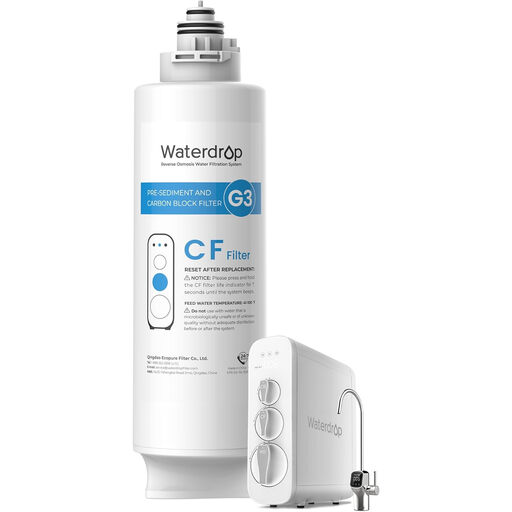
Why This Fits Their Persona: Ideal for users of the popular WD-G3-W system who prefer a straightforward, predictable replacement every 6 months. The installation is designed for maximum simplicity.
The clear labelling WD-G3-N1CF and explicit compatibility with the WD-G3-W system prevent mix-ups with other G3 models. The 6-month cycle provides a reliable basis for planning.
3-in-1 composite filter reduces sand, rust, chlorine, and odours. The tool-free, twist-to-replace mechanism takes only 3 seconds, according to the manufacturer.
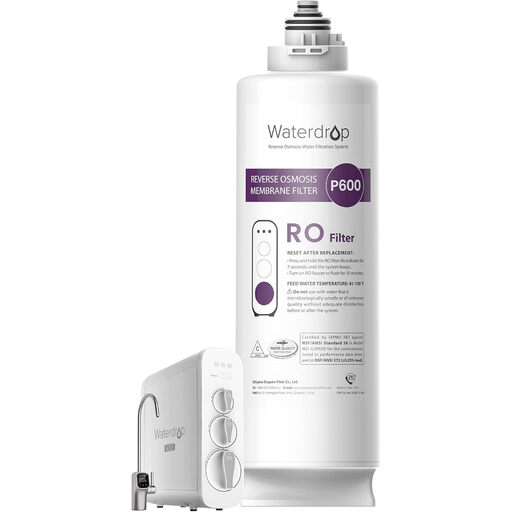
Why This Fits Their Persona: Perfect for users who want to minimise maintenance. With a lifespan of up to two years, this RO membrane filter is a long-term solution for owners of the WD-G3P600 system.
The specification of up to 24 months or 8,328 litres is a clear, quantifiable figure that goes beyond vague promises. The NSF/ANSI 58 certification for TDS reduction serves as objective proof of performance.
Effectively reduces TDS, chromium, PFAS, fluoride, and heavy metals. The long lifespan significantly lowers operating costs and maintenance effort.
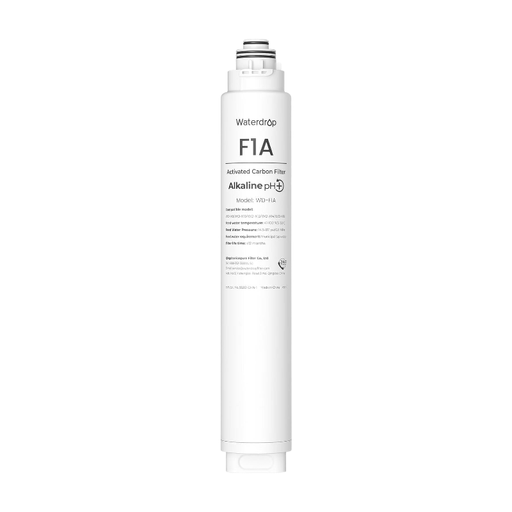
Why This Fits Their Persona: Specifically for users of the WD-X12-Alkaline and WD-X16 systems who want not just pure, but functionally enriched water. This filter goes beyond simple contaminant reduction.
This filter performs a specific function (alkalinisation) that a standard filter cannot. This prevents the purchase of the wrong filter type and ensures the desired result is achieved.
Adjusts the water's pH to 7.5± and enriches it with minerals like calcium and magnesium. Offers a lifespan of up to 12 months.
We have compiled a complete, real-time list of products that fully satisfy these strict selection criteria.
The replacement frequency depends on the filter type, your water consumption, and water quality. Most Waterdrop systems feature a smart indicator that displays the filter status and notifies you when a change is needed. As a general guideline:
An incompatible filter usually cannot be installed correctly. It might not lock into place, may feel too loose or too tight, or the water supply might not resume after installation. Before opening the packaging, compare the model number on the new filter's box with your old filter or the information in your user manual.
No, changing a Waterdrop filter is intentionally designed to be simple. Most systems use a "Twist-and-Lock" mechanism. You typically don't need any tools. The replacement often takes just a few seconds: turn the old filter counter-clockwise to unlock and remove it, then insert the new filter and turn it clockwise until it locks into place. The water supply is automatically shut off during the change.