
Lieferung heute & morgen

Qualitätsgarantie

Willkommens-Angebote freischalten: KOSTENLOSE Lieferung | Bis zu 80 % RABATT | Kostenlose 30-Tage-JoyPlus-Testphase
App herunterladen
Fingerprints, limescale marks and streaks on large panes are just as frustrating at home as restricted visibility through dirty vehicle windows. The right window cleaner can make the job easier – provided its design, reach and cleaning method suit the intended use.
Many poor purchases are not caused by the price, but by unclear product information. A budget window squeegee, for example, may be sufficient for full-height windows, but have too short a reach for high panes. An electric window cleaner reduces manual effort, but requires regular care and suitable fluids. Window-cleaning robots, meanwhile, are technically more complex and must not be used without safety precautions.
A wide window squeegee covers more surface with each stroke. For small windows, sash windows or narrow mirrors, however, a large model can be cumbersome. The key consideration is therefore the combination of cleaning width, manoeuvrability and window layout.
The rubber blade also deserves attention: it should sit evenly against the surface and be free from crumbs. Even small particles can scratch glass or painted surfaces when dragged across them during dry wiping.
A telescopic window squeegee is practical for skylights and high windows. However, a long pole alone does not guarantee safe or precise cleaning. Check that the locking mechanism holds firmly and that the cleaning head can be angled. A connection that is too flexible makes smooth, even movements more difficult.
For high external windows, a telescopic pole should not be seen as a substitute for safe working practices. Electric devices also require a securely attached safety rope and a suitable glass surface.
Depending on the model, a window-cleaning robot may offer a spray function, edge detection and route planning. It still needs to be prepared and monitored while operating. Safety rope, power supply, adhesion and a suitable surface are essential requirements.
These types of device are not suitable for cracked, damaged, heavily uneven or unsuitable materials. Before use, follow the manufacturer's instructions concerning cleaning fluid, tank filling and ambient temperature.
For standard household windows, cleaning widths of around 25 to 35 centimetres are often easy to handle. A silicone or rubber blade should be well made and easy to rinse. Microfibre covers absorb dirt and liquid, but must be rinsed after cleaning and allowed to dry completely.
With a window-cleaning set containing a washing cover and window squeegee, the work can be completed in two steps: wet and loosen the dirt first, then remove the water and grime. This is particularly useful for glass surfaces, shower doors and larger mirrors.
An ergonomic handle reduces pressure on your hand and wrist. An adjustable angle helps around window edges and in hard-to-reach areas. With a telescopic window squeegee, the length range, locking mechanism and head stability are more important than the greatest possible maximum height.
Also check whether the pole is compatible with your existing system. The Leifheit 4-in-1 Window and Frame Wiper, for example, is designed for Leifheit Click System extension poles; these are not included with the product mentioned.
When choosing a window-cleaning device, distinguish between mains-powered and battery-powered functions. Some window-cleaning robots have a battery solely as an emergency power safeguard and continue to operate with the cable connected during cleaning.
Important features include safety rope, emergency power duration, edge detection, adhesion to the intended surface and the instruction manual. For devices with a spray function, only fill them with the fluid approved by the manufacturer.
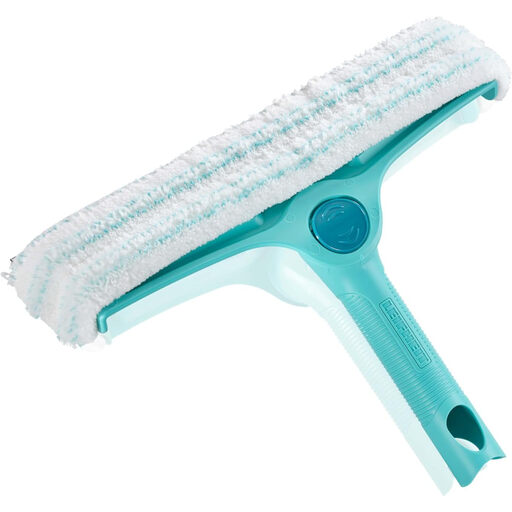
Why this product suits this profile: This combined window wiper is ideal for households that want to clean glass, frames and corners with one tool.
The 32-cm silicone blade and washable Micro Duo cover separate wet cleaning from wiping in one system. The adjustable angle helps with hard-to-reach areas.
4-in-1 function, three adjustable cleaning angles and compatibility with the Leifheit Click System.
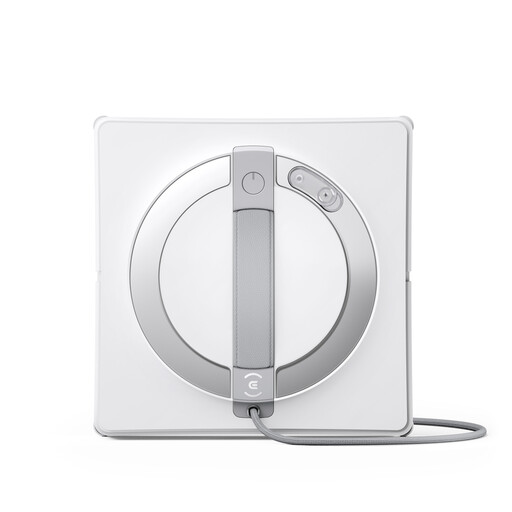
Why this product suits this profile: For large glass surfaces and regular cleaning intervals, this device offers a station, app control and automated movement planning.
The specifications list a 5.5-m safety rope, a 12-stage protection function and the necessary attachment to suitable glass. This clearly addresses key safety requirements.
6-in-1 station, three-nozzle spray head and Win-SLAM 4.0 route planning according to the product description.
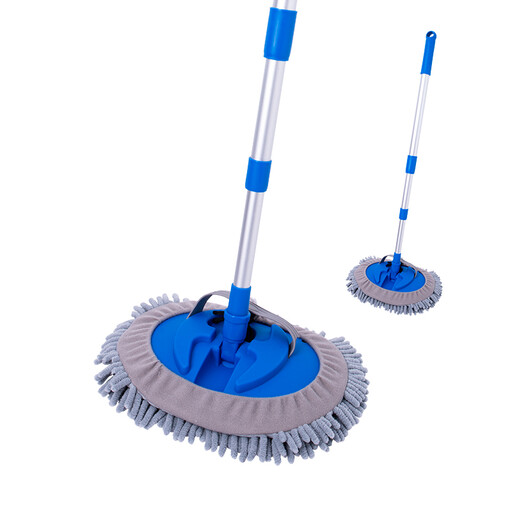
Why this product suits this profile: This system is aimed at users who want to reach high windows, glass roofs, tiles or vehicle surfaces without having to reposition a ladder frequently.
The stated length range of 51.5 to 110 cm and twist locks make the reach clear. The locks must be tightened securely before use.
Chenille microfibre, aluminium pole and 26 × 17.5 cm cleaning head for wet or dry use.
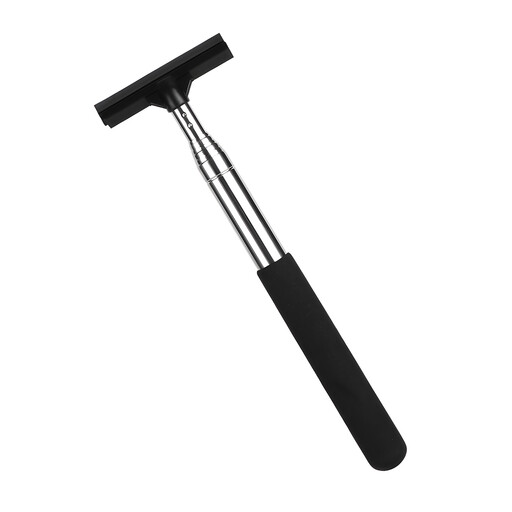
Why this product suits this profile: This compact tool can be stored in your vehicle and is designed for wing mirrors, windows, shower glass and other smooth surfaces.
The extendable length of up to 98 cm provides extra reach for wing mirrors. If there is dust or sand, rinse the surface with water before wiping.
Natural rubber blade, stainless steel and a foldable design with a stated weight of 0.13 kg.
We have put together a complete, regularly updated list of products that fully meet these strict selection criteria and the safety regulations applicable in the EU.
For high windows that can be reached safely, a telescopic window squeegee with a secure locking mechanism is a sensible choice. A window-cleaning robot may be suitable for hard-to-reach external surfaces. However, it requires a suitable glass surface, power supply and correctly attached safety rope. A ladder should only be used on safe, level ground.
Streaks are often caused by a dirty rubber blade, too much cleaning product or working in direct sunlight. Clean the blade regularly, use only a small amount of liquid and remove the water in overlapping strokes. A dry, clean edge on the window squeegee helps deliver an even result.
Service life depends on the material, care and frequency of use. Microfibre covers lose their absorbency if washed incorrectly or not dried completely. Rubber blades should be replaced as soon as they become hard, cracked or uneven. With an electric window cleaner, the battery, seals, pads and spray system also need to be checked regularly. Following the care instructions and ensuring suitable replacement parts are available is crucial.