
Lieferung heute & morgen

Qualitätsgarantie

Willkommens-Angebote freischalten: KOSTENLOSE Lieferung | Bis zu 80 % RABATT | Kostenlose 30-Tage-JoyPlus-Testphase
App herunterladen
An A5 notebook is large enough for detailed notes, yet more manageable than a large writing pad. It is suitable for school, university, the office, journaling and creative projects. At first glance, choosing one seems simple: the cover, colour and ruling immediately catch the eye. However, paper weight, binding and practical details are more important for everyday use.
An elaborately embossed cover may look appealing, but it says little about how practical the notebook is for everyday use. So check whether the notebook with elastic closure, page marker or pen loop actually includes the features you want. Some versions only have a page marker, while a pen loop or back pocket is missing.
“96 Sheets” means 96 sheets or 192 pages. This distinction matters if you want to use a journal for writing or an A5 diary over a longer period. Always compare the sheet and page counts instead of relying on just one figure in the product title.
Paper weighing 100 g/m² is thicker than typical 80 g/m² paper and may feel more comfortable with many pens. However, the writing experience also depends on the ink, fountain pen, marker and the pressure you apply. For sketching or fountain pens, you should also look for details such as acid-free paper or, according to the product description, low ink bleed-through.
The A5 format measures approximately 14.8 × 21 cm. It provides enough space for notes, lists and longer texts, while still fitting into many rucksacks and work bags. For short notes on the go, an A6 notebook measuring approximately 10.5 × 14.8 cm is more compact. If you regularly write in lectures, at the office or while journaling, the A5 format generally offers a well-balanced writing area.
A lined A5 notebook is ideal for continuous text, minutes and lesson notes. Blank pages are better suited to sketches, mind maps and free-form journaling. Squared paper makes it easier to create tables, complete mathematical exercises and draw technical diagrams.
Look out for the following details:
A hardcover notebook protects the pages better in a bag and provides a more stable surface when writing on the go. A softcover notebook is more flexible and often lighter. Thread binding can help the pages lie flat, while with spiral pads, being able to turn over or remove individual pages completely can be particularly practical.
An elastic band keeps the notebook closed. A notebook with a page marker makes it easier to find important sections again. A back pocket holds loose pieces of paper, while a pen loop means you do not have to search separately for the right pen. These extras are especially useful for pupils, students and working professionals who carry their notebook with them every day.
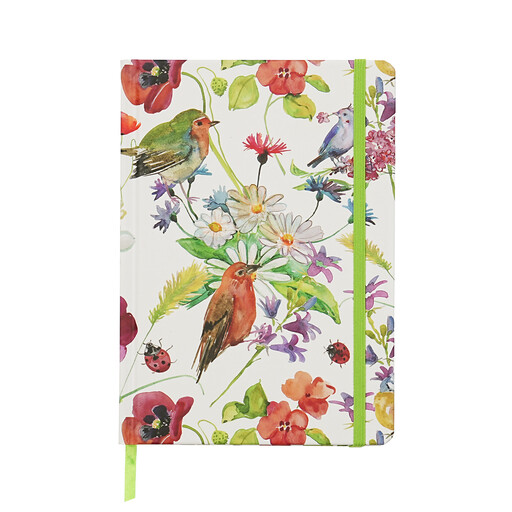
Why this product suits this profile: The A5 format, 192 pages and lined 100 g/m² paper cover typical requirements for school, university and office use. A page marker and elastic closure are built in.
The product description lists the sheet and page counts separately and specifies the paper weight and ruling.
A5 hardcover, 100 g/m² paper, 192 pages, page marker and elastic band.
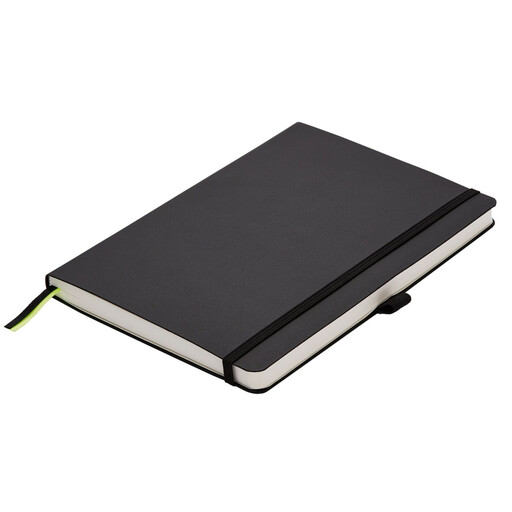
Why this product suits this profile: This model combines 192 ivory-coloured pages with 90 g/m² paper, Lamy ruling, thread binding and a flexible cover. It is designed for regular note-taking and sketching in a professional environment.
The features are clearly specified: pen loop, two page markers, back pocket and elastic band, rather than purely decorative styling.
192 pages, thread binding, pen loop, two page markers and back pocket.
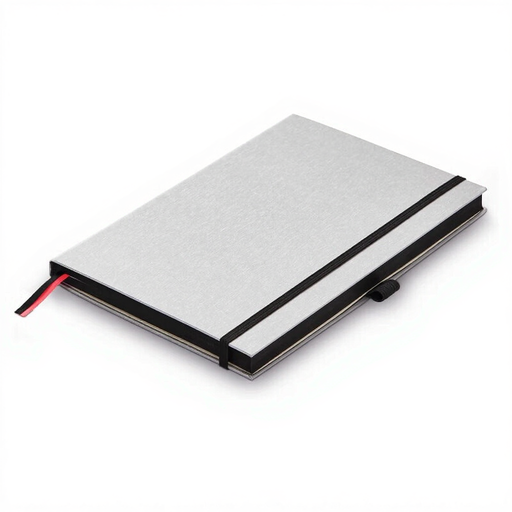
Why this product suits this profile: The blank pages can be used for sketches, mind maps and creative writing. The hardcover, thread binding and acid-free paper specification are well suited to organised filing.
If you need blank pages, you will not end up buying unsuitable ruling. The product description also provides specific care instructions for the cover and binding.
Blank pages, A5 format, hardcover, thread binding and, according to the product description, acid-free paper.
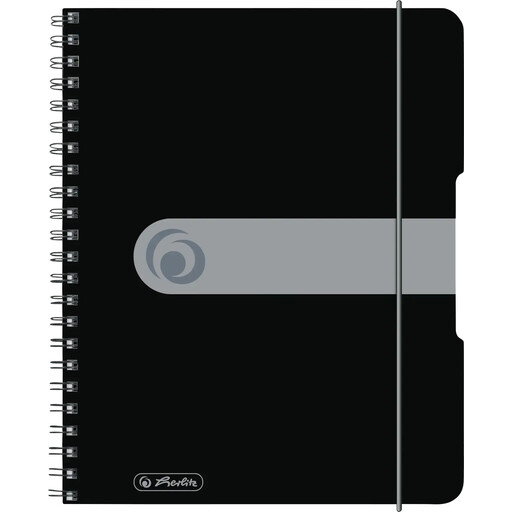
Why this product suits this profile: The set contains two A5 pads with squared pages, a white border, micro-perforation and six-hole punching. The ring binding allows the pad to lie flat while you write.
The punched holes and micro-perforation are clearly specified. This means the pad can be integrated into existing filing systems.
Two pads, squared ruling, ring binding, micro-perforation and six-hole punching.
We have put together a complete, regularly updated list of products that fully meet these strict selection criteria and the safety regulations applicable in the EU.
The actual service life depends on transport, writing pressure, moisture and how often the notebook is used. Store your notebook in a dry place away from direct sunlight. Liquids can cause paper to ripple and bindings to warp. With a hardcover notebook, avoid forcing the cover all the way backwards. An elastic band should only be used to close the notebook and should not be overstretched for long periods.
A5 offers more room for notes, longer texts and planning. A6 is suitable for short notes on the go and fits more easily into smaller bags. The right choice therefore depends on how much you write and how you transport the notebook.
Paper weighing 90 or 100 g/m² may provide a more suitable surface than very thin paper. The ink, nib width and writing pressure are also important. Information about ink bleed-through should be treated as guidance and considered according to your individual needs when using the notebook intensively.
For regular journaling, 192 pages or 96 sheets is a practical size. If you only plan to make short entries or work on occasional projects, fewer pages may be sufficient. For multiple subjects, separate notebooks or a back pocket for loose documents can be useful.