
Lieferung heute & morgen

Qualitätsgarantie

Willkommens-Angebote freischalten: KOSTENLOSE Lieferung | Bis zu 80 % RABATT | Kostenlose 30-Tage-JoyPlus-Testphase
App herunterladen
An A5 notebook offers enough space for notes, journaling and to-do lists while remaining more manageable than a large writing pad. This versatility is precisely what makes choosing the right model so challenging: labels such as “premium paper”, “durable” or “suitable for every use” reveal little about a notebook’s actual performance.
As a Joybuy Product Recommendation Officer, I therefore evaluate the relevant product details according to clear, comprehensible criteria. This helps prevent choosing a notebook that looks appealing but proves too small, impractical or unsuitable for your preferred writing instrument in everyday use.
Some manufacturers specify the number of pages, while others state the number of sheets. A notebook with 96 sheets normally contains 192 writable pages. Both figures should be taken into account for a fair comparison. Even a seemingly extensive A5 journal can fill up faster than expected when used for longer daily entries.
An A5 hardcover notebook protects its pages and is often well suited to carrying in a backpack. An A5 softcover notebook, by contrast, is more flexible and usually lighter. The right choice depends on how you intend to use it: a sturdy cover can be advantageous for frequent travel and loose storage, while a flexible cover takes up less space in a slim bag.
Decorative fabric or foil surfaces also require a dry storage location. Moisture can damage the paper, adhesive and cover.
Paper weight is an important indicator, but it does not replace specific usage information. 90 g/m² or 100 g/m² describes the paper weight, not its automatic suitability for every type of ink. If you write with a fountain pen, highlighter or felt-tip pen, pay attention to information about ink bleed-through and the paper surface. With highly saturated inks, it is advisable to test an inconspicuous page first and allow the ink to dry before closing the notebook.
The standard A5 format measures approximately 14.8 × 21 cm. It provides ample space for lecture notes, meeting notes or a structured A5 diary. If you only want to record short reminders and spontaneous ideas, an A6 model is easier to carry.
An A5 notebook fits into many backpacks and work bags, but requires more storage space than a pocket notebook. Before buying, check the actual external dimensions, especially if you plan to use a cover or a laptop compartment.
For a lined A5 notebook, the line spacing is crucial. Narrow ruling accommodates more text but can be less comfortable for larger handwriting. Blank pages are ideal for sketches, mind maps and free-form journaling. Special ruling can combine writing and drawing.
Also pay attention to:
An A5 notebook with an elastic closure stays closed in your backpack and protects loose pages. A pen loop means you do not have to search separately for the right ballpoint pen. Two ribbon markers are useful when, for example, you want to mark current tasks and an important reference page at the same time. A rear paper pocket provides space for receipts, cards or individual notes.
For long-term organisation, an undated A5 planner may be more practical than a traditional calendar. Undated monthly and weekly overviews do not become obsolete when individual weeks remain unused.
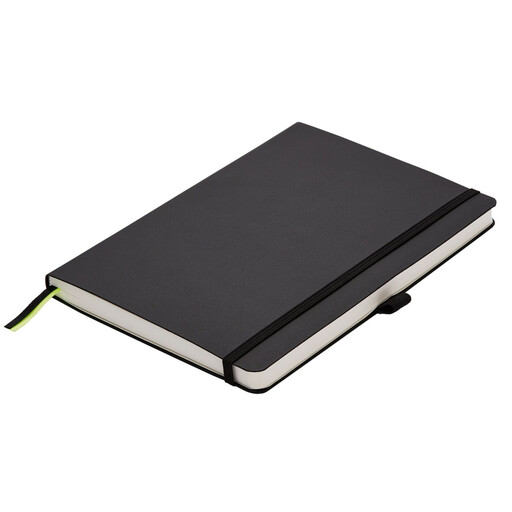
Why it suits this profile: The A5 format is suitable for school, university and office use, while the flexible black cover offers a clean, understated look.
The specifications clearly state 192 pages and 90-g/m² paper. The pen loop, elastic closure and paper pocket reduce the need for additional accessories.
Flexible softcover design, two ribbon markers, thread-sewn binding and ivory LAMY ruling.
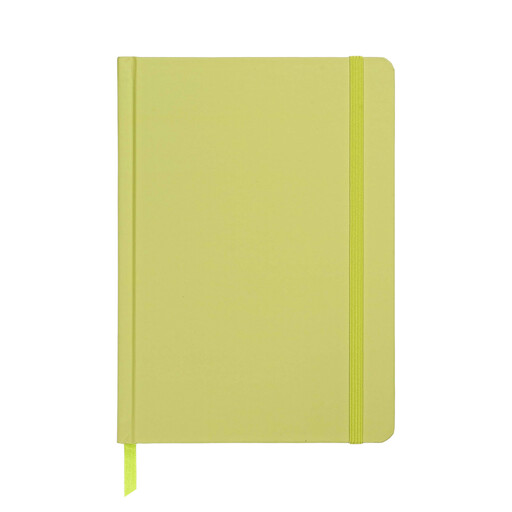
Why it suits this profile: The undated layout is ideal for flexible semester planning, goal tracking and professional organisation.
The monthly and weekly overviews are undated. Unused periods therefore remain available for later use instead of leaving empty calendar pages behind.
Hardcover, 224 pages or 112 sheets, 100-g/m² paper, ribbon marker and elastic closure.
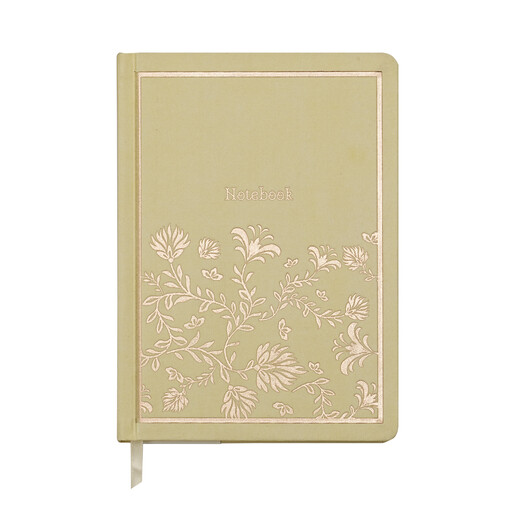
Why it suits this profile: The decorative design is made for journaling, creative writing and presenting a notebook as a gift.
According to the product specifications, the cover is made from fabric and paper, not solid wood. The care instructions recommend dry storage and protection from moisture.
192 pages, 100-g/m² ivory paper, textile cover and ribbon marker with elastic closure.
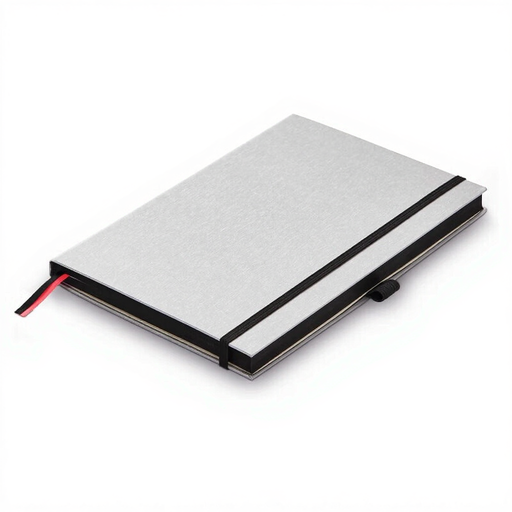
Why it suits this profile: Blank pages leave room for sketches, diagrams, mind maps and unrestricted creative work.
If you do not need lines, you do not have to compromise with ruled pages. The product specifications state that it features acid-free paper, a hardcover and thread-sewn binding.
A5 format, approximately 90 g/m² paper, blank pages and a robust cover for transport.
If you are looking for different colours, cover materials or formats, browse the premium notebook category for current options. It also includes A6 pocket models with PU covers, pen loops, ribbon markers and elastic closures.
We have put together a current selection of products that can be compared using clear criteria such as format, paper, cover and features.
For regular note-taking, around 160 to 224 pages is practical. An A5 diary or journal used for daily entries can benefit from a higher page count, extending its useful life. The key is whether the manufacturer counts pages or sheets.
A hardcover offers greater protection against pressure and creasing. A softcover is more flexible and can adapt more easily to the shape of a bag. For daily transport, you should also check the elastic closure, binding and actual weight.
That depends on the paper surface, ink and nib or tip width. Paper weighing 90 or 100 g/m² can provide a suitable foundation, but it does not guarantee the same result with every fountain pen or marker. With more sensitive writing instruments, a brief test on a back page is advisable.