
Lieferung heute & morgen

Qualitätsgarantie

Willkommens-Angebote freischalten: KOSTENLOSE Lieferung | Bis zu 80 % RABATT | Kostenlose 30-Tage-JoyPlus-Testphase
App herunterladen
A planner and time management notebook should bring your appointments, tasks, goals and notes together in one clear place. In practice, however, many models don’t suit the way people actually live: a format that’s too small leaves little room for tasks, a rigid calendar can make days off unusable, and vague descriptions of the materials make it harder to judge how long a planner will last.
This buying guide explains what professionals, students, self-employed people and organised individuals should look for before buying. It focuses on clear, practical criteria such as format, paper, dating and useful features.
A dated 365-day planner makes sense if you want to record appointments, tasks or progress every day. But if you often reschedule projects, work in study or training blocks, or only plan certain weeks, a dated model can leave you with a pile of blank pages.
An undated planner offers more flexibility. You can fill in monthly and weekly overviews only when you need them. Before buying, consider whether you want a continuous daily structure or the freedom to plan as you go.
A large office planner may offer plenty of space, but an impractical page layout can make it harder to use every day. Check whether the model has enough room for:
A productivity planner should be more than just attractive: it should suit the way you work.
A hardcover notebook protects the pages in your rucksack or on your desk. A PU notebook, on the other hand, has a synthetic cover rather than genuine leather. The binding, closure and suitability for everyday use also matter.
A notebook with an elastic closure and pen loop helps keep loose pages from opening and means you won’t have to search separately for your favourite pen. These details are particularly useful when you’re out and about, but they don’t replace checking the format and paper quality.
An A5 planner measures approximately 14.8 × 21 cm and offers considerably more writing space for weekly overviews, project planning and goal tracking. It’s a good size for your desk, work bag or studies.
An A6 notebook, at approximately 10.5 × 14.8 cm, is easier to carry around. It fits into many smaller bags and is best suited to short notes, lists, sketches and spontaneous ideas. However, there may not be enough room for detailed daily planning.
Paper weight is measured in grams per square metre. 100-g/m² paper is specifically listed for the Jubiluu models featured here. It is cream-coloured, ruled offset paper. How well it works for you will still depend on the pen you use: ink, gel pens and felt-tip pens can behave differently depending on writing pressure and the amount of ink.
Check whether a daily planner has only daily pages, or also includes weekly and monthly overviews or check-in sections. A model with monthly and weekly double-page spreads supports planning at different levels. For undated products, also check that the pages are simple and clear to fill in.
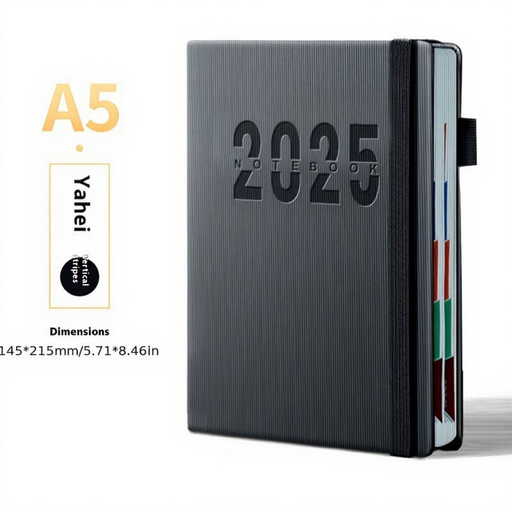
Why it suits this profile: Its structured daily layout is ideal for beginners who want to record appointments, tasks and daily reflections using a consistent routine.
The clearly defined daily layout reduces the risk of choosing a planner with too little space for everyday entries. The check-in format also encourages you to review your day regularly.
365-day layout, black cover, and sections for daily planning and progress notes.
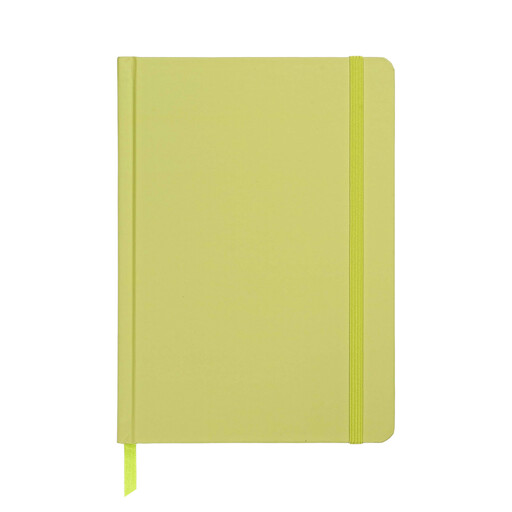
Why it suits this profile: The A5 format and undated layout combine generous writing space with the flexibility to use it for work, study or long-term projects.
The undated layout means unused calendar days won’t automatically take up pages. Details such as the 224 pages and 100-g/m² offset paper also make it easier to assess the product objectively.
A5 dimensions of approximately 14.8 × 21 cm, hardcover, monthly and weekly overviews, and space for notes.
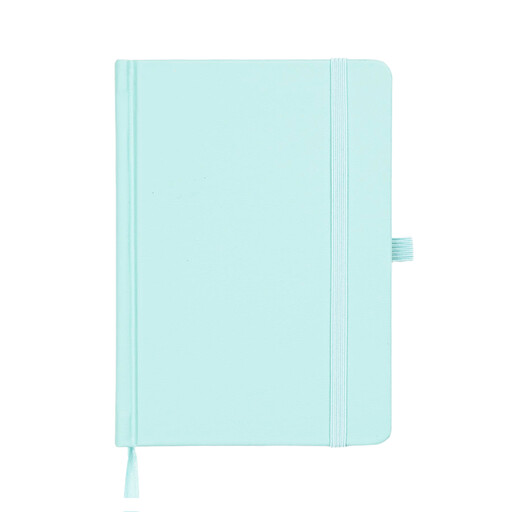
Why it suits this profile: This compact model is designed for commutes, meetings, short to-do lists and spontaneous notes when a large planner would be impractical.
The stated A6 dimensions make the limited writing space clear. The elastic closure, bookmark and pen loop help keep the notebook closed and ready to use when you’re out and about.
Approximately 10.5 × 14.8 cm, 160 pages of 100-g/m² offset paper, PU hardcover and built-in storage features.
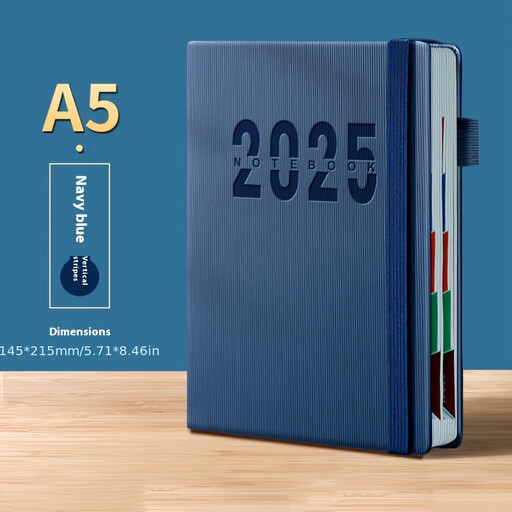
Why it suits this profile: This blue office planner is for people who want to keep appointments, tasks, project progress and daily check-ins together in one year-round layout.
The description specifically lists sections for daily, weekly and monthly planning. This makes it easier to check whether the layout suits your workload and planning needs.
Daily layout, check-in function, sections for project milestones, and a black or blue office look, depending on the version.
We’ve put together a complete, regularly updated list of products that meet these strict selection criteria and fully comply with the safety regulations in force in the EU.
Start with fixed appointments, then add tasks in order of priority. Keep time-sensitive items clearly separate from optional activities. A short review or check-in at the end of the day can help you note what you’ve completed and which tasks need to be rescheduled.
Its lifespan depends on the binding, cover, paper and how you use it. A hardcover can protect the pages during daily travel. Protect the surface of a PU notebook from excessive moisture, heat and sharp objects. Avoid stretching the elastic closure more than necessary.
That depends on your planning habits. If you plan regularly, a dated daily planner can help you build a consistent routine. If your projects vary or you take longer breaks, an undated planner prevents unused calendar days from going to waste. What matters most, then, is not the initial price but how much you actually use each page.