
Lieferung heute & morgen

Qualitätsgarantie

Willkommens-Angebote freischalten: KOSTENLOSE Lieferung | Bis zu 80 % RABATT | Kostenlose 30-Tage-JoyPlus-Testphase
App herunterladen
Author: Joybuy Product Recommendation Officer
Whether you're mountain biking, skiing, snorkelling, travelling or on the football pitch, an action camera needs to capture fast movement reliably and work without fuss in everyday situations. In practice, however, it's not just 4K, 8K or high megapixel counts that determine the right camera for you. Vague water-resistance ratings, short battery life or missing accessories often lead to unexpected extra costs.
This buying guide explains which technical specs actually matter and which models from our selection suit different usage profiles.
A 4K action camera already delivers detailed footage for many travel, sport and vlogging scenarios. An 8K action camera offers extra headroom for cropping or 360-degree shots. However, this comes with larger file sizes, higher demands on your memory card, smartphone and computer, and potentially shorter recording times.
What really matters is the combination of resolution, frame rate, sensor size and intended use. 4K at 120 frames per second, for example, is ideal for smooth slow-motion footage. 8K is mainly useful if you plan to crop sections later or reframe panoramic shots.
A waterproof action camera cannot automatically be submerged in every situation without additional housing. The key factors are the stated depth rating, whether all covers are properly closed, the condition of the seals, and whether an underwater housing is required.
Salt water, sand and frequently opening the battery or card compartment can all put extra strain on the seals. After use in the sea, you should rinse the camera with fresh water and dry it thoroughly. Always follow the manufacturer's instructions and user manual.
A camera may seem attractively priced, but batteries, mounts, charging cases or filters are often sold separately. For longer bike rides, ski days or trips, an action camera bundle with multiple batteries can work out more economical. For shooting in bright sunlight, ND filters are important because they reduce the amount of light and, with the right settings, allow for more controlled motion blur.
For everyday videos, family footage and social media content, 4K is usually sufficient. If you want to capture sport in slow motion, look for a combination of 4K/120 fps. With an 8K action camera, also check whether the resolution is recorded natively or only available through a specific output or editing function.
A larger sensor can capture more image information in challenging light conditions. However, this doesn't replace proper exposure and doesn't guarantee a certain level of image quality. Models with a 1/1.3-inch or 1/1.1-inch sensor are aimed at users who want to film in twilight, indoors or in changing light.
A camera with image stabilisation compensates for movement electronically or mechanically. For cycling, skiing and hiking footage, features like RockSteady, FlowState or HorizonSteady are relevant. You should distinguish between:
With 360-degree models, you can often set the perspective afterwards. This is handy when you don't have time to frame the shot during recording, but it requires a compatible app and extra editing work.
The stated battery life depends on resolution, frame rate, temperature, stabilisation and screen usage. In the British winter, batteries can lose capacity more quickly in low temperatures. For longer sessions, spare batteries, a charging case or a power bank are a good idea.
Also check whether a microSD card is included. With the XbotGo Falcon, a microSD card is required according to the product details and is not supplied. For the DJI Osmo Nano, variants with 64 GB and 128 GB are available; according to the product description, around 48 GB is usable on the 64 GB model.
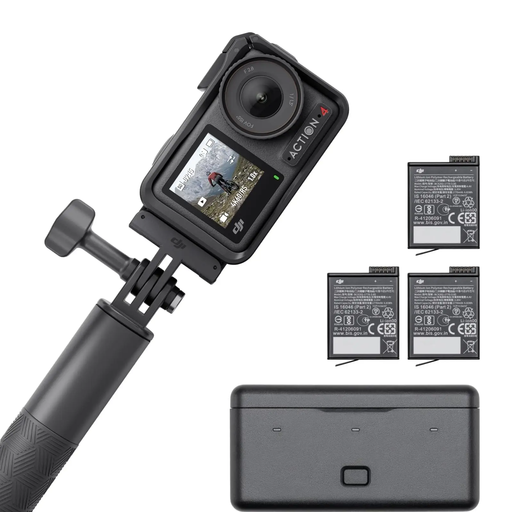
Why this product fits the profile: This 4K camera offers 4K/120fps, a 155° wide-angle lens, stabilisation and three extra batteries in the Adventure Combo. It's ideal for travel, cycling trips and first vlogging attempts without having to source additional accessories straight away.
The bundle reduces hidden follow-up costs with three batteries and a charging station. Water use remains subject to the stated limits.
4K/120fps, 10-bit colour mode, waterproof to 18 m according to product specs, and three spare batteries.
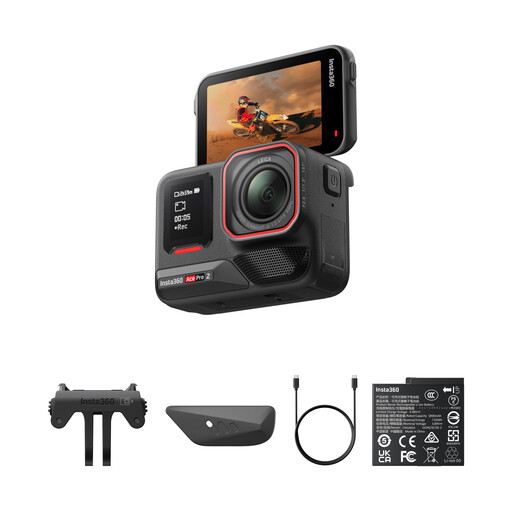
Why this product fits the profile: The combination of a 1/1.3-inch sensor, 8K/30fps, flip touchscreen and FlowState stabilisation is aimed at vloggers and content creators who want flexibility both in front of and behind the camera.
The flip screen makes it easier to check your shot when vlogging. The package includes one battery; the "Dual Battery Bundle" name should be checked against the actual packing list before purchase.
8K/30fps, PureVideo processing for 4K/60fps in low light, 2.5-inch flip touchscreen and waterproof to 12 m according to product specs.
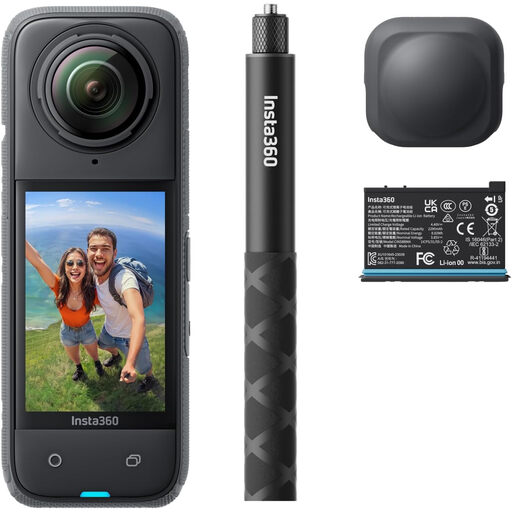
Why this product fits the profile: This 360-degree camera captures the surroundings in 8K/30fps and lets you choose the frame later. It suits travel videos, ski and cycling scenes, and any situation where you don't want to keep adjusting the camera.
You don't need to frame the shot perfectly beforehand. However, buyers should note that the invisible selfie stick is sold separately according to product specs.
165 g weight, 8K 360-degree video, FlowState stabilisation, 360-degree horizon lock and interchangeable lenses.
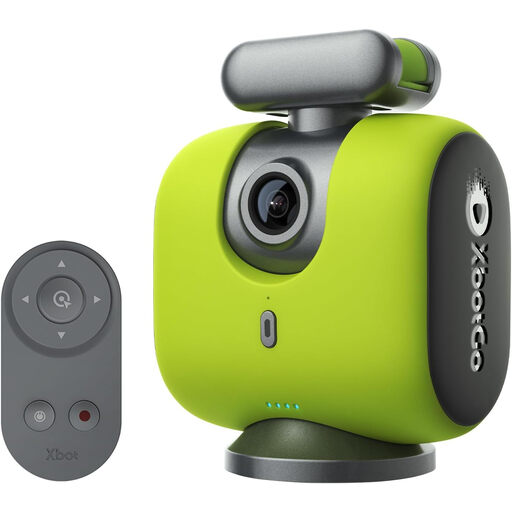
Why this product fits the profile: This AI sports camera is designed for automatic tracking of team sports. According to product specs, it supports over 20 sports and works with both iOS and Android.
Automatic tracking can reduce the need for someone to operate the camera constantly. Before buying, check app compatibility, tripod requirements and streaming platforms.
Automatic tracking, 360° panoramic follow mode, live streaming and no subscription required according to the product description.
We've put together a full, regularly updated list of products that meet these strict selection criteria and comply with all EU safety regulations.
That depends on the depth and duration of use. A camera with a stated water resistance rating can be suitable for snorkelling or short water shots. For diving and regular use in salt water, a suitable underwater housing provides an extra layer of protection. Battery and card compartments must be fully closed.
The technical lifespan depends on charge cycles, temperature, moisture, drops and general care. A camera with replaceable batteries or spare lenses can remain usable for longer in everyday use, because individual worn or damaged parts can be swapped out. After water use, the housing and ports should be dried and checked regularly.
Beyond the purchase price, you may need memory cards, spare batteries, chargers, mounts, ND filters and protective housings. With AI and 360-degree models, app features or cloud services may also be relevant. So before you buy, it's worth comparing the full package contents and any potential extra costs.