
Lieferung heute & morgen

Qualitätsgarantie

Willkommens-Angebote freischalten: KOSTENLOSE Lieferung | Bis zu 80 % RABATT | Kostenlose 30-Tage-JoyPlus-Testphase
App herunterladen
Holes in the wall are a common nuisance, especially in rental properties where drilling may require the landlord's permission or leave marks to be dealt with when moving out. Adhesive hooks offer a practical and damage-free alternative for securely hanging towels, kitchen utensils, or decorations. However, the selection is vast, and the differences in material, load capacity, and application are crucial.
This guide will help you understand how drill-free hooks work and make an informed decision for your specific needs—whether it's for a damp bathroom, a busy kitchen, or the hallway.
Choosing the right hook depends on more than just its design. To ensure the hook holds firm and the surface remains undamaged, three key criteria should be considered.
The maximum load capacity is one of the most important specifications provided by the manufacturer and should never be exceeded. A lightweight hook for a dish towel has different requirements than a heavy-duty adhesive hook strong enough for a heavy bathrobe. Check the weight of the item you plan to hang and choose a hook with a sufficient load margin.
The material is just as critical, especially for specific environments. Stainless steel hooks or high-quality plastic hooks are often waterproof and rust-proof, making them the ideal choice as drill-free towel hooks in the bathroom or near the kitchen sink. For living areas, materials like bamboo or other woods can also be an aesthetically pleasing option.
Self-adhesive hooks adhere best to smooth, clean, and non-porous surfaces. These include:
On rough, textured, or delicate surfaces like wood-chip wallpaper, plaster, or untreated wood, the adhesive's performance can be significantly reduced, and removal may damage the surface. Read the product description carefully to ensure the self-adhesive wall hook is suitable for your intended wall.
Proper installation is essential for maximum adhesion. The surface must be thoroughly cleaned (usually with alcohol or a degreasing cleaner) and completely dry before application. After attaching the hook, most manufacturers recommend a 24-hour waiting period before applying any load. During this time, the adhesive can develop its full bonding strength.
Many modern adhesive systems, like Tesa Powerstrips, are designed for residue-free removal. This is a key advantage for renters and anyone who wants to keep their interior design flexible.
Based on functionality, material, and application, we have curated a selection of products that cater to different needs.
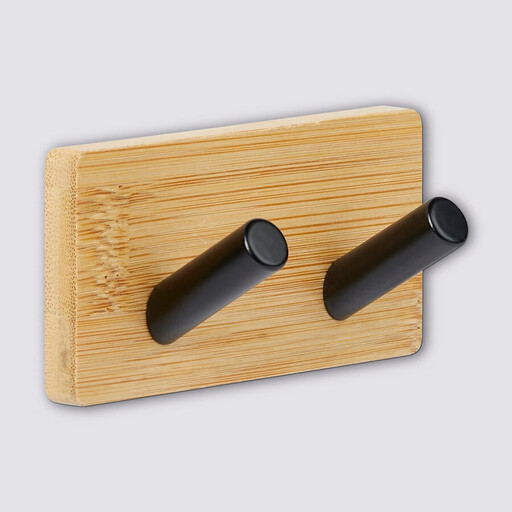
Why it stands out: This double hook combines the natural warmth of bamboo with the stability of steel. Its design blends harmoniously into living rooms, hallways, or kitchens, adding a subtle, eco-conscious accent.
Advantages:
Who it's for: Users looking for a functional hanging solution with a decorative, natural look for lighter items like keys, dish towels, or accessories.
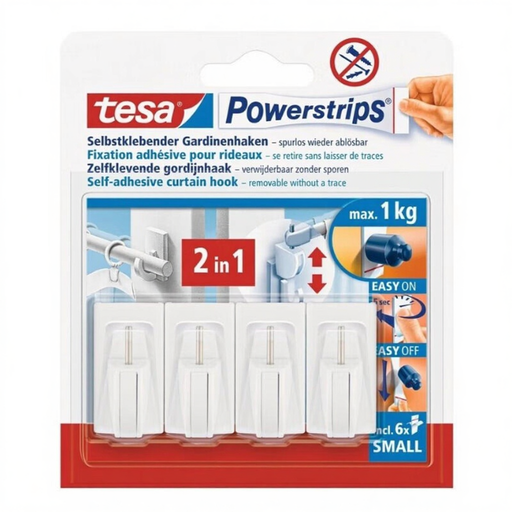
Why it stands out: The Tesa Powerstrips technology is renowned for its ability to securely fasten hooks and remove them without a trace. The hook can easily be reused with a new Powerstrip.
Advantages:
Who it's for: Ideal for renters and anyone who frequently redesigns their space. Perfect for light items like calendars, small towels, or decorations on smooth surfaces.
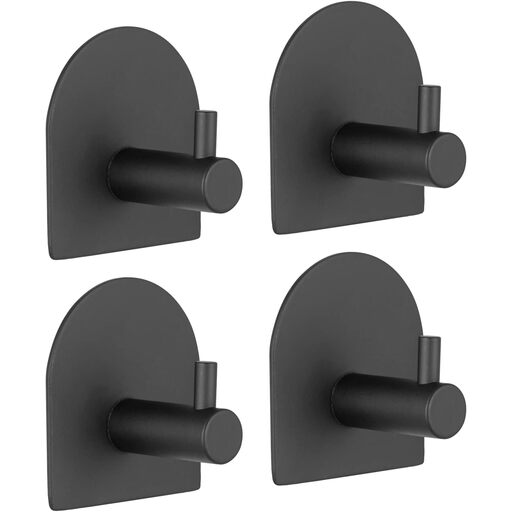
Why it stands out: These hooks are designed for demanding tasks. Made from stainless steel and boasting a high load capacity, they are a robust solution for the bathroom or kitchen.
Advantages:
Who it's for: Individuals who need a very strong and durable hanging solution for heavy items like wet bath towels, bathrobes, or heavy pans. Their water resistance makes them an excellent choice as drill-free towel hooks.
The products featured here cover a wide range of use cases. However, if you're looking for a different design, a specific size, or other materials, there is an even greater variety to explore.
Browse our entire collection and find the perfect solution for your home.
? Discover more self-adhesive hooks here
The load capacity varies significantly depending on the model and manufacturer. It can range from under one kilogram for small decorative hooks to over 10 kilograms for special heavy-duty hooks. Always check the manufacturer's specifications on the packaging or in the product description to avoid overloading.
Yes, many adhesive hooks are specifically designed for use in damp environments like the bathroom. Look for products that are explicitly labelled as waterproof. Models made of stainless steel or plastic are particularly suitable for this, as they do not rust.
Always follow the manufacturer's instructions. Many systems, like Tesa Powerstrips, have a special tab that you pull slowly and parallel to the wall to stretch and release the adhesive strip. For other hooks, gently warming the adhesive with a hairdryer can help. This softens it, making the hook easier to detach from the surface without leaving residue or causing damage.