
Lieferung heute & morgen

Qualitätsgarantie

Willkommens-Angebote freischalten: KOSTENLOSE Lieferung | Bis zu 80 % RABATT | Kostenlose 30-Tage-JoyPlus-Testphase
App herunterladen
Adhesive hooks create extra storage space without the need for a drill, wall plugs or screws. For rented flats, narrow hallways and homes with limited wall space, self-adhesive hooks are a practical solution. However, products differ significantly when it comes to surface suitability, weight capacity, material and removal.
Three common buying misconceptions often lead to poor purchases:
Most adhesive hooks stick to smooth, clean and dry surfaces. Suitable examples include glass, metal, tiles, stainless steel, acrylic or certain painted walls. TAILI explicitly lists these surfaces for its model.
Unsuitable surfaces generally include textured or brittle walls, fabric, wallpaper, uneven paint, brick and cracked surfaces. Before applying, the area should be cleaned of dust, grease and moisture. A dry cloth or a suitable, non-greasy cleaning agent can help. Afterwards, the surface must be allowed to dry completely.
For delicate paintwork, it’s advisable to test on an inconspicuous area. This is especially important for tenants looking for residue-free removable hooks who want to avoid drill holes.
A wall hook for keys or light accessories has different requirements to a coat hook for a full bag. So check the following:
For the TAILI model, the stated maximum load is 2.6 lb per hook, which is roughly 1.18 kg. This is the manufacturer’s specification and should not be exceeded. With a hook rail featuring multiple hooks, the stability of the entire adhesive area is also relevant.
For coats, full rucksacks or heavy kitchen utensils, a screwed-in mounting may be more suitable. No-drill hooks are primarily useful for light to medium-weight everyday items, provided the surface is suitable.
The material affects appearance, care and intended use:
Also pay attention to dimensions. A 33 cm long rail with four hooks uses a narrow wall space efficiently, while individual adhesive hooks can be positioned more flexibly. S-hooks don’t need an adhesive surface: they hang over a rail, shelf edge or towel bar. This makes them easier to reposition as your needs change.
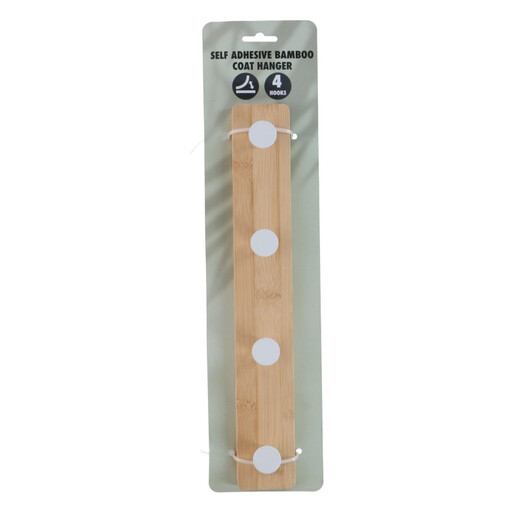
Why this product fits the profile: The compact rail is 33 cm long and offers four hooks for the hallway, bedroom, kitchen or bathroom. Colour selection is random from black or white.
The product description states adhesive mounting without nails and removal without visible adhesive residue when used correctly.
Four storage hooks in a slim bamboo rail; suitable for small spaces.
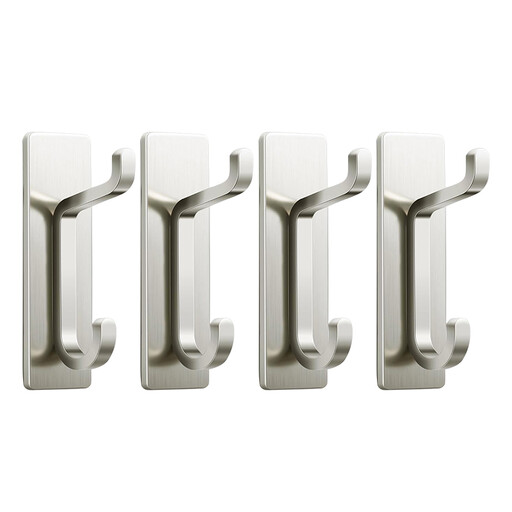
Why this product fits the profile: The hooks are made of stainless steel and are designed for both wall and door mounting. The silver finish complements modern kitchens, bathrooms and hallways.
The material and intended adhesive mounting are clearly stated. This makes it easier to match the choice with the room and surface.
Stainless steel construction; 4-pack for multiple mounting points.
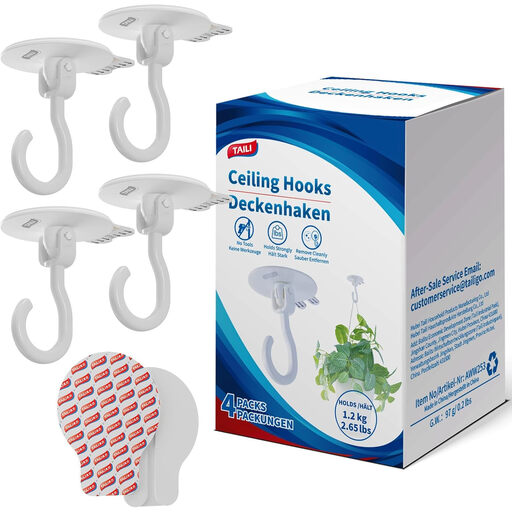
Why this product fits the profile: The rotating hooks can be used on walls or ceilings and are suitable for lightweight plants, fairy lights, towels, keys or decorations.
The manufacturer distinguishes between suitable and unsuitable surfaces and states 2.6 lb as the maximum load per hook.
180-degree folding function and 360-degree rotation; includes 4 hooks and 5 adhesive strips.
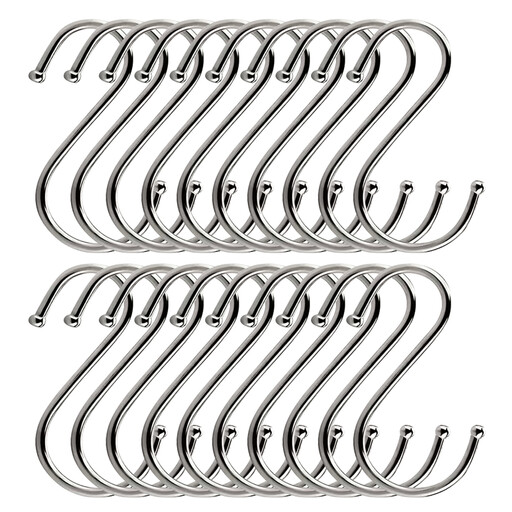
Why this product fits the profile: The 20 metal hooks can be hung over rails, towel bars or edges without any adhesive, and repositioned as needs change.
This solution requires no adhesive surface, thereby bypassing problems with wallpaper, textured plaster or delicate paint.
75 mm length per hook; 20 pieces per pack; designed for light to medium-weight items.
We’ve put together a complete, regularly updated list of products that fully meet these strict selection criteria and the safety regulations in force in the EU.
For removal, the strip should be stretched slowly in the direction of pull. For the TAILI model, the instructions describe carefully stretching the adhesive strip; if the tab tears, a thin plastic card can help. Metal tools can scratch the wall and surface.
This depends on the model, adhesive strip and surface. There is no general weight rating for all adhesive hooks. The manufacturer’s specification per hook is what matters. For the TAILI model, it is 2.6 lb per hook. Heavy or valuable items should not be secured solely with an adhesive hook.
On smooth, dry tiles or glass, self-adhesive hooks can be suitable. However, prolonged moisture, condensation, heat and soap residue can affect the bond. The hook should not be placed directly in a splash zone. Bamboo hooks need special protection from high humidity.
Pull the adhesive strip slowly and as parallel to the surface as possible, rather than ripping the hook straight off. The specific instructions are crucial. With delicate paint or wallpaper, there is always a residual risk, so testing on an inconspicuous area is advisable.