
Lieferung heute & morgen

Qualitätsgarantie

Willkommens-Angebote freischalten: KOSTENLOSE Lieferung | Bis zu 80 % RABATT | Kostenlose 30-Tage-JoyPlus-Testphase
App herunterladen
Flour, rice, muesli, pasta and snacks stay reliably protected only when food storage containers are genuinely suited to both the food and the storage location. When searching for airtight food storage containers, many products look similar at first glance. However, differences become apparent in the seal, closure, material, cleaning requirements and shape.
Three common buying misconceptions can lead to unnecessary expense:
An airtight food storage box should protect its contents from moisture and the surrounding air. For dry foods such as sugar, flour or porridge oats, a lid that closes securely is particularly important. For soups, sauces or leftovers, leakproof performance is also essential.
Look for specific details such as:
A vacuum function is not automatically necessary. It can be useful for certain applications, but usually requires compatible pumps and thorough cleaning of the valves.
Plastic food storage containers are lightweight and shatter-resistant. However, the manufacturer’s material information and usage instructions should be the main basis for your choice. Products made from PP, SAN or other food-safe plastics have specific temperature limits that must be observed.
In practical terms:
Information about temperature ranges, microwave use, freezer suitability and dishwasher safety should therefore be among the most important points to check before buying.
Stackable food storage containers with a rectangular shape often make better use of shelf space than round containers. It is important to check the internal dimensions of your kitchen cupboard. A tall container may hold plenty of food, but might not fit beneath a shelf.
A practical arrangement could look like this:
Containers should be completely dry before filling. Residual moisture can affect the storage of dry foods. Smooth interior surfaces and clearly stated dishwasher instructions are useful for keeping your routine simple.
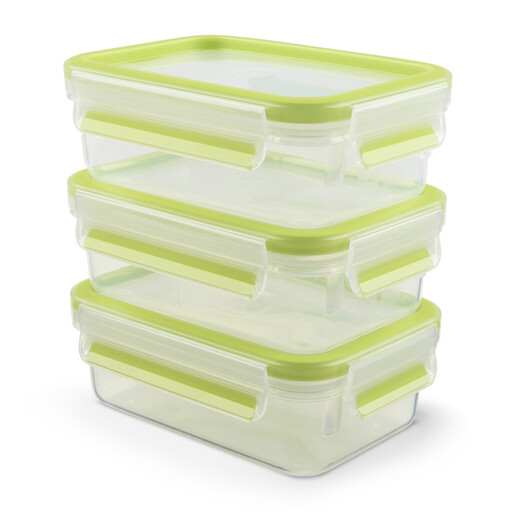
Why this product suits this profile: Three containers, each with a capacity of 0.55 litres, offer an accessible introduction to storing leftovers, snacks and smaller side dishes.
According to the product description, the integrated seal is designed without gaps. The containers are also stated to be leakproof and suitable for the dishwasher, microwave and freezer.
3-piece set, 0.55 litres per container and a temperature range of -40 to +110 °C according to the product data.
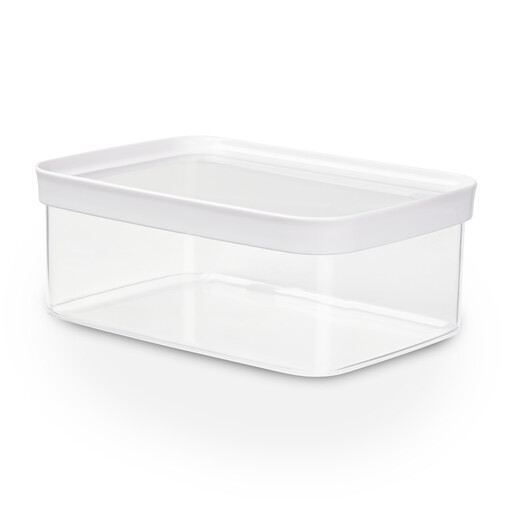
Why this product suits this profile: The rectangular 2-litre container is designed for households that want to store dry foods in an organised and visible way.
The audible click closure makes it easier to tell when the container is fully closed. Coordinated formats and non-slip edges help with stacking.
Transparent plastic, dishwasher-safe design according to the product data and a capacity suitable for larger quantities of dry food.
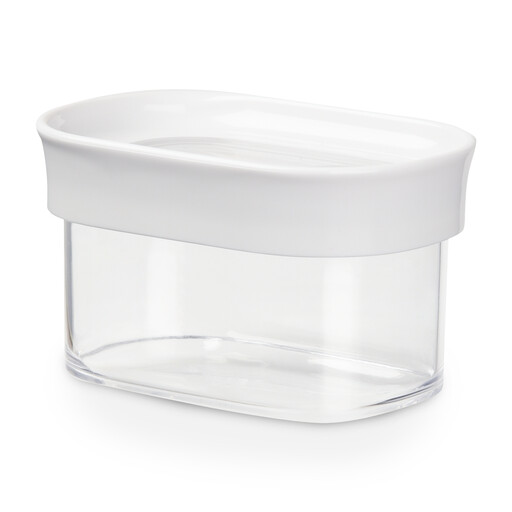
Why this product suits this profile: The compact format is ideal for spices, seeds, decorations or individual ingredients in the food cupboard.
The small size reduces the risk of buying a container for quantities that are too large. According to the product details, the container is intended for dry foods and is dishwasher-safe.
Space-saving, transparent format with an audible closure and stackable edges.
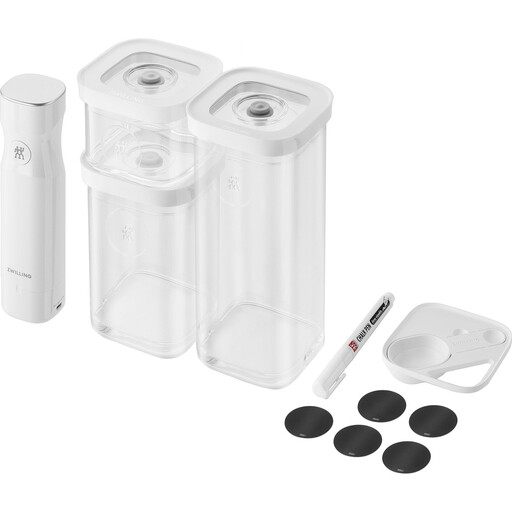
Why this product suits this profile: This modular set is designed for households that want to combine several sizes with an optional vacuum function.
The specifications clearly state separate temperature and cleaning limits: containers can be washed in the dishwasher at up to 60 °C, while the lids must be cleaned by hand. They are not suitable for microwave or oven use.
Four sizes from 0.2 to 1.8 litres, stackable design and compatibility with a cordless vacuum pump available separately.
We have put together a complete, regularly updated list of products that fully meet these strict selection criteria and the safety regulations applicable in the EU.
Label food storage containers with their contents and the date they were transferred or opened. This makes it easier to use older supplies first. For flour, rice and pasta, a completely dry container is recommended. Before closing the lid, make sure there are no crumbs around the seal.
For leftovers and liquid foods:
Their lifespan depends on the material, how they are used, cleaning and the condition of the seal. Check containers and lids regularly for cracks, deformation and brittle seals. Any visibly damaged part should be replaced.
Yes, provided they are intended for dry foods and the lid closes securely. For larger quantities, choose a suitable capacity. Containers must be completely dry and clean before filling.
The price depends on factors including the material, set size, capacity, sealing system and additional features such as a vacuum closure. A small individual container may be sufficient for occasional use; when storing several types of food, a coordinated set is often more practical. The actual product specifications and intended use are what matter most.