
Lieferung heute & morgen

Qualitätsgarantie

Willkommens-Angebote freischalten: KOSTENLOSE Lieferung | Bis zu 80 % RABATT | Kostenlose 30-Tage-JoyPlus-Testphase
App herunterladen
A cluttered bathroom with exposed pipes and no space for towels or toiletries is a common problem. The right vanity unit can solve this by making smart use of wasted space and creating a clean, organised look. This article serves as a practical guide to help you choose the right model for your needs. We'll introduce different types and provide you with specific recommendations.
Choosing the right cabinet depends on several factors. To make an informed decision, you should consider the following points.
Before you select a bathroom cabinet, precise measurements are essential. Note the width, depth, and height of the available space under your sink. A critical measurement is the cutout for the P-trap. Measure the distance from the wall to the centre of the drainpipe, as well as the width of the P-trap itself, to ensure the cabinet's cutout will fit.
Think about what you want to store in the cabinet. The type of storage should match your needs and provide more storage space in the bathroom.
The bathroom is a high-moisture environment, so the choice of material is very important. Most bathroom furniture is made from MDF or particleboard that has been specially treated for this environment. Look for a water-resistant surface coating (e.g., melamine resin or lacquer) that protects the material from moisture and makes it easy to clean. High-quality edge sealing is also important to prevent water from seeping in.
Here is a selection of models that cater to different needs and bathroom layouts.
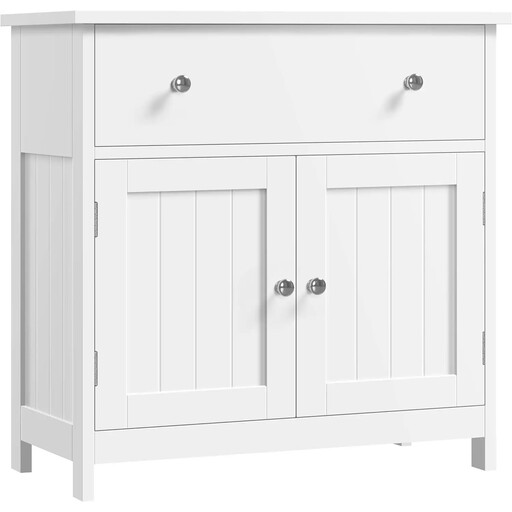
Yaheetech Bathroom Vanity Unit, 60 x 30 x 60 cm
Why it stands out: This model combines a classic farmhouse aesthetic with a thoughtful storage solution. The combination of a two-compartment drawer and a spacious cabinet with doors makes it a versatile organiser.
Advantages:
Who is it for? For users looking for a freestanding cabinet in a standard size who appreciate a timeless farmhouse style. It's well-suited for concealing unsightly pipes while creating flexible storage space.
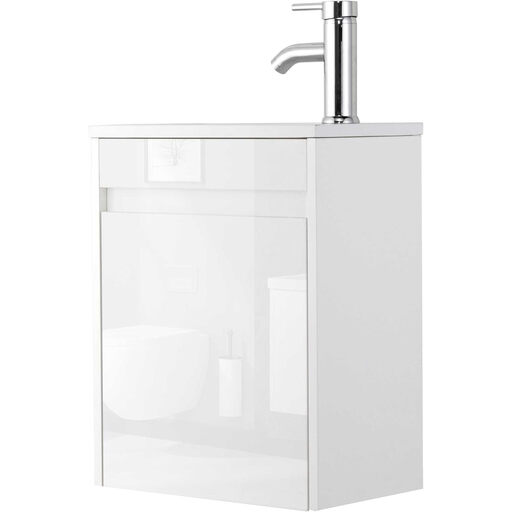
UEV Wall-Mounted Vanity with Sink, 40.6 cm
Why it stands out: This product is a complete bathroom furniture set, consisting of a sink and a matching vanity unit. The wall-mounted design is particularly space-saving and modern.
Advantages:
Who is it for? For anyone looking for an all-in-one solution for a small bathroom or powder room. The floating look of the wall-mounted vanity unit creates a sense of spaciousness and modern elegance.
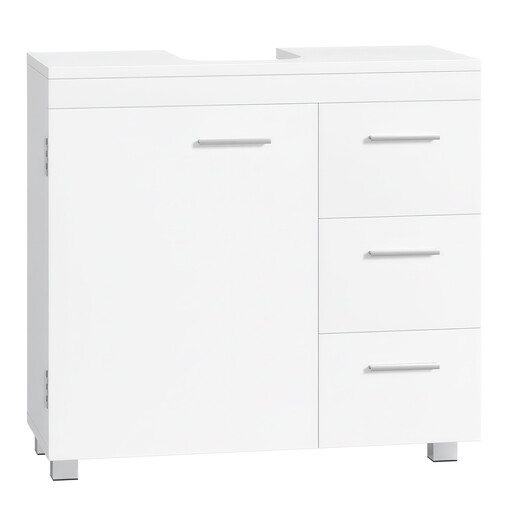
Ochama Under-Sink Cabinet for Pedestal Sinks, 70 cm wide
Why it stands out: This model is specifically designed as a cabinet for pedestal sinks. The generous cutout allows the cabinet to be placed around the existing ceramic pedestal without having to dismantle it.
Advantages:
Who is it for? Ideal for renters or homeowners with an existing pedestal sink who are looking for a simple and effective retrofit solution for more storage without replacing the entire sink.
Haven't found the right model for you yet, or would you like to get a broader overview? Discover a wider variety of designs, sizes, and features in our vanity units category.
Explore more Toilet Vanity Unit models here
1. How do you measure correctly for a vanity unit? Measure the maximum width, depth, and height of the available space under the sink. The position of the P-trap is especially important: measure the distance from the wall to the centre of the drainpipe and the total width of the P-trap. Compare these measurements with the P-trap cutout of the desired cabinet.
2. Can a vanity unit be fitted to any sink? Not every cabinet fits every sink. Standard vanity units are designed for wall-mounted sinks without a base. For pedestal sinks, there are special models with a suitable, wider cutout. For vessel sinks, a countertop with separate cabinets is typically used instead of a traditional vanity with a P-trap cutout.
3. What is the difference between a wall-mounted and a freestanding vanity unit? A wall-mounted vanity unit is mounted to the wall and "floats" above the floor. This makes cleaning the floor easier and can make the room appear larger. A freestanding cabinet stands directly on the floor, often offers slightly more storage space, and does not require a load-bearing wall for installation.