
Lieferung heute & morgen

Qualitätsgarantie

Willkommens-Angebote freischalten: KOSTENLOSE Lieferung | Bis zu 80 % RABATT | Kostenlose 30-Tage-JoyPlus-Testphase
App herunterladen
A robot vacuum with a mopping function and an auto-empty station promises the ultimate in household autonomy. The idea of not having to think about vacuuming or mopping for weeks on end is tempting for many. However, the market is filled with marketing claims that don't always hold up in practice. Before you make a purchasing decision, it's crucial to understand the common pitfalls that can lead to disappointment and unnecessary expense.
Many devices fail at basic challenges that are often omitted from promotional materials. These include three common problems:
To avoid a bad purchase, you should focus on objective technical features that determine real-world performance and everyday convenience.
The way a robot perceives and navigates its environment is fundamental to its efficiency.
Since dirt and dust tend to collect in corners and along baseboards, an effective robot vacuum with edge cleaning is crucial. Look for special designs that go beyond a simple side brush. These include extendable mop pads or robotic arms that physically reach the edge to ensure complete coverage.
The auto-empty station is the heart of an autonomous system. Its functionality determines how much manual work is actually left.
Instead of making a one-size-fits-all recommendation, we have identified models that address specific needs and user profiles.
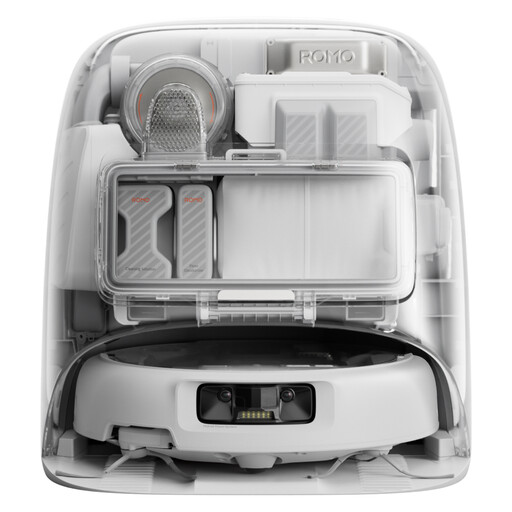
Why it's a good fit: For users seeking a nearly hands-free cleaning solution with innovative technology. The combination of extremely high suction power and precise navigation is ideal for complex homes and demanding surfaces.
Directly addresses the edge cleaning problem with two extendable robotic arms that physically guide brushes and mops into corners and along baseboards—a mechanical solution where others only offer software tweaks.
The combination of 25,000 Pa suction power and drone-level sensor technology enables a thorough deep clean and precise obstacle avoidance. The manufacturer claims the station allows for up to 200 days of maintenance-free operation.
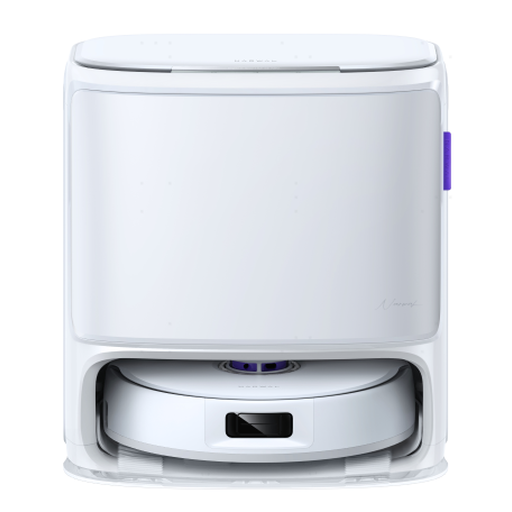
Why it's a good fit: Ideal for pet owners who need a reliable robot vacuum for pet hair. The system is designed to efficiently pick up hair and minimise the maintenance caused by tangled brushes.
The "DualFlow Tangle-Free System" is specifically designed to prevent hair from tangling in the brushes. This significantly reduces the most common maintenance headache for robot vacuums in homes with pets.
The station cleans the mops with adaptive hot water and dries them, ensuring hygiene. A dirt sensor detects whether areas need to be re-cleaned until they are truly spotless—a practical feature for stubborn stains.
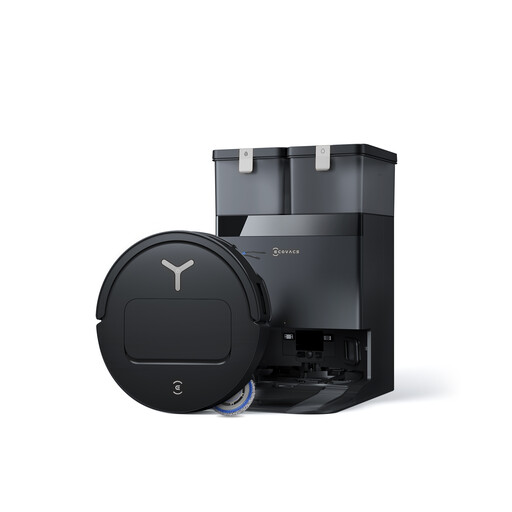
Why it's a good fit: At just 81 mm tall, this low-profile robot vacuum is specifically designed for homes with low sofas, beds, or cabinets, without compromising on the performance of the cleaning station.
While many powerful robots can't fit under furniture due to their height (often >95 mm), this model combines an ultra-slim design with a fully-featured OMNI station. This ensures that even hard-to-reach areas are cleaned automatically.
Despite its slim profile, the device offers a high suction power of 25,000 Pa and adaptive edge cleaning (TruEdge 2.0). The Auto-Lift Mopping feature automatically raises the mop pads on carpets, making it a great all-rounder for mixed flooring.
We have compiled a complete, up-to-date list of products that fully meet these strict selection criteria and UK safety regulations.
The frequency depends on the size of your home, the amount of dirt (e.g., from pets), and the station's capacity. For modern devices with large dust bags (3 litres or more) or bagless systems, the interval can be between 60 and 120 days. The dirty water tanks typically need to be emptied more often, from every few days to weekly, depending on usage.
Yes, most modern robot vacuum and mops have carpet detection. When the robot moves onto a carpet, it automatically increases suction power and lifts its mop pads to avoid getting the carpet wet. This feature is crucial for homes with mixed flooring.
The navigation method is one of the most important features. Basic models with gyroscope or camera-only navigation often clean chaotically, miss spots, or get stuck frequently. A robot vacuum with LiDAR navigation or advanced AI navigation operates much more systematically, efficiently, and reliably. The investment in better navigation technology pays for itself directly through more thorough cleaning and fewer manual interventions.