
Lieferung heute & morgen

Qualitätsgarantie

Willkommens-Angebote freischalten: KOSTENLOSE Lieferung | Bis zu 80 % RABATT | Kostenlose 30-Tage-JoyPlus-Testphase
App herunterladen
Regularly checking your blood pressure is a key part of personal health management. However, with the vast number of models on the market, choosing the right blood pressure monitor can be overwhelming. This article provides an objective guide, explaining the essential features of different device types to help you make an informed purchasing decision.
Before you buy a blood pressure monitor, it's helpful to understand a few basic criteria. The following points summarise the most important aspects that can influence your choice.
One of the first decisions is where to take the measurement. Both options have specific characteristics:
Modern digital blood pressure monitors offer more than just displaying systole and diastole. Consider which features are relevant to you:
The accuracy of a measurement depends significantly on the correct fit of the cuff. Measure your upper arm circumference before choosing an upper arm blood pressure monitor. Most standard cuffs cover a circumference of 22 to 36 cm. For larger or smaller arms, special cuff sizes are required, which are often available as accessories. Also, look for an easy-to-read display, especially if you have impaired vision.
Here, we present three models with different focuses, catering to various user needs.
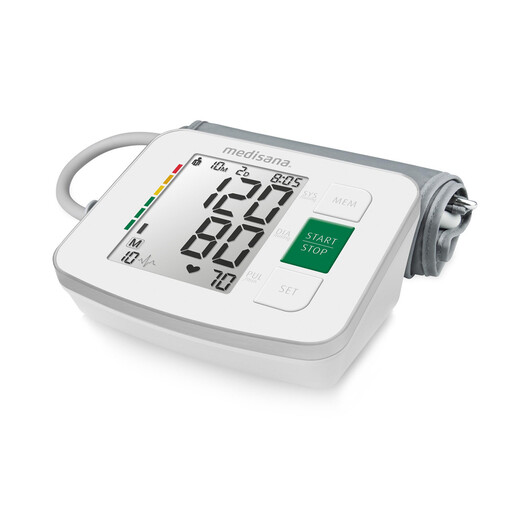
What sets it apart The medisana BU 512 focuses on a straightforward and clear display of readings. The screen shows systole, diastole, pulse, date, and time with digits up to 22 mm high. A traffic-light colour scale helps with the quick interpretation of the values. The device can also calculate the average of all stored data upon request.
Advantages
Who it's for This model is a great choice for users looking for a reliable and easy-to-use digital blood pressure monitor for two people who value a large, clear display.
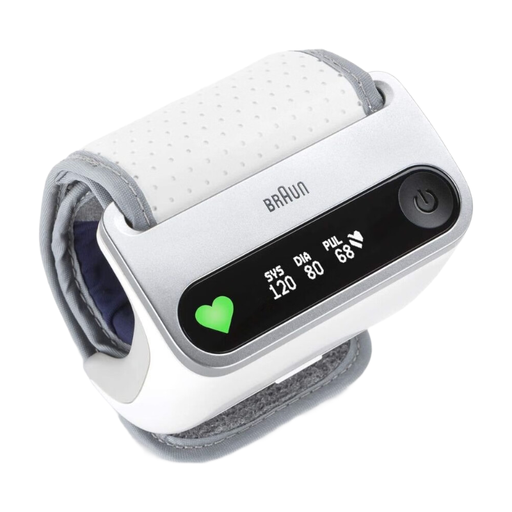
What sets it apart The Braun iCheck 7 is a compact wrist device with smart functionality. A smart positioning system ("ball-in-the-hole") helps the user to correctly position their wrist at heart level for an accurate measurement. The readings are transferred via Bluetooth to the Braun Healthy Heart app, enabling seamless documentation of your progress.
Advantages
Who it's for This device is aimed at tech-savvy users who prefer a blood pressure monitor with an app and appreciate the benefits of a mobile wrist model without sacrificing guidance for correct use.
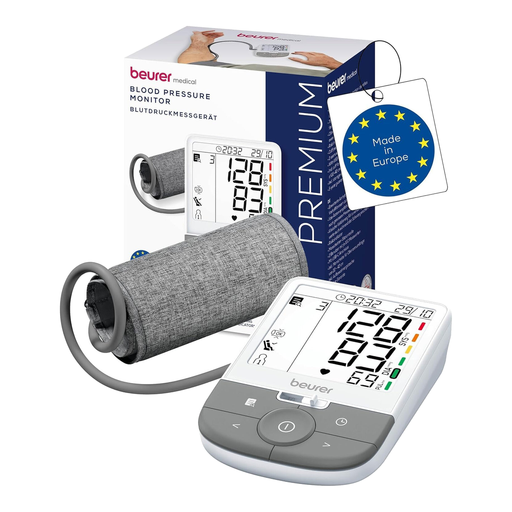
What sets it apart The Beurer BM 53 offers an expanded feature set for detailed heart health monitoring. According to the manufacturer, the device has advanced arrhythmia detection that can identify atrial fibrillation (AFib) for stroke prevention. Features like a rest indicator and cuff fit check support precise measurement. Data can be managed via the "beurer HealthManager Pro" app and synchronised with services like Apple Health.
Advantages
Who it's for This model is designed for users who want an upper arm blood pressure monitor with advanced monitoring features like AFib detection and app integration. It is also suitable for individuals with larger upper arm circumferences.
The models presented here already cover a wide range of needs. However, the market offers an even greater variety of devices with different features. If you would like to compare more models, you can find a more comprehensive selection in our main category.
Discover more electric monitors
1. How often should you measure your blood pressure? The frequency of blood pressure measurement is individual and should ideally be discussed with a doctor. For home measurement, it is often recommended to take readings regularly at the same time under calm conditions to obtain comparable values.
2. What is the difference between an upper arm and a wrist blood pressure monitor?Upper arm blood pressure monitors measure blood pressure from an artery closer to the heart, which can lead to very stable results when used correctly. Wrist devices are more compact and easier to put on but require precise positioning of the wrist at heart level to avoid measurement deviations.