
Lieferung heute & morgen

Qualitätsgarantie

Willkommens-Angebote freischalten: KOSTENLOSE Lieferung | Bis zu 80 % RABATT | Kostenlose 30-Tage-JoyPlus-Testphase
App herunterladen
Disposable cups are practical for offices, homes, cafés, caterers and events. However, a low price per cup does not automatically mean you have made the right choice. Capacity, material, suitability for hot or cold drinks and the right pack size are all important considerations.
The specifications 200 ml, 220 ml or 250 ml usually describe the maximum volume. If a disposable cup is filled to the brim, the risk of spills increases. It is therefore sensible to leave some room when serving coffee and tea. Disposable cups with a capacity of 200 ml are more suitable for smaller portions, while 250-ml disposable cups offer more space for water, juice or soft drinks.
Converting US fluid ounces can also be confusing: 7.5 oz is approximately 220 ml, while 8 oz is around 237 ml. Product specifications should therefore be compared based on the actual volume, rather than simply by searching for “disposable coffee cup”.
A paper cup is not always made from paper alone. A coating may be needed to make it leak-resistant. For example, the Maxcook model is specified as using a combination of paper fibres and a PE coating. This can help the cup retain its shape, but it also comes with specific usage instructions: according to the product description, the cup is not suitable for microwave use and should not be used near naked flames.
When choosing cups for hot drinks, buyers should also check the stated intended use. A product described as suitable for coffee and tea is not automatically suitable for very hot liquids, extended periods of use or transportation without an additional lid.
A pack of 50 cups may be enough for a household or a small meeting. For an office, catering or a larger celebration, paper cups with 100 units are often more practical to manage. Small packs of six can be useful when only a few cups are needed or when a particular design is the priority for a themed party.
Before buying, it is worth doing a simple calculation:
For espresso, small amounts of water or short serving periods, 200-ml disposable cups may be suitable. 250-ml disposable cups are better suited to larger portions at birthday parties, sporting events or informal meetings. Milkshakes, larger cold drinks or products containing ice cubes may require a 300-ml cup or larger.
Pay attention to the shape of the cup. A wide rim can make filling easier, while a taller, narrower disposable drinking cup takes up less space. Product dimensions should be considered particularly carefully when using cup holders, vending machines or catering trays.
For a disposable paper cup, the following details are particularly relevant:
“Recyclable” should not automatically be taken to mean that the cup can be disposed of in the paper recycling bin without restriction. Coated cups are handled differently depending on the region and the composition of the material. Check the manufacturer’s information and the requirements of your local waste disposal provider.
Drinkware should include clear information about its intended food contact. Legal requirements apply in the EU, although a product description does not automatically replace an individual conformity assessment by the buyer. If information about temperature limits, coating or intended use is missing, it is advisable to proceed with caution.
Disposable cups are designed for single use. Even if a paper cup still appears sturdy, it should not be reused for different drinks. At events, clearly separating hot and cold drinks makes it easier to use the cups correctly.
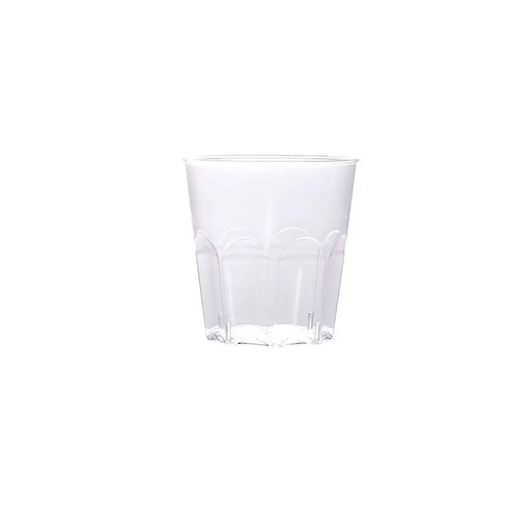
Why this product suits this profile: The pack of 50 cups and 200 ml capacity are suitable for smaller households, meetings or modest celebrations.
The specific information stating 200 ml and 50 units makes it easier to plan quantities and reduces the risk of buying an unnecessarily large bulk pack.
200 ml capacity; 50 units per pack; octagonal cup shape according to the product name.
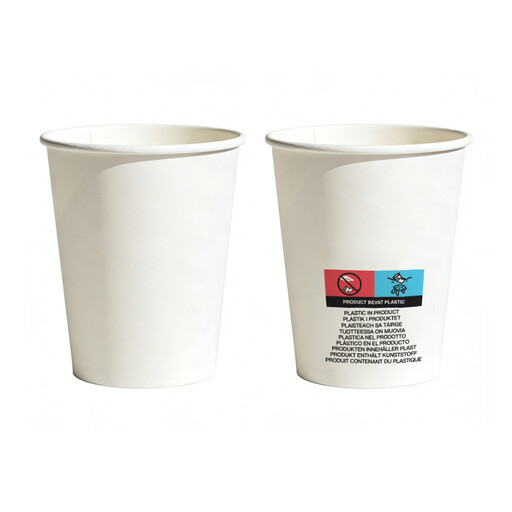
Why this product suits this profile: The product information specifies paper fibres with a PE coating, a reinforced structure and suitability for coffee, tea, water and cold drinks.
The material and warning information makes it clear that the coating and temperature limits need to be checked. According to the product information, microwave use is not permitted.
Approx. 220 ml capacity; 100 units per pack; information provided for hot and cold drinks.
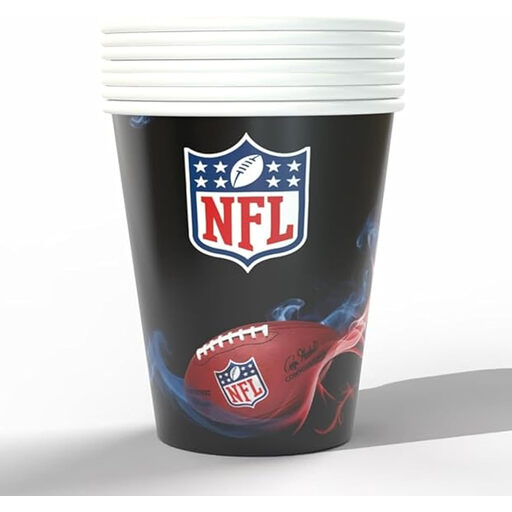
Why this product suits this profile: The NFL design is aimed at themed parties and fan events. With a capacity of 250 ml, the cups are suitable for water, lemonade, juice and similar drinks.
The pack size of six prevents you from storing unnecessarily large quantities of plain cups for a small themed gathering. For larger events, the total requirement should be calculated separately.
250 ml capacity; black NFL design; made from recyclable rigid paper according to the product information.
For coffee in the office, 200 to 250 ml is often sufficient. When serving hot drinks, you should also check whether the cups can be held safely and whether they have a double-wall construction or come with separate protection. For cold drinks, condensation and extended periods of use are important considerations, as moisture can affect the paper.
At parties and events, logistics are just as important as design. If necessary, label stations for hot and cold drinks, store the cups in a dry place and keep enough spare cups available. A product with a distinctive design, such as a party cup featuring an NFL motif, suits a particular occasion but is less versatile for neutral office or catering events.
We have put together a complete, regularly updated list of products that fully meet these strict selection criteria and the safety regulations applicable in the EU.
200 ml is standard for small portions of coffee. If you want to allow room for milk, sugar or a little extra space, you can choose a cup with a capacity of around 220 to 250 ml. The product’s stated suitability for hot drinks is the key consideration.
Disposable cups are intended for single use. The actual length of time they can be used depends on the drink’s temperature, the fill level, the coating and condensation. If the manufacturer advises this, cold drinks should not be left standing unnecessarily long in coated paper cups.
There is no simple answer. The material, coating, manufacturing, transport and disposal all affect the environmental impact. Check the specific material information and dispose of the cup according to local requirements. Terms such as “recyclable” should not be assessed without considering the actual disposal routes available.