
Lieferung heute & morgen

Qualitätsgarantie

Willkommens-Angebote freischalten: KOSTENLOSE Lieferung | Bis zu 80 % RABATT | Kostenlose 30-Tage-JoyPlus-Testphase
App herunterladen
Konjac jelly combines an elastic, chewy texture with fruity flavours and convenient ready-to-eat enjoyment. For fans of Asian sweets, vegan households and anyone looking for a low-calorie snack, konjac jelly can be a practical option. However, products vary considerably in terms of ingredients, sugar, energy content, packaging and consumption instructions.
If you want to buy konjac jelly, you should therefore not be guided solely by terms such as “light”, “Japanese” or “fruity”. The information on the packaging and how you plan to use the product are what really matter.
Some varieties contain less than 100 kcal per 100 g, while others contain around 106 to 111 kcal. However, energy content alone does not tell you how much sugar a product contains. For example, TARAMI Oishii Konjac Jelly Strawberry lists 53 kcal and 11.2 g of sugar per 100 g. According to the product information, Shimonita Konjac Jelly Grape contains 106 kcal and 23.5 g of sugar per 100 g.
If you want to reduce your sugar intake, always check the nutritional information and ingredients list. Sweeteners such as erythritol or sucralose may be used instead of sugar in some products, while other recipes contain sugar and glucose syrup.
A product may be offered in a Japanese style without having been made in Japan. The selection includes products stated as originating from Japan, as well as varieties from Korea or China. This is not a judgement on quality, but it is important information for shoppers specifically looking for an original Japanese product.
Look for the details “Country of origin”, manufacturer and responsible person in the EU. This information helps you distinguish marketing descriptions from verifiable product details.
Depending on the recipe, konjac jelly may be soft and elastic, smooth or distinctly chewy. This texture is precisely what makes the snack appealing, but it also makes the safety instructions particularly important. Several products advise against swallowing the jelly whole and recommend chewing it carefully. The consistency is often unsuitable for young children.
Do not put the lid or packaging in your mouth. With products supplied in cups, opening them may also leave a sharp edge. Read the instructions on the relevant packaging and follow the age and consumption recommendations stated there.
Always compare products using the same reference quantity. A 120 g pouch containing 5 kcal per 100 g works out at around 6 kcal per pack, provided the full amount is consumed. A 150 g cup containing 53 kcal per 100 g, on the other hand, contains around 80 kcal per pack.
The key details are:
The term “fat-free” should be confirmed by the nutritional information showing 0 g of fat per 100 g.
Konjac powder is only one ingredient in the recipe. Depending on the product, additional ingredients may include fruit juice or fruit concentrate, sugar, glucose syrup, gelling agents, acidity regulators, flavourings and sweeteners. If you are looking for vegan jelly, check for the relevant label and read the complete ingredients list.
For example, Delief Vegan Collagen Konjac Jelly Lychee is marketed as vegan and, according to the product information, contains konjac powder, erythritol, sucralose and lychee concentrate powder, among other ingredients. The term “plant-based collagen” is a product description and should not be confused with a medical claim about its effects.
For allergies, remember: The specific packaging is decisive. Some products do not list any of the 14 major EU allergens in the recipe, but may still warn that traces could be present. With fruit varieties such as mango, peach, lychee or strawberry, sensitive individuals should check the relevant allergen information.
Many varieties are Ready-to-eat and can be consumed immediately after opening. Pouches or small individual portions are practical for taking on the go. According to the manufacturer, some products taste better chilled, but do not necessarily need to be stored in the fridge before opening.
Check:
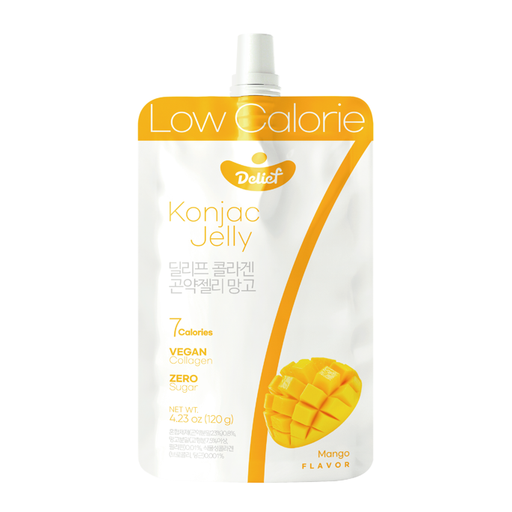
Why this product suits this profile: The 120 g portion combines mango flavour with a recipe labelled as vegan, making it an easy introduction to konjac jelly.
The nutritional information states 5 kcal and 0 g of fat per 100 g. This means you can make your choice based on specific values rather than just the term “light”.
Labelled vegan, mango flavour, 120 g pack and 0 g of sugar per 100 g according to the product information.
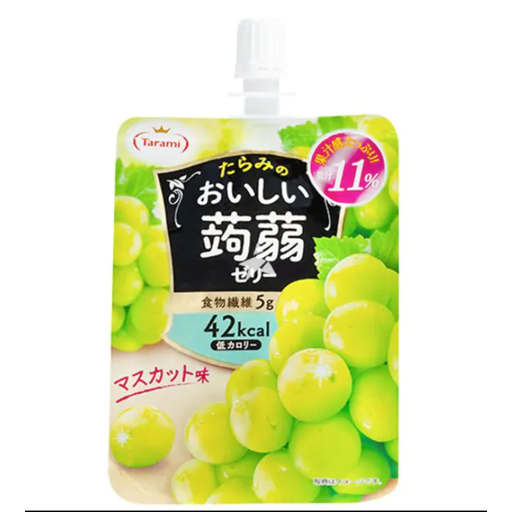
Why this product suits this profile: Its Japanese origin, stated Muscat grape flavour and detailed nutritional and ingredients lists provide a clear basis for making an informed choice.
The information states 54 kcal, 0 g of fat and 11.5 g of sugar per 100 g. This allows calorie and sugar content to be assessed separately.
150 g portion, 1.2 g of fibre per 100 g according to the product data, and ready to eat.
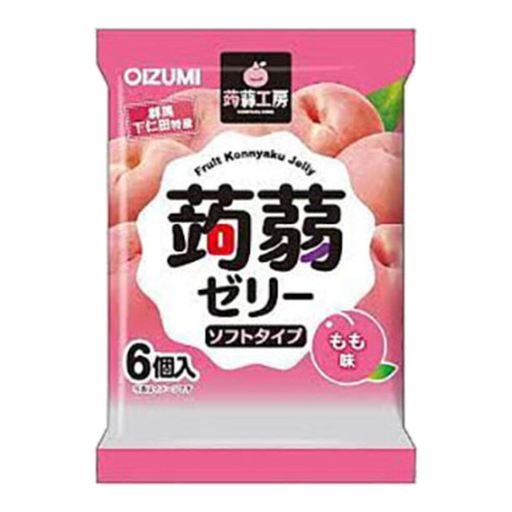
Why this product suits this profile: The compact 106 g pack and Japanese origin suit shoppers who want to choose several varieties for the office, travel or keeping in stock.
The product data states the origin, ingredients, 0 g of fat and 106 kcal per 100 g. This keeps origin and nutritional values separate from the general image of a Japanese snack.
Peach flavour, chewy jelly texture, 106 g pack and ready to eat with no preparation required.
We have put together a complete, regularly updated list of products that fully meet these strict selection criteria and the safety regulations applicable in the EU.
That depends on the particular recipe. In this selection, stated values range from 5 kcal to 111 kcal per 100 g. Some products contain 0 g of fat but may still contain sugar or glucose syrup. Always check energy, sugar and pack size together.
The best-before date is shown on the relevant packaging. Depending on the variety, unopened products should be stored in a cool, dry place away from direct sunlight. After opening, konjac jelly should be consumed promptly in accordance with the manufacturer’s instructions; some products require refrigeration.
Konjac jelly is generally ready to eat. Open the pouch or cup, remove the jelly and chew it carefully before swallowing. The jelly should not be consumed whole. Due to its elastic consistency, it is not suitable for young children if the packaging includes the relevant warning instructions.