
Lieferung heute & morgen

Qualitätsgarantie

Willkommens-Angebote freischalten: KOSTENLOSE Lieferung | Bis zu 80 % RABATT | Kostenlose 30-Tage-JoyPlus-Testphase
App herunterladen
A camping mat has to fulfil different roles depending on how you use it. When sleeping in a tent, the sleeping surface, thickness and insulation matter most. For a picnic or the beach, water resistance, pack size and easy cleaning are more important. If you only focus on a large sleeping area or terms like “ultra-light”, you could easily end up with a mat that doesn’t suit your actual needs.
A double sleeping pad measuring 200 × 140 cm offers space for two people, but it can take up significantly more storage room than a single trekking mat. For car camping, this is usually less of an issue than it is for backpacking. Always check the dimensions when inflated and packed, as well as the total weight.
A waterproof picnic blanket protects against damp grass, but it won’t replace a robust sleeping mat on stony ground. Even a coated outdoor mat can be damaged by thorns, sharp stones or branches. A level pitch, cleared of sharp objects, therefore remains essential.
A thick inflatable camping mat can offer high sleeping comfort. For cold nights, however, thermal insulation is also crucial. With foam mats, the R-value can serve as a guide. A higher value generally indicates greater thermal resistance, but actual suitability also depends on your sleeping bag, the ground, your clothing and the weather.
For one person, a width of around 55 to 65 cm is common for many camping mats. If you tend to toss and turn at night or sleep on your side, you may benefit from a wider mat. For couples and families, a double sleeping pad is worth considering, while solo travellers can carry a compact sleeping mat more easily in their rucksack.
An overview of the main types:
Look for specific material details rather than general marketing claims. Coated polyester, nylon or TPU can repel water and make the surface easier to clean. With aluminium foil layers, the coating should not be creased, scratched or exposed to high heat.
After use, remove sand and dirt and allow the mat to dry completely. A damp, rolled-up mat can encourage odours or mould. For foam mats, a damp cloth and dry storage are usually more suitable than machine washing. Always follow the manufacturer’s care instructions.
For train travel, hiking trips and backpacking, weight and pack size are key considerations. An ultra-light sleeping pad can be an advantage in your rucksack, while for family camping, a larger sleeping surface may be more important. With air mats, also check whether a pump is built-in or needs to be carried separately.
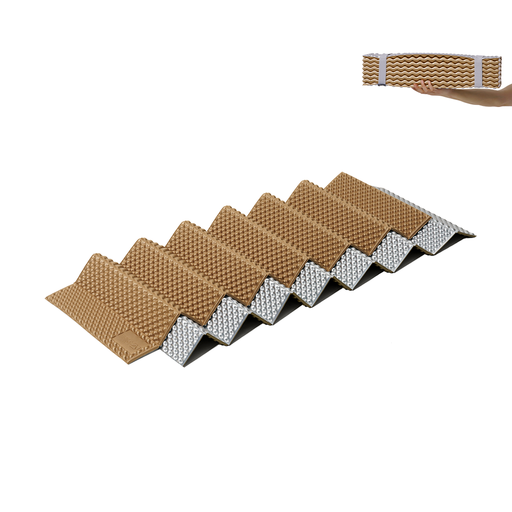
Why this product fits the profile: This folding camping mat weighs around 0.5 kg according to the product information and is designed for backpacking and trekking. It suits people looking for a simple camping mat that doesn’t need inflating.
The foam construction requires no valve and cannot fail due to a leak. The egg-crate structure and water-repellent surface are clearly specified.
183 × 55 × 1.7 cm sleeping surface; approximately 0.5 kg weight; multiple mats can be connected according to the product description.
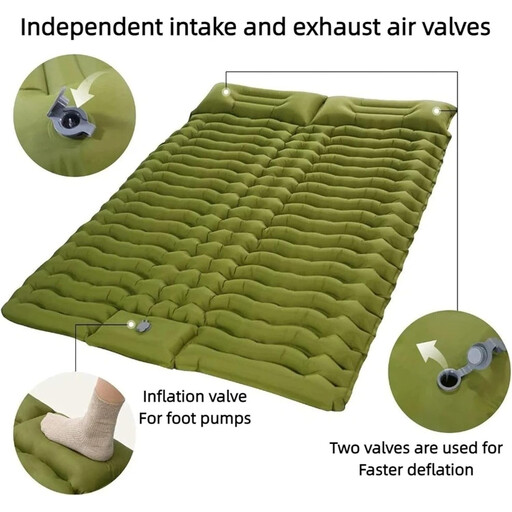
Why this product fits the profile: This inflatable camping mat is aimed at couples or families who need a wide sleeping surface and prefer a setup without a separate pump.
The product details specify dimensions, weight, pack size and valve construction. This makes it easier to assess space requirements, transport and setup before buying.
200 × 140 × 8 cm when inflated; integrated foot pump and pillow; pack size 29 × 16 × 16 cm; product weight stated as 1.7 kg.
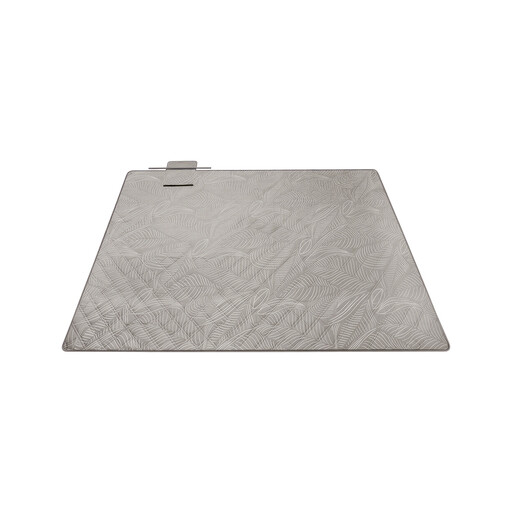
Why this product fits the profile: For the park, garden, beach and family outings, this beach blanket offers a large area for sitting and lying, without being designed as a camping sleeping mat.
The four ground pegs address wind on grass or sand. The water-repellent underside reduces direct contact with damp surfaces, but does not replace an insulating mat for cold nights.
200 × 200 cm; approximately 1.1 kg; four-layer construction with padding; folds down to 42 × 18 × 18 cm and comes with a carry handle and strap.
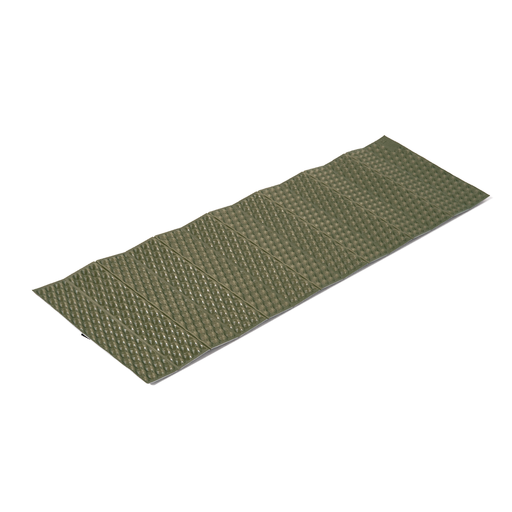
Why this product fits the profile: This trekking mat combines a relatively low weight with a stated sleeping surface of 183 × 63 cm and an R-value of 2.6.
The R-value provides a concrete guide to insulation. The product details also point out that an additional air mattress should be used in cold conditions.
R-value 2.6; approximately 750 g; 2.6 cm thickness; reversible and can be used as a single or combined mat.
We have put together a complete, regularly updated list of products that fully meet these strict selection criteria and the safety regulations in force in the EU.
Thermal insulation, ground temperature and your sleeping bag are the key factors. A stated R-value makes comparison easier. A thin waterproof picnic blanket mainly serves as moisture protection and should not be used alone as a sleeping surface in cold weather.
Remove stones, branches and thorns before setting up. Use the designated valves on an inflatable camping mat and store it dry. Coated aluminium or TPU surfaces should not come into contact with sharp objects or open flames.
The lifespan depends on the material, how much it is used, the ground surface, care and storage. A folding foam mat is resistant to minor leaks. Air mats, on the other hand, require regular checking of valves and seams. Dry every mat thoroughly before long-term storage and follow the manufacturer’s care instructions.