
Lieferung heute & morgen

Qualitätsgarantie

Willkommens-Angebote freischalten: KOSTENLOSE Lieferung | Bis zu 80 % RABATT | Kostenlose 30-Tage-JoyPlus-Testphase
App herunterladen
A high-quality cast iron Dutch oven is more than just a cooking pot; it's a lifetime investment and a versatile kitchen workhorse. Whether for a Sunday roast, a hearty stew, or even baking bread, cast iron's ability to retain and distribute heat evenly delivers consistently impressive results.
However, the market is vast, and choosing the right model can be a challenge. This article serves as an objective guide. As a Joybuy Product Recommendation Officer, I have compiled the relevant product information to help you make an informed decision based on facts, not marketing hype.
To find the right model for your kitchen, there are a few key criteria to consider. These will help you objectively compare the features of different Dutch ovens.
The shape of the Dutch oven should be chosen based on what you plan to cook.
The size, specified in litres, depends on your household size. For 2–4 people, a capacity of 3.5 to 5 litres is often sufficient. Larger families or those who enjoy cooking for guests should consider models from 6 litres and up.
Modern cast iron Dutch ovens are typically enamelled. This coating protects the iron from rust, makes the surface resistant to acid (important for dishes with tomatoes or wine), and significantly simplifies cleaning.
A key advantage is their universal versatility. A good cast iron casserole is suitable for all hob types, including gas, electric, ceramic, and especially as an induction-compatible Dutch oven. Furthermore, these pots are designed as oven-safe casseroles, allowing you to sear on the hob and then transfer them to the oven for braising.
A heavy, tight-fitting cast iron pot with a lid is fundamental to the braising process. It prevents moisture from escaping and keeps the heat constant inside the pot. Some manufacturers, like STAUB, equip their lids with a special texture on the underside. This ensures that condensed steam drips back evenly onto the food, continuously basting it.
Based on the criteria mentioned, we have curated a selection of models that impress with their material properties, craftsmanship, and functionality.
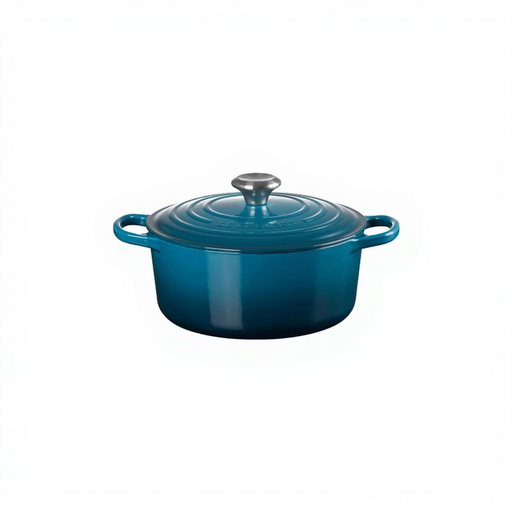
What makes it stand out: The Le Creuset Dutch oven is a classic, crafted in France. This model is distinguished by its light-coloured, scratch-resistant interior enamel, which makes it easy to monitor food as it cooks. The large handles provide a secure grip, even when using oven gloves. The enamelled cast iron lid fits tightly and features a heat-resistant stainless steel knob.
Advantages:
Who it's for: This model is an excellent choice for home cooks looking for a versatile, round Dutch oven for everyday use who value a light-coloured interior for better control over the cooking process.
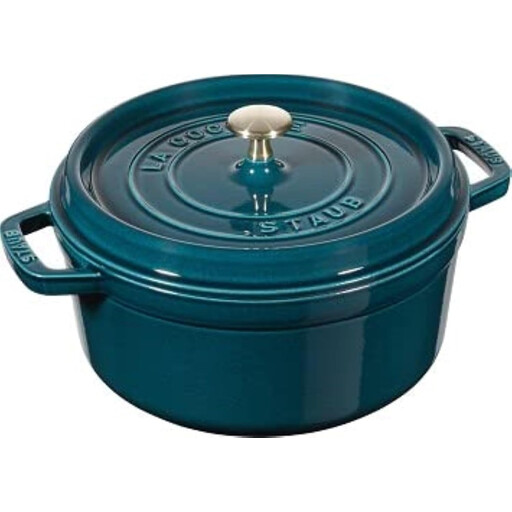
What makes it stand out: The STAUB Cocotte, also made in France, is renowned for its matte black interior enamel, which develops a patina over time and enhances searing performance. Its standout feature is the lid with its self-basting spikes, which, according to the manufacturer, ensures exceptionally moist and tender results by continuously returning moisture to the food.
Advantages:
Who it's for: Ideal for cooks who focus on braising meat, fish, and vegetables and want to benefit from the lid's self-basting technology. Its compact size is a great fit for smaller kitchens.
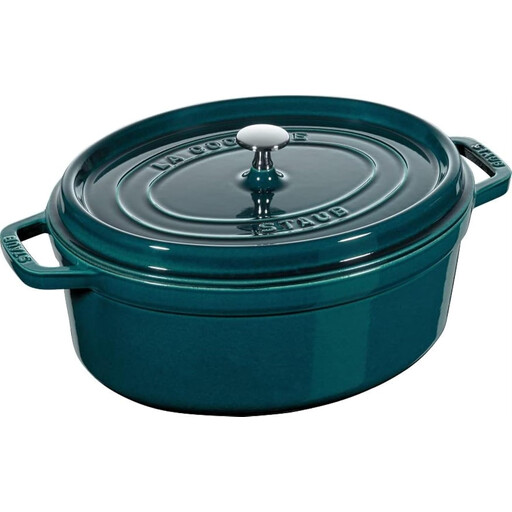
What makes it stand out: This large, oval version of the STAUB Cocotte offers all the benefits of the round model but with significantly more space. Its oval shape and generous 6.7-litre capacity make it the top choice for preparing whole poultry, large roasts, or fish fillets. The Petrol Blue enamel is not only visually stunning but also robust and durable.
Advantages:
Who it's for: This model is aimed at ambitious home cooks and families who regularly prepare large quantities or bulky foods. It is an excellent choice for holiday roasts and entertaining guests.
The models featured here in Petrol Blue and Deep Teal are just a sample of the available options. If you'd like to discover more designs, especially within the popular blue colour spectrum, you can find a wider selection of high-quality cookware here.
Discover more blue pots and Dutch ovens
Can you bake bread in a cast iron pot? Yes, a cast iron pot is ideal for baking bread. The heavy material retains heat exceptionally well and releases it evenly, creating an environment similar to a stone oven. The trapped steam provides excellent oven spring and a crisp, golden-brown crust. Round Dutch ovens are particularly well-suited for classic round loaves.
What is the difference between a roaster and a Dutch oven made of cast iron? The German terms Br?ter (roaster) and Schmortopf (casserole/braiser) are used largely synonymously. Both refer to a heavy, thick-walled pot with a tight-fitting lid, which is ideal for roasting, braising, and slow cooking. In English, this versatile pot is most commonly known as a cast iron Dutch oven.
How do you properly care for an enamelled cast iron Dutch oven? Care is straightforward. Allow the Dutch oven to cool completely after use before cleaning to avoid thermal shock and cracks in the enamel. Wash it with warm water, mild dish soap, and a soft sponge. Although many models are listed as dishwasher-safe, hand washing is recommended to preserve the enamel's lustre long-term. Stubborn residue can be loosened by soaking briefly in warm water.