
Lieferung heute & morgen

Qualitätsgarantie

Willkommens-Angebote freischalten: KOSTENLOSE Lieferung | Bis zu 80 % RABATT | Kostenlose 30-Tage-JoyPlus-Testphase
App herunterladen
A well-organized child's room not only promotes tidiness but also fosters your child's independence and creativity. A key piece of furniture in this setup is the children's room bookshelf. However, the sheer number of options can quickly become overwhelming. Many models look appealing at first glance but prove to be impractical or even unsafe in daily use. This guide will help you avoid common purchasing pitfalls and find a functional solution.
Before you make a decision, you should be aware of the typical weaknesses that often only become apparent after the purchase:
To make a durable and safe choice, you should check three core parameters. These criteria form the basis for effective storage in a child's room.
Safety is the highest priority. Look for the following features:
A good children's bookshelf is tailored to the child's size and motor skills.
Children's rooms require flexible solutions. Consider whether a simple bookshelf is sufficient or if a combined solution makes more sense.
Here are some models tailored to different needs and room situations.
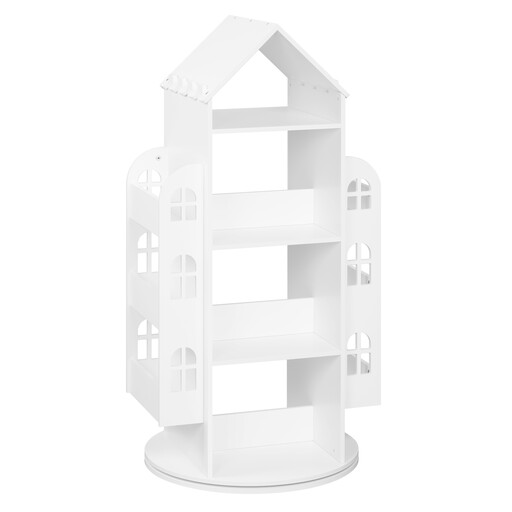
Why it's a great fit: Perfect for smaller rooms, it offers an enormous amount of storage for books and toys on a small footprint, thanks to its 360° rotation and vertical design.
The wide, stable base minimizes the risk of tipping. The rotating feature makes all compartments easily accessible, eliminating "dead corners" and avoiding the impractical shelf trap.
360° rotation for easy access from all sides; 7 main compartments and 6 side pockets allow for clear categorization.
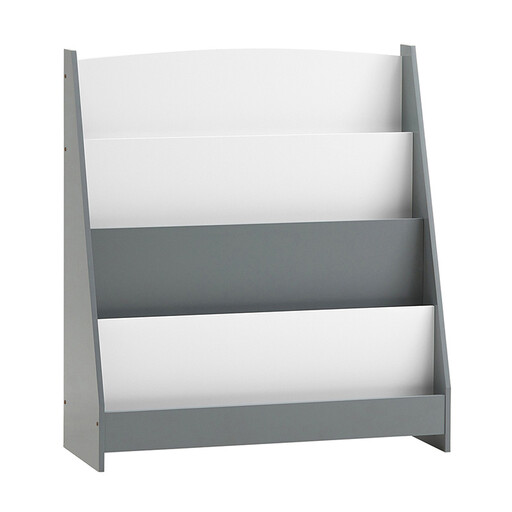
Why it's a great fit: This shelf is specifically designed to foster independence. The low height and four front-facing compartments allow even toddlers to select and put away their own books.
It was specially developed to avoid the pitfall of impractical height. Rounded corners and an included anti-tip kit directly address safety concerns.
Child-friendly height of 88 cm; four compartments for front-facing book display; made from MDF boards (E1 grade).
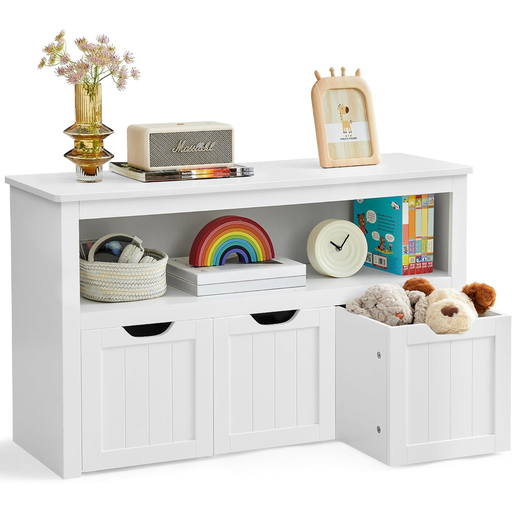
Why it's a great fit: This solution is an all-in-one organizational powerhouse. It combines open shelves for books with three removable bins on casters, perfect for building blocks, dolls, and other toys.
The very low height of 60 cm is optimal for toddlers. The separate bins solve the problem of cramming bulky toys into unsuitable bookshelves. Rounded cutouts serve as handles and reduce the risk of pinching.
Three removable storage bins with casters; very child-friendly overall height of 60 cm; open compartment and top shelf for additional storage space.
We've curated a complete, up-to-date list of products that fully meet these strict selection criteria and safety regulations.
1. How do I securely attach a bookshelf to the wall? Every freestanding shelf for a child's room should be anchored to the wall using the provided anti-tip kit. This usually consists of a bracket or strap that is screwed to the shelf and the wall. Drill a hole in the wall, insert a suitable wall anchor, and screw the safety hardware in tightly. Ensure the connection is stable and that the shelf cannot tip forward, even when under load.
2. From what age is a Montessori-style shelf useful? A Montessori-style shelf is beneficial for toddlers as soon as they can stand securely and purposefully reach for objects—typically from around 12 to 18 months of age. Because the books are displayed with their covers facing forward, even children who can't read yet can visually recognize their favorite stories and select them independently.
3. How do I properly clean a children's bookshelf made of MDF? To clean coated MDF boards, a soft, slightly damp cloth is usually sufficient. For more stubborn dirt, a mild, neutral cleaner can be used. Afterwards, wipe it down with a dry cloth. Avoid aggressive cleaning agents or abrasive sponges, as they can damage the surface.