
Lieferung heute & morgen

Qualitätsgarantie

Willkommens-Angebote freischalten: KOSTENLOSE Lieferung | Bis zu 80 % RABATT | Kostenlose 30-Tage-JoyPlus-Testphase
App herunterladen
Storage jars keep your kitchen organised and make dry food easy to see. However, not every decorative container provides practical food storage. Products are often chosen for their appearance, even though the lid, capacity and cleaning requirements are more important in everyday use. If you want to buy storage jars, you should therefore check a few common weak points.
A lid with a seal can reduce air exchange, but it may not be suitable for transporting liquids. For soups, sauces or moist foods, leakproof storage containers with a secure closure are the better choice. For traditional storage jars, the product description should clearly state whether they are intended only for dry provisions or also for liquids.
A spice jar that is too small makes refilling more difficult. On the other hand, a very large container can become awkward when used for ingredients frequently. Flour, rice and cereal require different sizes from tea, nuts or spices. The stated capacity is not the only important factor: the width of the opening matters too. A measuring cup or tablespoon should fit inside easily.
Glass is generally easy to clean, but lids and seals may be made from different materials. A glass container with a wooden lid often needs to be washed by hand, while plastic lids are often dishwasher-safe. Sudden temperature changes can also put stress on glass. The relevant manufacturer’s instructions should be followed before buying and before first use.
For food storage, containers should be expressly labelled as suitable for contact with food. Glass options include soda-lime glass and borosilicate glass. Borosilicate glass is used for some products and is listed as the material in the product details. However, this should not automatically be taken to mean that the product is suitable for use in an oven, microwave or extreme temperature changes.
For plastic storage containers, details such as polypropylene (PP) are relevant. It is also worth checking the temperature range and whether the product is approved for use in a microwave, freezer and dishwasher. A lid containing wood will generally have different care requirements from the glass container itself.
For dry provisions, simple lids may be sufficient depending on how the containers are used. However, if you want to keep moisture, odours and air out as far as possible, look for a continuous seal and a clearly described closure. Clip-top containers can be practical thanks to their multiple locking points. The Emsa containers are described as having an integrated seal and being leakproof according to the supplier.
The seal on glass containers with wooden lids should be checked particularly carefully. The lid should sit straight, and the rim must be clean and dry. An airtight closure will only protect the contents reliably if the seal and glass rim close correctly.
Stackable storage containers make efficient use of cupboard and shelving space. Square shapes can often be arranged more space-efficiently than round containers, while round jars may provide easier access for spoons or scoops. Before buying, compare the internal height, external dimensions and available shelf clearance.
For meal prep, smaller food storage containers with secure closures are often more practical. Larger jars, on the other hand, are ideal for the pantry, as they provide a quick overview of the level and contents. Labels or lids that can be written on help prevent similar ingredients from being mixed up.
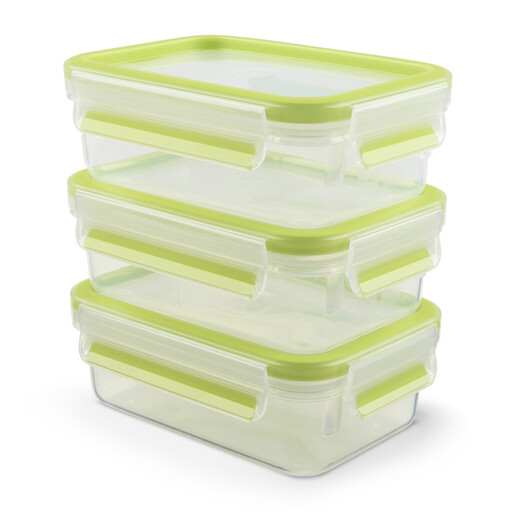
Why this product suits this profile: The three-piece set offers a capacity of 0.55 litres per container, making it suitable for smaller portions, packed lunches or prepared meals.
The product details specify an integrated seal and suitability for the dishwasher, microwave and freezer at temperatures between −40 and +110 °C. However, the manufacturer’s claim of “100% leakproof” should still be checked against the intended use.
Three identical PP containers with a capacity of 0.55 litres each; the product description states that both the lids and containers are dishwasher-safe.
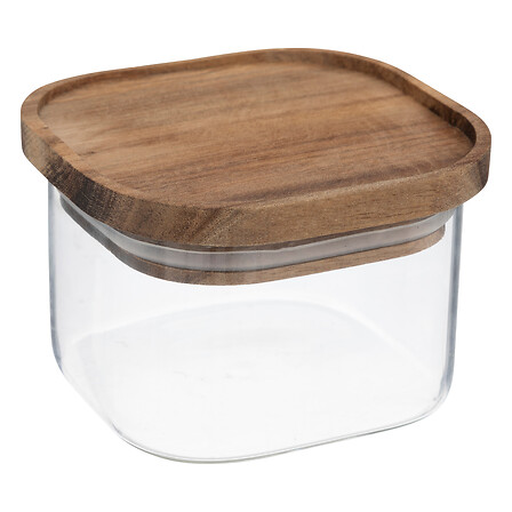
Why this product suits this profile: This square borosilicate glass container with an acacia wood lid combines visible storage with a clean design for shelves or worktops.
The product details limit use to dry foods and recommend hand washing. This helps avoid incorrect expectations regarding microwave, oven or dishwasher suitability.
0.4-litre capacity, square dimensions of 11 × 11 × 7.4 cm and an acacia wood lid designed for hand washing.
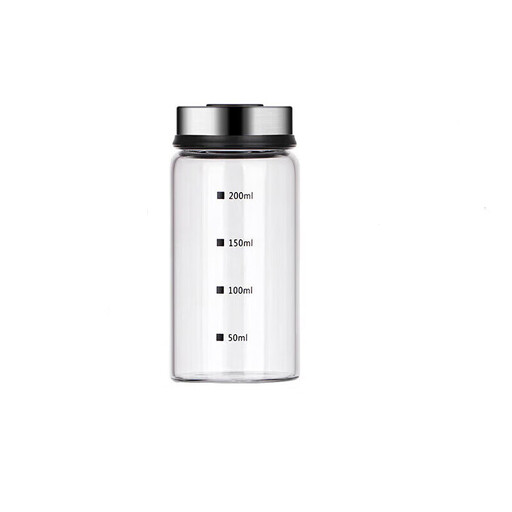
Why this product suits this profile: A rotating spice jar is ideal for households that want to keep spices within easy reach and neatly organised in one fixed place.
The product name indicates borosilicate glass. Before buying, check the capacity, closure type and cleaning instructions in the complete product details.
Rotating design and glass listed as the material, making it suitable for compact spice organisation.
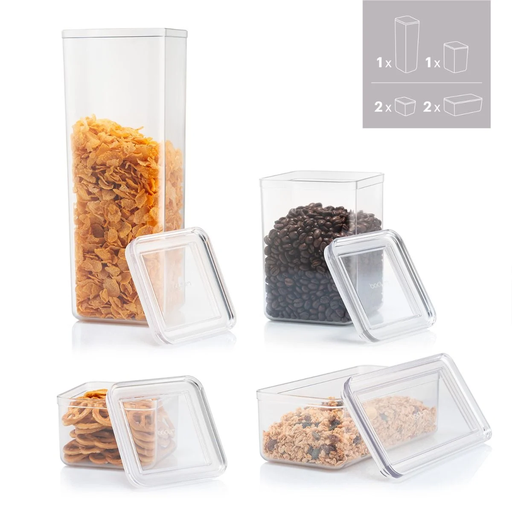
Why this product suits this profile: The 12-piece set is designed for users who want to organise several ingredients consistently, whether in a pantry or as part of their daily kitchen routine.
The size of the set means you should carefully check the available space, container dimensions and lid closure before buying. This prevents you from buying more containers than can be stored sensibly in the cupboard.
Twelve storage jars with transparent lids; suitable for consistent pantry organisation, provided the dimensions and closure work for your kitchen.
We have put together a complete, regularly updated list of products that fully meet these strict selection criteria and the safety regulations applicable in the EU.
It depends on how you intend to use them. Storage jars are transparent and well suited to dry foods on shelves. Plastic storage containers are often lighter and more practical for transport, freezer storage or meal prep. The key factors are material approval, closure, weight and care instructions.
With proper use, glass containers can be used for a long time. Their lifespan depends mainly on knocks, sudden temperature changes, lids and seals. Wear parts such as silicone seals should be checked regularly for deformation or cracks and replaced according to the manufacturer’s instructions.
Containers should be clean, dry and appropriately sized. A tight closure reduces contact with air and moisture. Smaller quantities can also help you use frequently consumed foods more quickly. Each ingredient should be stored in a container that is suitable according to the specific manufacturer’s instructions.